

The question of asphalt repair vs replacement is the one we answer more than any other when we pull up for an estimate, and the honest answer is almost never “tear it all out.” Homeowners across Springfield call us worried that a few cracks or a rough patch means a whole new driveway, when in reality a targeted repair or a resurface will often buy years for a fraction of the cost. Below we lay out the exact decision framework our crew uses on site, including the times we tell people to spend less, not more. If your driveway or lot is showing its age, this guide will help you walk into that estimate knowing what to look for.
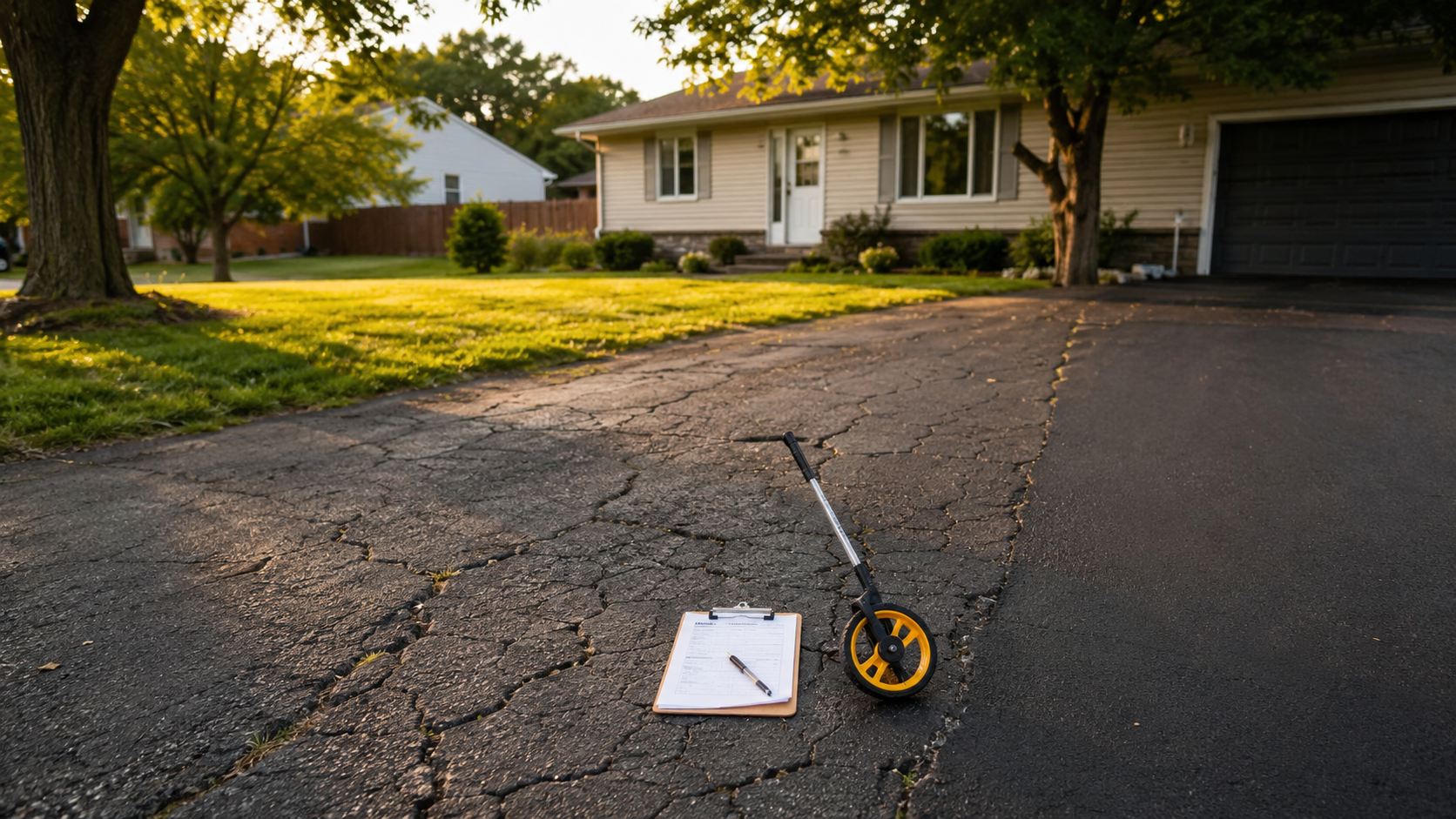
When is asphalt repair vs replacement the right call?
Every driveway we look at falls somewhere on a scale from “patch a spot” to “start over,” and where it lands comes down to three things: how much of the surface is failing, whether the base underneath is still sound, and how old the pavement is. The asphalt repair vs replacement decision is really a question about the base. Asphalt is a wearing surface sitting on a compacted gravel base and the clay subgrade below it. When only the top is tired but the base is solid, you have cheap, high-value options. When the base has failed, no amount of surface work will hold, and replacement becomes the smart money.
Here is the rough rule we work from, and the one the Asphalt Institute supports through its pavement life-cycle guidance: fix problems early and cheaply while the structure is intact, and only rebuild when the structure is gone. On our estimates we walk the whole surface first, because a driveway can look rough in one corner and be perfectly sound everywhere else.
- Localized damage, sound base: a repair or patch. Think a single pothole, a sunken apron, or one alligatored section under 25 percent of the area.
- Widespread surface wear, sound base: resurfacing, also called an overlay. The old surface stays as a base for fresh asphalt.
- Base failure or pavement past its life: full-depth replacement. Cracks that keep coming back, drainage that undermines the slab, or a driveway 20-plus years old with no life left.
What does asphalt repair actually cover?
Repair is the narrow, surgical option, and for most of the driveways we see it is all that is needed. When we talk about asphalt repair and patching we mean fixing the specific spots that are failing while leaving the good pavement alone. Done right, a repair addresses why the spot failed, not just how it looks. That is the difference between a fix that lasts and one that reopens by spring.
The most common repairs we run in Springfield are straightforward:
- Crack filling. Hot rubberized filler in working cracks keeps water out of the base, which is what kills pavement here. This is the cheapest hour you will ever spend on a driveway.
- Full-depth patching. Saw-cut the failed area, dig out the bad base, rebuild it, and lay fresh hot mix. This is the real fix for potholes and soft spots.
- Skin patching and leveling. A thin lift over a low area or a rough stretch to smooth it and shed water.
If your pavement is structurally fine and just has isolated trouble, targeted asphalt repair and patching is almost always the right spend. We will say it plainly on the estimate: do not buy a new driveway to solve a problem a patch and some crack filler will handle. Repair or replace asphalt driveway decisions tip toward repair far more often than the sales pitch you may have heard suggests.
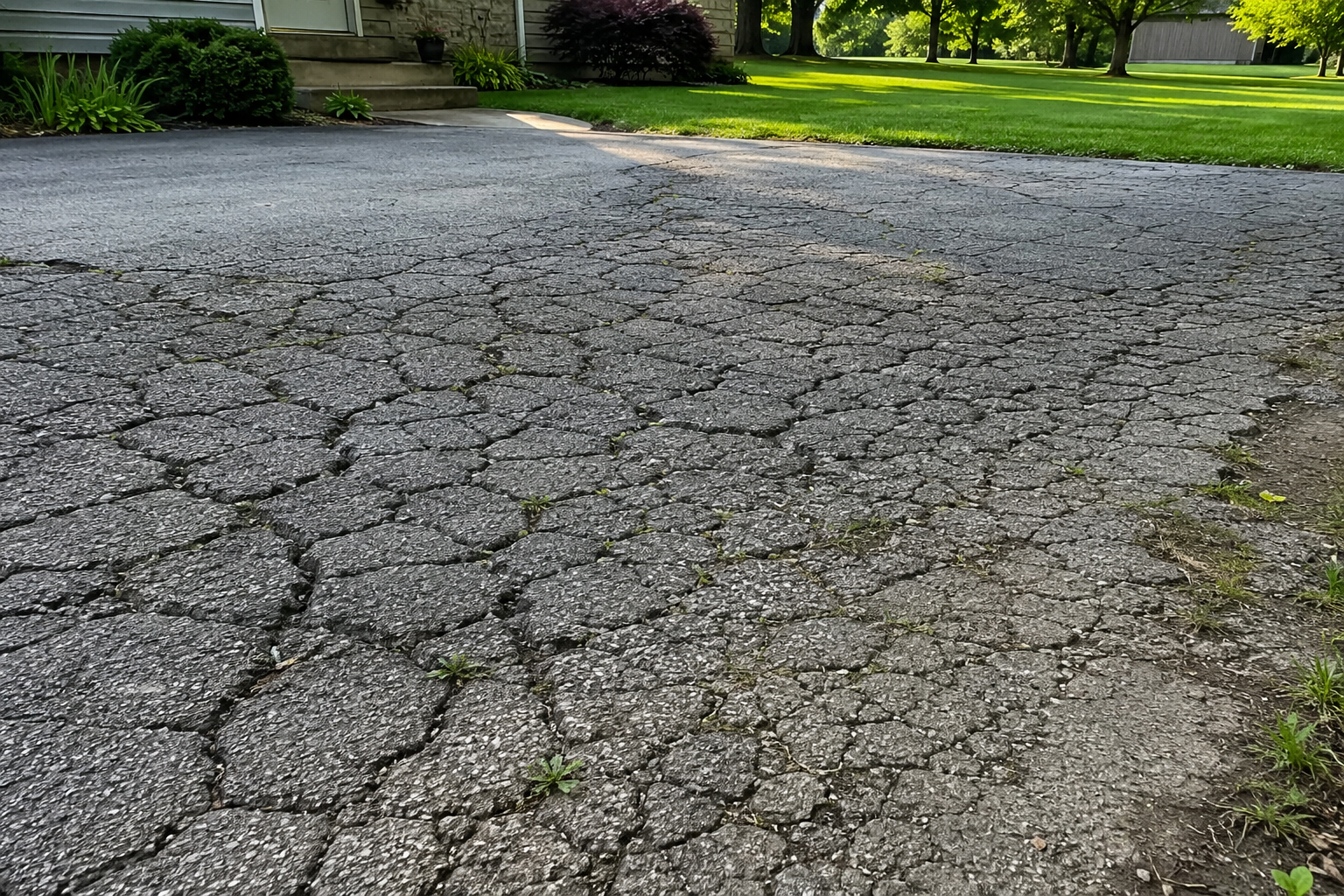
When does resurfacing beat a full replacement?
Resurfacing, or an asphalt overlay, is the middle option and the one most homeowners have never had explained to them. Instead of tearing out the old pavement, we prep it and lay a new one-and-a-half to two inch layer of hot mix over the top. The old surface becomes the base for the new one. When the question is asphalt resurfacing vs replacement, resurfacing wins whenever the underlying structure is still doing its job.
An overlay makes sense when the pavement has surface-level problems over a base that is still solid. Good candidates share a few traits:
- Surface cracking and fading, but no widespread alligator cracking that signals base failure.
- A base and subgrade that drain and hold, with no pumping or soft spots.
- Curb, apron, and garage heights that can absorb another two inches without creating a lip or a drainage problem.
Before an overlay we deal with the movers first: fill and heal the working cracks, patch any failed spots, and correct drainage. Sometimes we mill off the top layer at the edges and transitions so the new surface ties in flush. That milling step is where asphalt milling earns its keep, letting us resurface a lot without raising it into the curbs or doorways. Asphalt overlay vs replacement usually comes down to whether we can trust the base, and a core sample or a walk-over during heavy rain tells us fast.
The honest caveat: an overlay is only as good as what it covers. If we put two fresh inches over a base that is already breaking up, the new surface will crack right where the old one did, on the same lines, within a year or two. That is called reflective cracking, and it is exactly why we refuse to overlay pavement that should be replaced. Paying for an overlay that fails early is worse than paying once to do it right.
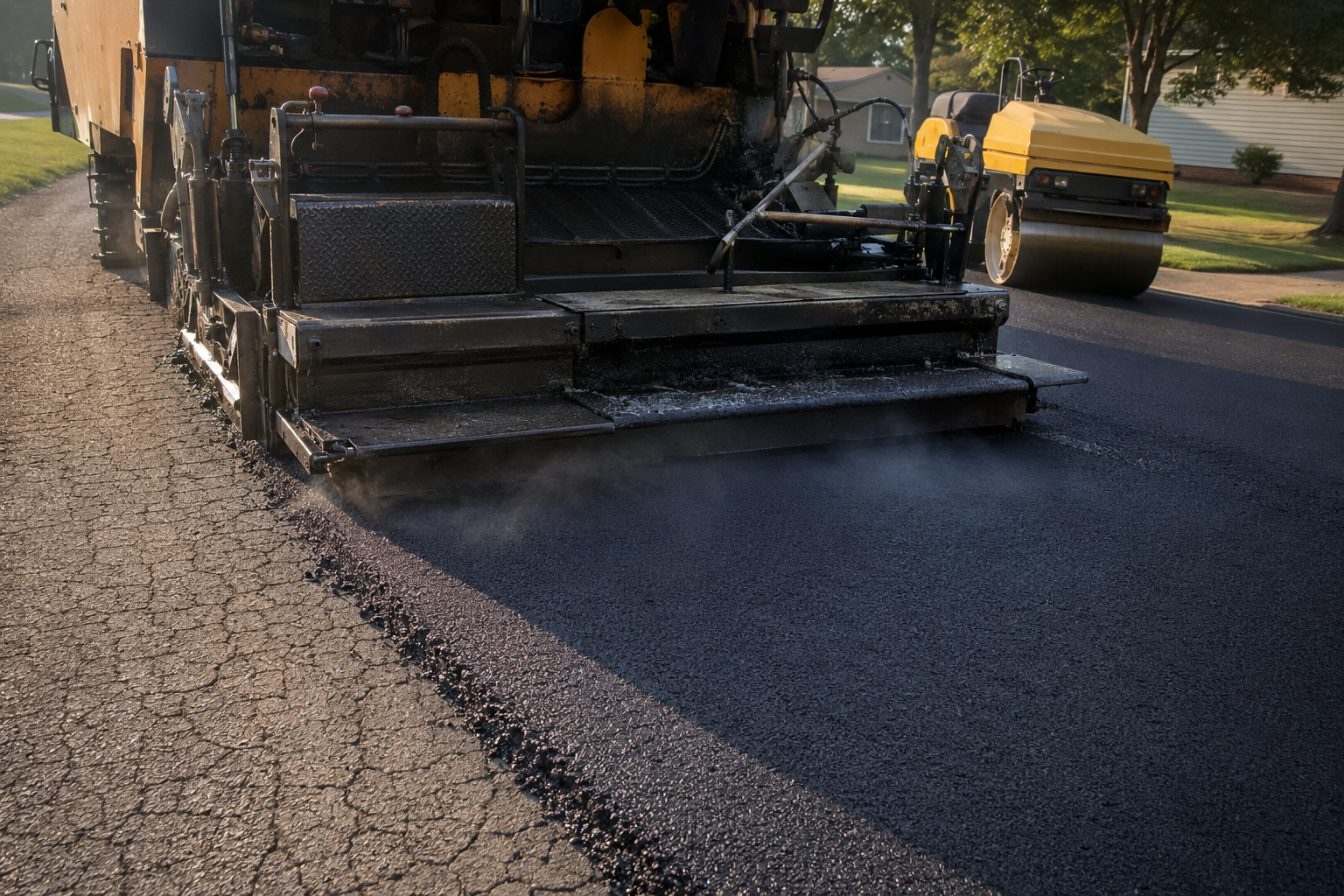
When is it time to replace asphalt for good?
Replacement is the biggest spend, so it is the one we hold to the highest bar. We recommend a full-depth replacement when the base is gone or the pavement has simply reached the end of its life. At that point repairs and overlays are throwing good money after bad, and the cheapest long-term answer is to remove everything, rebuild the base properly, and pave fresh. Knowing when to replace asphalt driveway pavement is mostly about reading the base, not the surface.
The signs that push us to recommend replacement are consistent:
- Widespread alligator cracking across more than a quarter to a third of the surface. That pattern means the base is failing under load, not a surface issue.
- Recurring potholes and patches that keep reopening. When you are patching the same areas every year, the base is telling you it is done.
- Standing water and pumping, where water sits and the pavement flexes or pushes up mud at the cracks after rain.
- Age past 20 to 25 years with no meaningful maintenance history, where the asphalt has oxidized gray and brittle all the way through.
When we do replace, the base work is where the value lives. A new surface over an old, unfixed base is a guaranteed callback, so we grade, add and compact aggregate, and correct drainage before any new asphalt goes down. If you want the full walk-through of how a fresh installation goes, our asphalt paving page covers the sequence from demo to final compaction.
How do the three options compare on cost and lifespan?
Rather than quote a fake average, we price every job from a written estimate after we see the pavement, because base condition and access change the number more than square footage does. What we can share is how the three paths compare in relative cost, disruption, and how long each should last on a sound base. This is the shape of the tradeoff we walk homeowners through on site.
| Option | Relative cost | Best when | Expected added life |
|---|---|---|---|
| Crack fill and patch | Lowest | Isolated cracks or one failed spot, base sound | Extends current pavement several years |
| Resurface / overlay | Middle | Worn surface, base still solid | Roughly 8 to 15 years |
| Full-depth replacement | Highest | Base failure or pavement past its life | Roughly 20 to 30 years with upkeep |
Notice that the cheapest options often deliver the best value per dollar when the pavement qualifies for them. That is the whole point of catching problems early. A driveway that gets its cracks filled and gets crack filling and sealing on schedule may never need the big replacement at all, or at least pushes it a decade down the road. The most expensive driveway is the one that was ignored until replacement was the only option left.
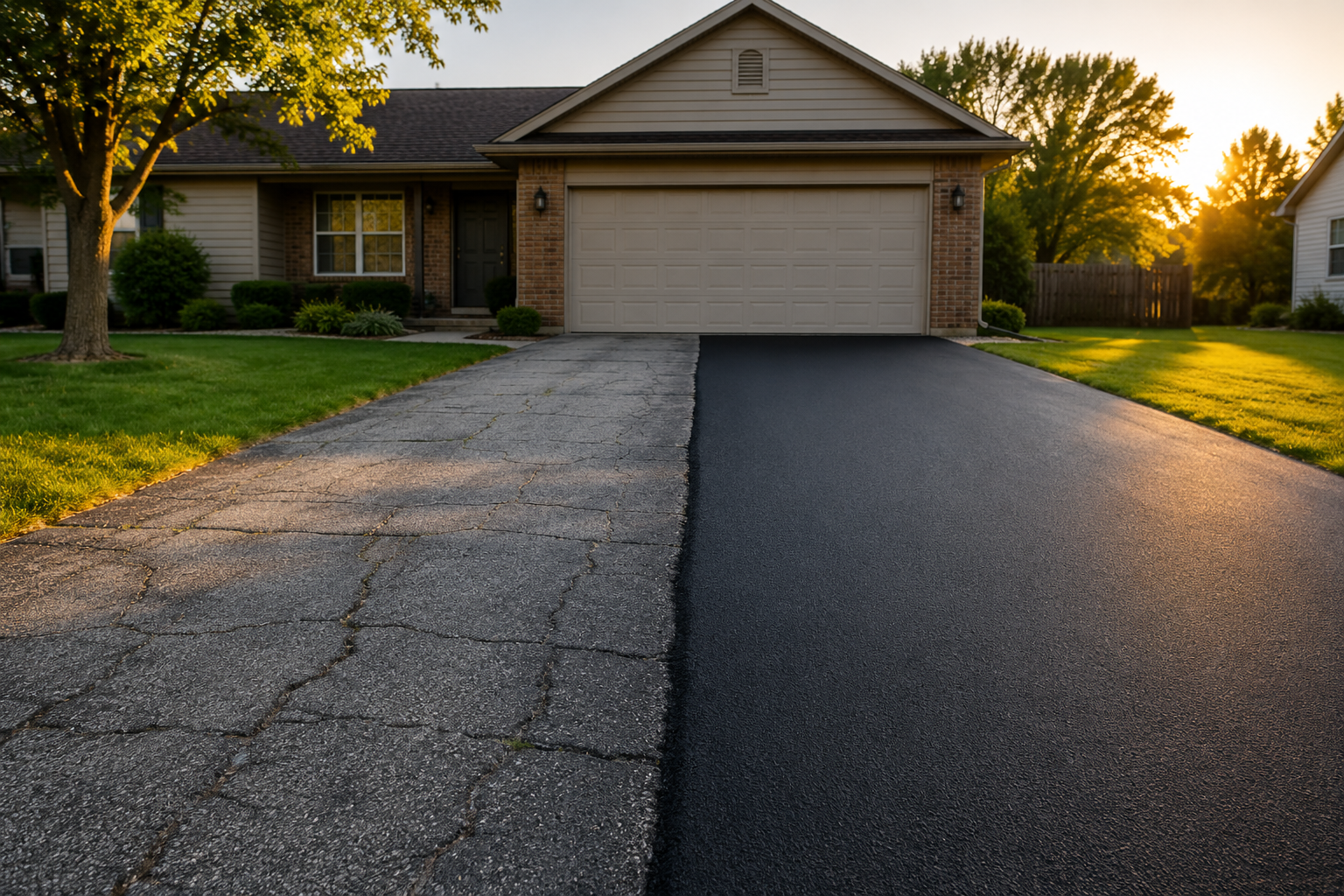
The honest part: we will tell you to spend less
Here is the piece other contractors sometimes leave out. On plenty of estimates the right answer for asphalt repair vs replacement is the small job, and we say so even though it is the smaller ticket for us. If a driveway needs six hundred dollars of crack filling and a patch, we are not going to pitch a full replacement, because that is how you end up with a customer who never calls back and never refers you. Trust is worth more than one oversized invoice.
What we ask homeowners to do is get eyes on the pavement before it slides from the repair column into the replacement column. Water is the enemy in Springfield, between our clay soils and freeze-thaw winters, and every season a crack goes unfilled is a season water works into the base. Catch it early and you stay in the cheap options. Wait too long and the choice makes itself. When you are ready, the fastest way to a straight answer is to contact our crew for a written estimate.
Frequently Asked Questions
Is it cheaper to repair or replace an asphalt driveway?
In almost every case where repair is even an option, repair is far cheaper than replacement, often by five to ten times for the same driveway. The catch is that repair only works when the base underneath is still sound. If the base has failed, repairs will not hold and replacement becomes the cheaper choice over time because you stop paying for patches that reopen every year.
How do I know if my asphalt just needs resurfacing?
Resurfacing works when the surface is worn but the base is solid. The tell is the crack pattern: long single cracks and fading point toward a good overlay candidate, while widespread alligator cracking that looks like scales means base failure, which an overlay will not fix. We confirm it by checking drainage and, when needed, taking a core to see the base before we recommend an overlay.
How long does an asphalt overlay last?
On a sound base with the cracks and drainage addressed first, an overlay commonly lasts 8 to 15 years, and longer with regular sealcoating and crack filling. Over a failing base it can crack within a year or two along the old crack lines, which is why we only recommend resurfacing when the structure below is still doing its job.
When should an asphalt driveway be completely replaced?
Replace when the base has failed rather than just the surface. The signs are widespread alligator cracking over a quarter or more of the area, potholes and patches that keep reopening, standing water with flexing or pumping after rain, and pavement past about 20 to 25 years with no maintenance. At that point removing everything and rebuilding the base is the durable, lower-cost-per-year answer.
Can you patch part of a driveway and resurface the rest?
Yes, and we do it often. A common plan is to full-depth patch the failed spots, fill the working cracks, then overlay the whole surface so it wears evenly and sheds water as one continuous layer. Combining repairs with a resurface is frequently the best value when a driveway is mostly sound with a few bad areas.
Get a Free Written Estimate
Not sure whether your driveway or lot needs a repair, a resurface, or a full replacement? Our crew will walk the pavement, read what the base is doing, and give you an honest written estimate with the smallest fix that will actually last. No pressure and no upselling you into a bigger job than you need.
Asphalt Pavers LLC, 434 S Belcrest Ave, Springfield, MO 65802. Call us at (417) 319-2693. Hours: Mon-Sat 8:00 AM-5:00 PM. Find us on Google Business Profile.
Reviewed by the owner – 2026-09-04