

If you have been quoted for a repaved parking lot and wondered whether there is a smarter middle option, understanding what is asphalt milling will change how you think about the job. Asphalt milling is the process of grinding off the worn top layer of an existing pavement with a specialized machine, leaving a solid, level base ready for a fresh surface. On a lot of our road and lot projects around Springfield, milling followed by resurfacing does everything a full tear-out would do, at a fraction of the cost and disruption. This guide explains the milling process, what happens to the ground-up material, and how we decide when resurfacing beats a full replacement.
What Is Asphalt Milling, Exactly?
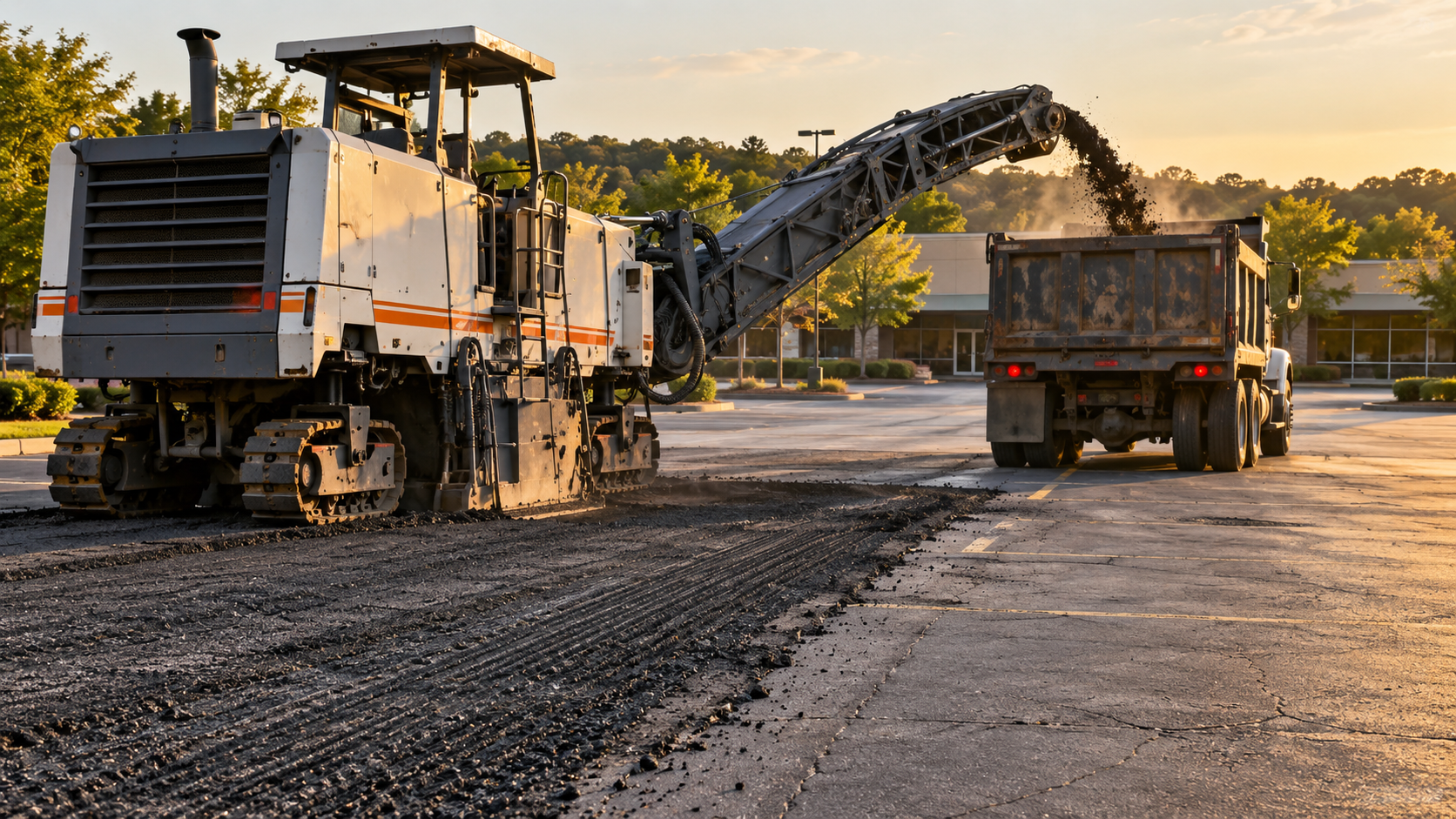
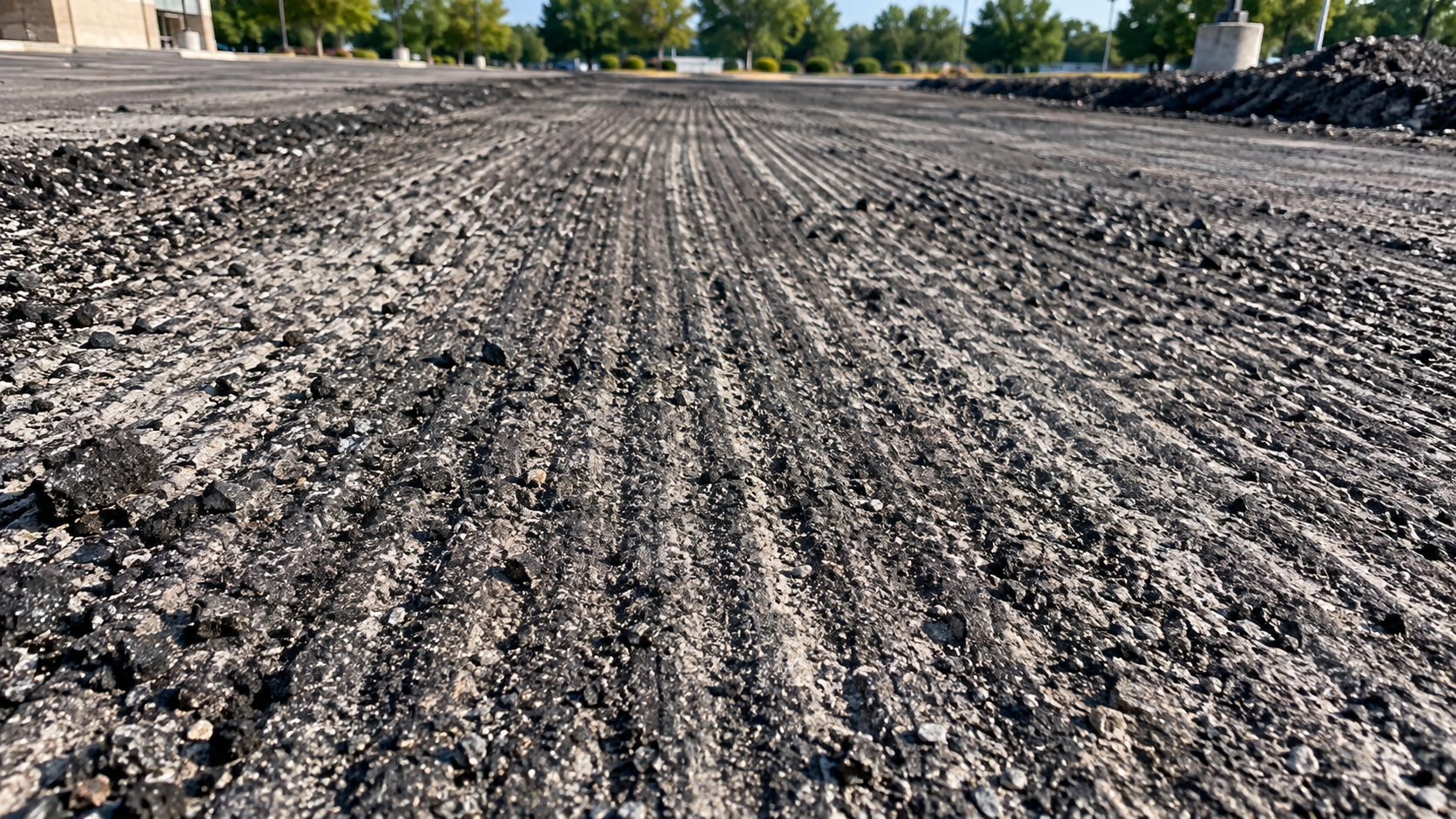
Asphalt milling is the controlled removal of the top layer of an asphalt surface using a milling machine, sometimes called a cold planer or a grinder. Instead of digging out the entire pavement down to the dirt, the machine shaves off a set depth of old asphalt, usually somewhere between one and a half and three inches on a driveway or lot, and grinds it into small pieces as it goes. What you are left with is the sound lower structure of the old pavement, now flat, clean, and profiled with fine grooves that a new layer of asphalt bonds to.
The word people trip on is “cold.” Cold milling just means the machine cuts the existing asphalt at ambient temperature, without heating it first. That is the standard method for driveways, parking lots, and most roads. It is fast, it produces reusable material, and it does not require the pavement to be torn out and hauled away in full. For a deeper technical read on mixes and recycled material, the Asphalt Institute is the authority we point customers to.
How the Asphalt Milling Process Works, Step by Step
On our jobs the asphalt milling process follows the same sequence whether we are doing a single driveway or a commercial lot. Here is what a typical day looks like from the seat of the machine:
- Assess and mark depth. We check the pavement thickness and set the cut depth so we remove the failed surface without chewing into a good base.
- Mill the surface. The cold planer moves across the lot, a rotating drum studded with carbide teeth grinds off the set depth, and a conveyor loads the ground material straight into a dump truck.
- Sweep and clean. A power broom clears the fine grindings so the profiled surface is clean and ready to bond.
- Fix any base problems. If milling exposes a soft or failed spot, we dig it out and repair the base before paving. Milling actually helps us find these weak areas.
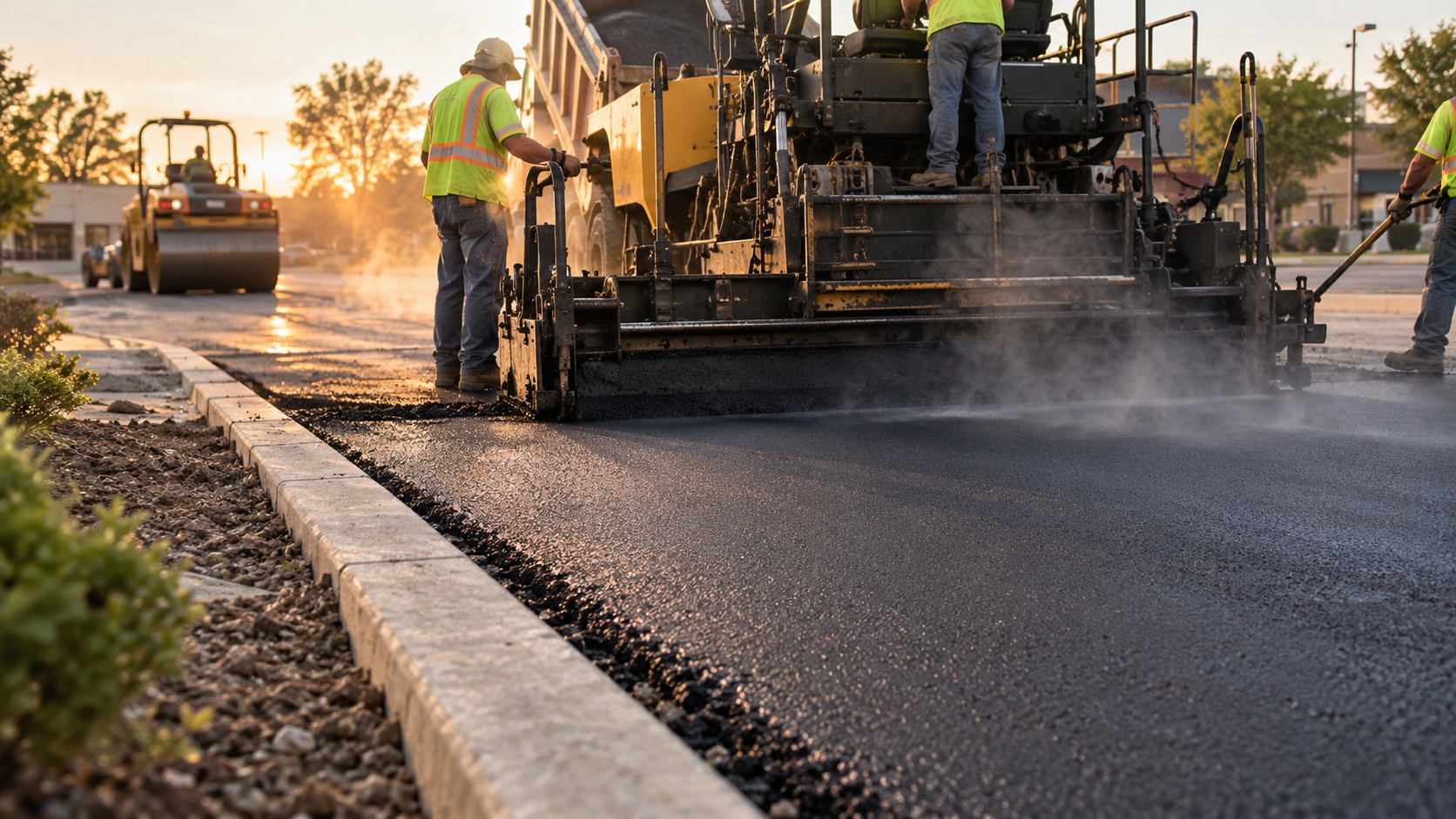
- Tack and pave. We spray a tack coat for adhesion, then lay and compact the new asphalt surface flush with the surrounding grade.
The grooved texture the drum leaves behind is not a cosmetic thing. Those ridges give the new asphalt a mechanical grip, so the resurfaced layer locks to the old base instead of sitting on top of it like a sticker. You can see how this fits into a larger job on our asphalt milling service page.
When Does Resurfacing Beat a Full Replacement?
This is the real question behind “what is asphalt milling” for most property owners: do you mill and resurface, or tear the whole thing out and start over? The honest answer depends on what is failing. If your surface is cracked, rutted, or worn but the base underneath is still solid, milling and resurfacing is almost always the better value. If the base itself has failed, no surface treatment will save it and you need full-depth replacement.
Here is the simple framework we use on estimates:
| Situation | Best Option |
|---|---|
| Surface cracking, oxidation, or wear; base still solid | Mill and resurface |
| Rutting or shoving in the top layer only | Mill and resurface |
| Pavement sitting too high against curbs or garage slabs | Mill to restore grade, then resurface |
| Widespread alligator cracking through the full depth | Full-depth replacement |
| Base is soft, pumping, or holding water | Full-depth replacement |
The cost gap is significant. Milling and resurfacing skips the demolition, the full haul-off, and the rebuilding of the base, which are the most expensive and time-consuming parts of a paving job. On commercial lots it also means far less downtime, because we can often mill and pave a section at a time and keep the property partly open. When the base is genuinely gone, though, we will tell you so, because resurfacing over a bad base just buys you a year before the same cracks come back. For a straightforward new surface where replacement is right, our asphalt paving crew handles the full build.
What Happens to the Milled Asphalt? Recycled Millings Explained
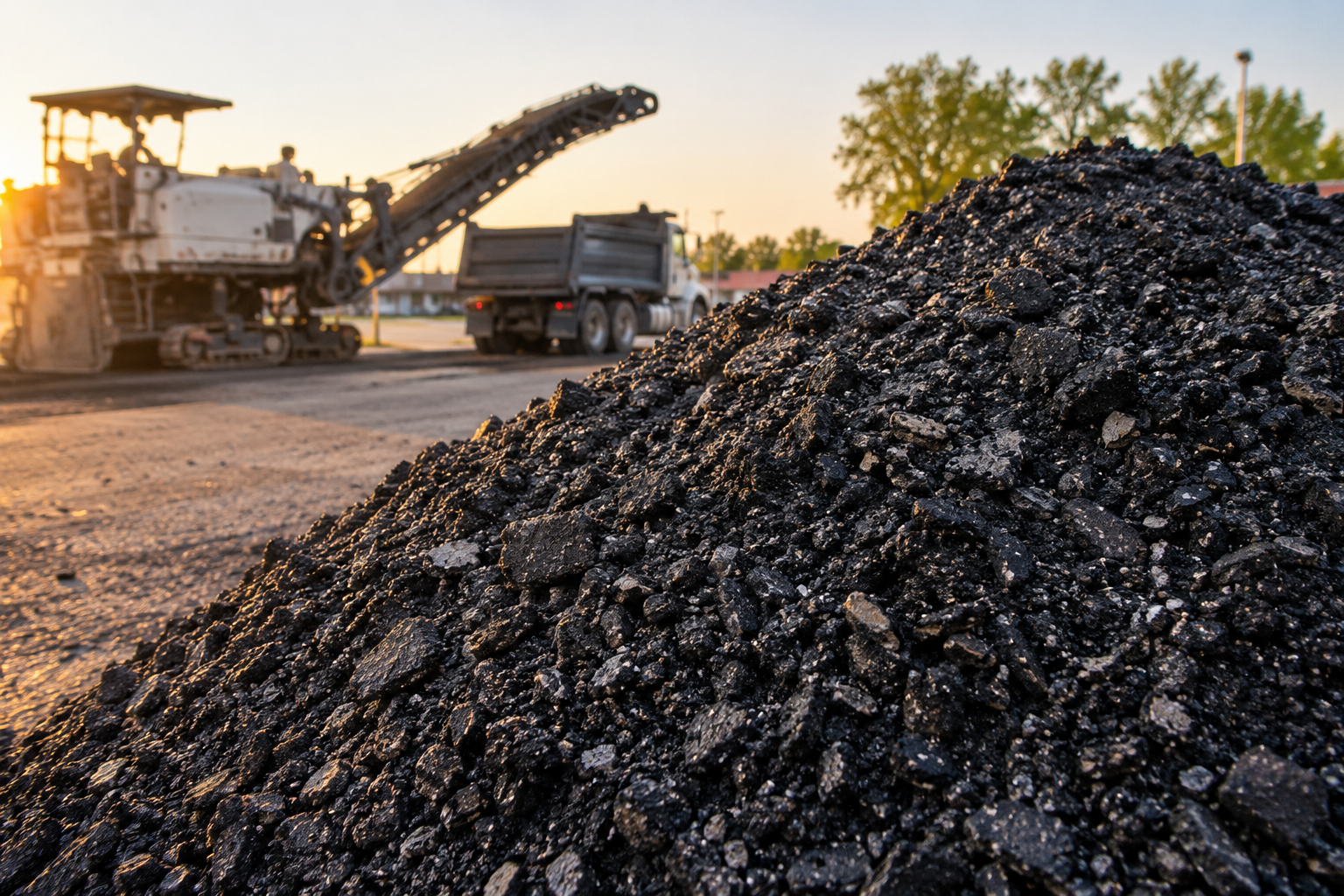
One of the best things about milling is that almost nothing gets wasted. The ground-up material, called recycled asphalt pavement or simply millings, is a genuinely valuable product. It still contains the original asphalt binder and aggregate, so it can be reheated and blended into new hot-mix asphalt at the plant, which is one of the reasons asphalt is among the most recycled materials in the country.
Millings also have a second life as a surfacing material on their own. Compacted recycled asphalt millings make a durable, low-cost surface for rural driveways, alleys, overflow parking, and lanes where a full hot-mix surface is not in the budget. They pack down hard, shed water well, and hold up far better than loose gravel. We put the millings from our jobs to use rather than treating them as trash, which keeps material out of the landfill and costs down.
Milling and Curb Height: The Detail Most People Miss
Here is a piece of curb-height logic that catches property owners off guard. Every time an old lot gets a new layer of asphalt paved directly over the top, the surface climbs higher. Do that two or three times over the decades and the pavement starts to swallow the curbs, meet garage floors at the wrong level, and bury drainage inlets so water pools where it used to run off.
Milling solves this. By grinding off the old surface before we repave, we bring the pavement back down to its correct elevation. The new layer goes on flush with curbs, gutters, door thresholds, and adjoining concrete, the way it was designed to sit. This matters most on jobs that tie into drainage or existing structures, and it is a big reason we mill before resurfacing rather than just paving over the problem. Restoring proper grade also protects the surrounding curb and gutter from the water damage that trapped runoff causes.
Frequently Asked Questions
What is asphalt milling in simple terms?
Asphalt milling is grinding off the worn top layer of an existing asphalt surface with a machine, leaving a solid, level base that a fresh layer of asphalt can be paved onto. It removes the failed surface without tearing out the entire pavement.
How deep does asphalt milling go?
On driveways and parking lots we typically mill between one and a half and three inches, enough to remove the worn surface layer while leaving the good base intact. Full-depth roadwork can go deeper. We set the exact depth after checking your pavement thickness.
Is milling and resurfacing cheaper than full replacement?
Yes, usually by a wide margin. Milling and resurfacing skips demolition, full haul-off, and rebuilding the base, which are the costliest parts of a paving job. It only works when the base underneath is still sound. If the base has failed, full replacement is the right call.
Can I use recycled asphalt millings on my driveway?
You can. Compacted recycled asphalt millings make a durable, budget-friendly surface for driveways, alleys, and overflow parking. They pack harder and last longer than loose gravel, though they are not as smooth or finished as a fresh hot-mix surface.
How long does an asphalt milling job take?
A residential driveway can often be milled and resurfaced in a single day. Larger commercial lots are scheduled in sections so parts of the property stay open. The milling itself is fast, most of the timeline is base repairs, paving, and cure time.
Does milling damage the base underneath?
No, when it is done right. A skilled operator sets the drum depth to remove only the worn surface. Milling actually exposes weak spots in the base so we can repair them before paving, which makes the finished surface last longer.
Get a Free Written Estimate
Not sure whether your lot needs milling and resurfacing or a full replacement? We will assess the surface and the base, tell you honestly which one you need, and put the scope in writing before any work begins.
Asphalt Pavers LLC, 434 S Belcrest Ave, Springfield, MO 65802 · (417) 319-2693 · Mon-Sat 8:00 AM-5:00 PM · Find us on Google
Reviewed by the owner – 2026-09-14