

The smartest time to prepare asphalt for winter is right now, in the two or three weeks before Springfield’s first hard freeze, because every small defect you ignore this fall turns into a bigger, more expensive one by spring. We run late-season repair calls every October, and the pattern never changes: the driveways and lots that got a quick checklist done in fall come through the freeze-thaw season intact, and the ones that got skipped show up on our spring schedule with spalling edges, widened cracks, and fresh potholes. This is our end-of-season walkthrough, the same one we use when a client asks what actually needs doing before the cold sets in.
None of this is complicated, but the timing is unforgiving. Sealer and crack filler need surface and air temperatures the Ozarks stops reliably giving us once late October arrives, so the window to act is short. Here is exactly what we check, in the order we check it.
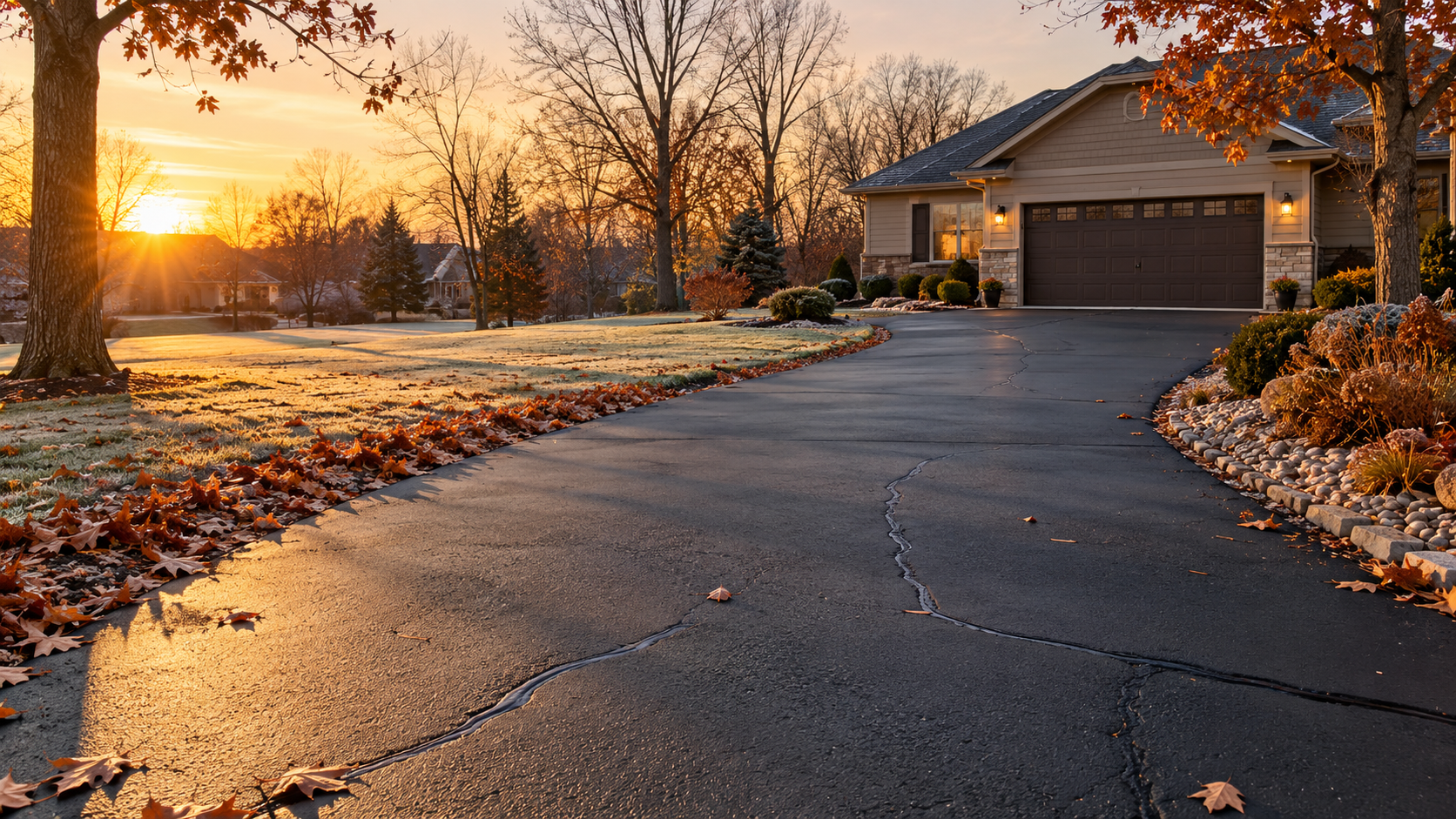
Why Do You Need to Prepare Asphalt for Winter in Missouri?
Missouri winters are rough on pavement for one specific reason: water. Springfield does not get one long deep freeze like the upper Midwest. We get a repeating cycle of thaw and refreeze, often many dozens of times across a single winter, as daytime temperatures climb above freezing and overnight lows drop back below it. According to the National Weather Service Springfield office, our first freeze typically lands in mid to late October, which is exactly why this checklist is a fall job and not a December one.
Every time water sits in a crack or a low spot, freezes, and expands, it pries the asphalt apart a little more. Refreeze it fifty times over a winter and a hairline crack becomes a gaping one, and a small depression becomes a pothole. Winterizing is really just the work of getting water out of and off your pavement before that cycle starts. Do that, and you have beaten most of what the season can throw at your driveway or lot.
Step 1: Fill Every Crack Before the First Freeze
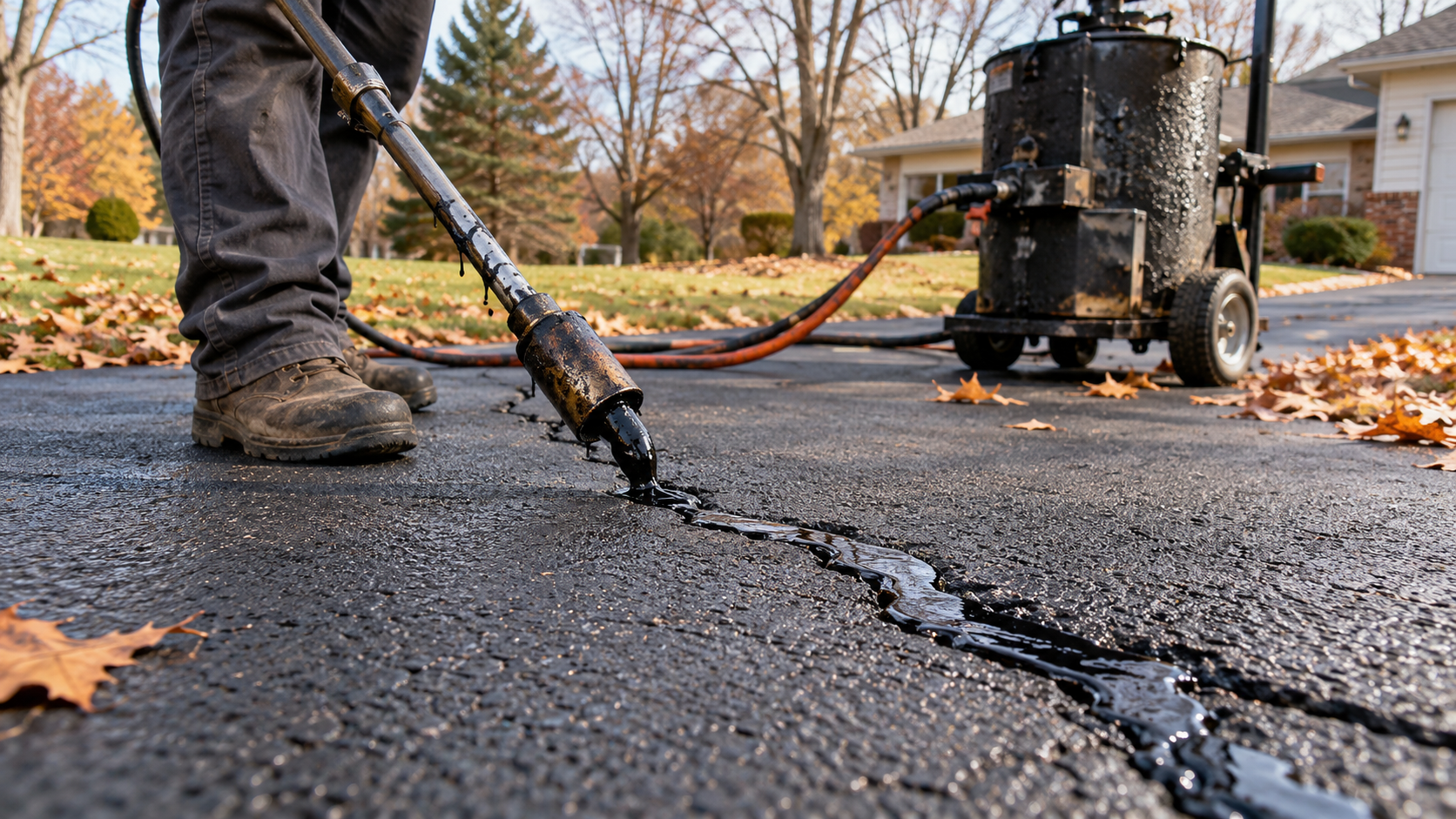
Crack filling is the single highest-value thing you can do this fall, and it is first on the list for a reason. An open crack is a direct funnel for water to reach the base underneath your asphalt. Once water gets into the base and freezes, it lifts and undermines the whole section, and no amount of sealcoat or patching next year will undo that damage cheaply.
We clean each crack out, dry it, and fill working cracks with a hot rubberized filler that stays flexible through the freeze-thaw swings rather than a brittle cold-pour product that cracks right back open in January. On our own estimates this is almost always the cheapest line item and the one that prevents the most expensive future repair. If your driveway or lot has visible cracks wider than a credit card, get them sealed before the cold, which is the core of our crack filling and repair service this time of year.
Step 2: Patch Potholes and Failed Areas Now
If you already have potholes or alligatored sections going into winter, they will not wait politely until spring. A pothole is an open wound that collects water, freezes, and spreads outward and downward with every cycle. We have watched a fist-sized hole in October become a wheel-swallowing crater by February on lots that got left alone.
Proper asphalt winter maintenance means a real patch, not a shovel of cold mix thrown in and tamped with a boot. We saw-cut the failed area to clean edges, remove the broken material, address the base if it has gone soft, and compact new hot mix flush with the surrounding surface. A proper patch holds through the freeze. A throw-and-roll patch pops out with the first thaw, and then you are paying twice. When failures are widespread we walk the whole surface during our asphalt repair and patching visit and prioritize what has to be fixed before the freeze versus what can safely wait for spring paving weather.
Step 3: Clear Drainage So Water Has Somewhere to Go
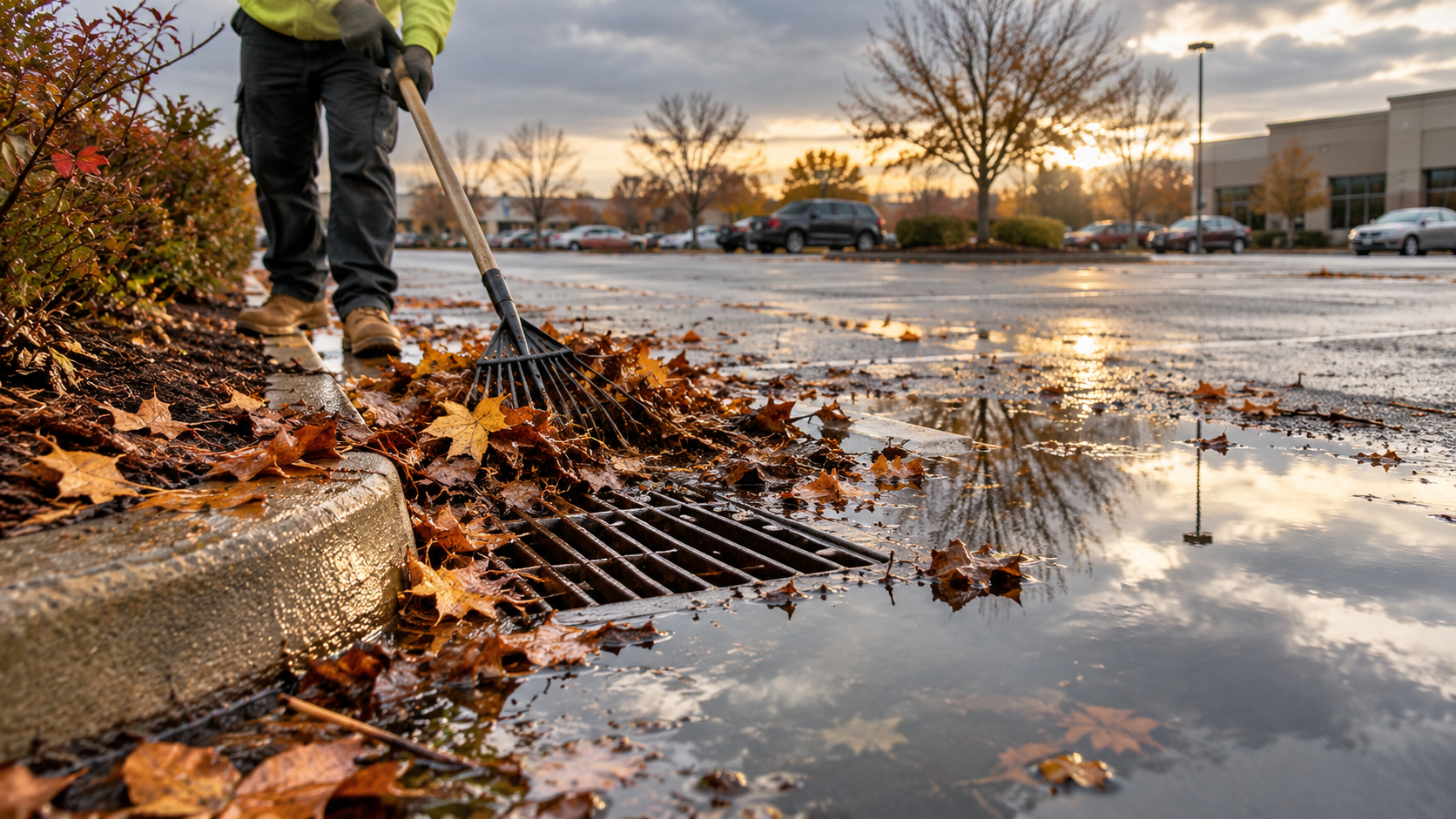
You can seal every crack and still lose pavement to a drainage problem. Standing water is the enemy of winter asphalt, so part of preparing your driveway for freeze-thaw is making sure water sheds off the surface instead of pooling. Walk your pavement after the next rain and note where puddles sit for more than an hour. Those birdbaths will freeze into slick, pavement-damaging ice sheets all winter.
- Clear leaves and debris from edges, drains, and channels so meltwater can actually run off instead of backing up onto the asphalt.
- Check low spots and edges where water collects; persistent ponding usually signals a grading or sub-base issue worth addressing.
- Look at the pavement edges where lawn and driveway meet, since water running under an unsupported edge undermines it fast in freeze-thaw.
If you have a chronic low spot that never drains, note it for a grading fix rather than fighting ice there all winter. It is cheaper to correct the slope once than to patch the same freeze damage every spring.

Step 4: Should You Sealcoat Before Winter?
This is where we give honest advice rather than an automatic yes. Sealcoat is a protective layer that blocks water and UV, and a fresh coat going into winter does help, but only if it can cure properly first. Sealer needs daytime temperatures reliably in the 50s and above with warm overnight lows to cure, and once Springfield slides into consistently cold nights the window closes. Applying sealer too late in the season gives you a coat that never fully cures and peels by spring, which is worse than no coat at all.
So our rule is simple. If we still have a stretch of warm days in the forecast and the pavement is sound, sealcoating now is a smart move and the cracks should be filled first anyway. If it is already late and cold, skip the sealcoat this year, focus your fall budget on crack filling and patching, which can be done in cooler weather, and put sealcoating at the top of the spring list. We would rather tell you to wait than sell you a coat that fails.
Step 5: Prep for Snow and Plow Season
The last piece of plow-damage prevention happens before the first snow. Plow blades and metal shovels gouge asphalt, especially newer surfaces and raised edges. A few habits save a lot of repair:
- Mark the pavement edges, drain covers, and any raised features with stakes so a plow operator can see them under snow.
- Ask plow crews to leave a thin snow layer rather than scraping metal directly on the asphalt, and to use plastic shoes on the blade where possible.
- Use a plastic snow shovel instead of a metal one on driveways, and avoid chipping at ice with sharp tools.
- Skip the rock salt on asphalt where you can; it is less damaging than on concrete but still accelerates surface wear. Sand gives traction without the chemistry.
Here is the whole checklist in one place:
| Task | Why it matters | Deadline |
|---|---|---|
| Fill all cracks | Stops water reaching the base | Before first hard freeze |
| Patch potholes and failures | Prevents freeze-thaw spread | Before first hard freeze |
| Clear drainage and debris | Eliminates standing water and ice | Before first snow |
| Sealcoat (if warm enough) | Blocks water and UV; needs cure temps | Only while days stay in the 50s+ |
| Prep for plows | Prevents gouging and edge damage | Before first snow |
Frequently Asked Questions
When is it too late to prepare asphalt for winter in Springfield?
Crack filling and hot-mix patching can be done in cool weather and are worth doing right up until the ground freezes. Sealcoating is the exception; once daytime highs stop reaching the 50s and nights turn cold, it will not cure, so push sealing to spring and focus the fall on crack filling and patching.
Is sealcoating necessary before winter?
It helps but it is not always the right call. If the weather still allows a proper cure and your cracks are filled, a fall sealcoat adds protection. If it is already cold, skip it this year rather than applying a coat that will peel, and prioritize crack filling and patching instead.
What happens if I leave cracks unfilled over winter?
Water enters the crack, freezes, and expands dozens of times over a Springfield winter, widening the crack and undermining the base beneath. What was a cheap fall crack-fill becomes spring patching or section replacement. It is the most common avoidable damage we see.
Does rock salt damage an asphalt driveway?
Salt is less harmful to asphalt than to concrete, but it still accelerates surface wear and can worsen existing cracks by speeding freeze-thaw cycling. Sand is a safer traction option, and keeping water out of the pavement in the first place matters more than the de-icer you choose.
How soon before the freeze should I schedule this work?
Call as early in October as you can. Our late-season repair calendar fills fast once the first freeze warning hits, and temperature-sensitive work has a hard cutoff. The earlier you book, the more options you have before the window closes.
Get a Free Written Estimate
Beat the first freeze. We will walk your driveway or lot, fill the cracks, patch the failures, and tell you honestly whether sealcoating still makes sense this year. Call (417) 319-2693 or request your free written estimate today.
Asphalt Pavers LLC, 434 S Belcrest Ave, Springfield, MO 65802 • (417) 319-2693 • Mon-Sat 8:00 AM-5:00 PM • Find us on Google
Reviewed by the owner – October 16, 2026