

Curb and gutter repair is one of those jobs homeowners and property managers keep putting off because a chipped curb looks purely cosmetic, when in reality it is the first link in a chain that can quietly wreck the pavement sitting right behind it. We get called out to driveways and commercial lots all the time where the real complaint is alligator cracking or a sunken edge, and when we trace the problem back to its source it started with a broken curb that let water go where it never should have. This post walks through why that edge matters so much, how the damage spreads, and what an honest fix actually involves.
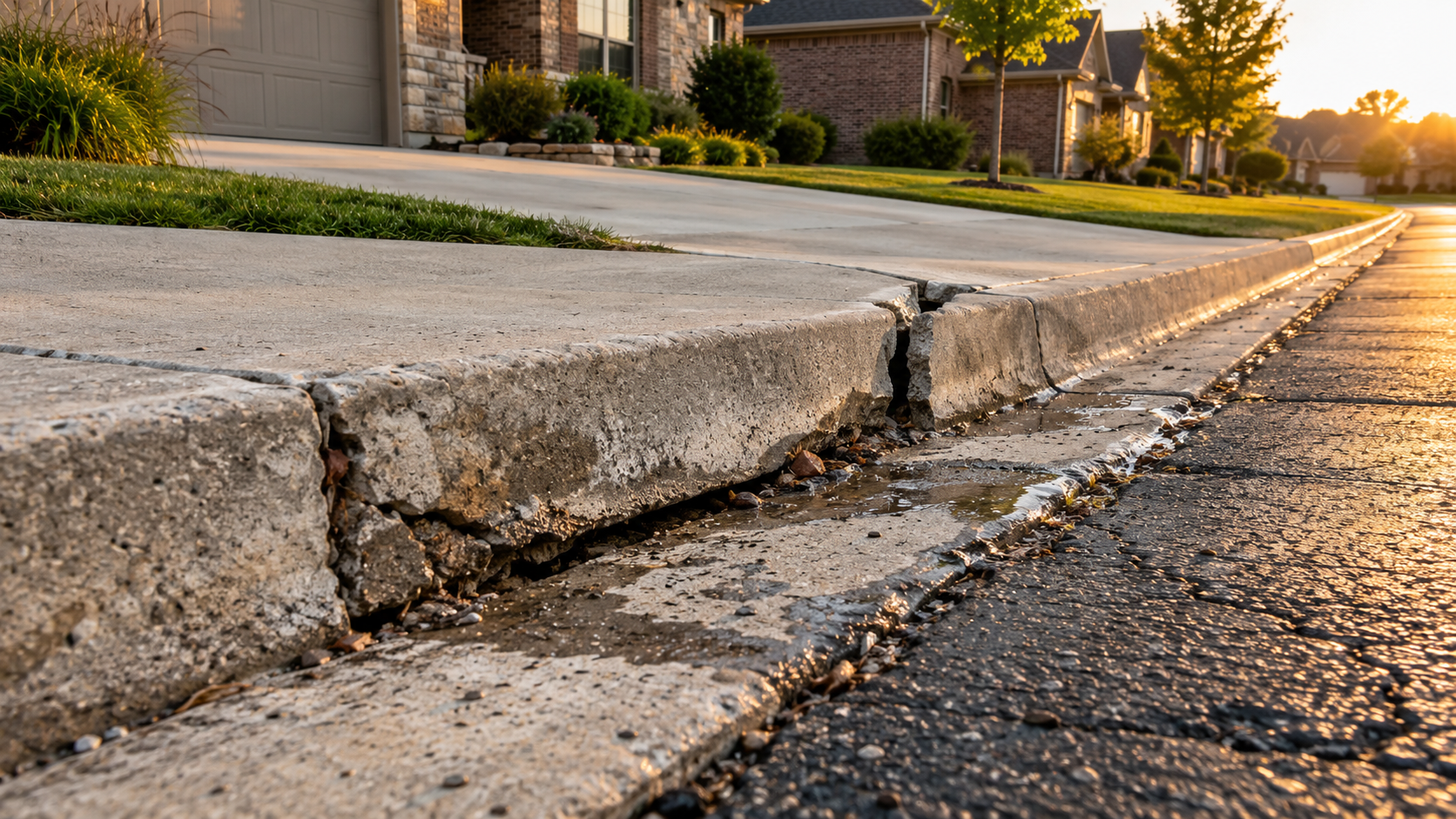
Why does curb and gutter repair matter more than it looks?
Curb and gutter repair matters because the curb is not decoration. It is the part of the system that controls where water goes. A concrete curb and gutter channels runoff away from the pavement edge and carries it to a drain or ditch instead of letting it pool against the asphalt and soak into the base. When that channel is intact, the edge of your driveway or lot stays dry and supported. When it is broken, cracked through, or separated from the pavement, water stops flowing where it should and starts finding the weakest path instead, which is almost always down into the gravel base under your asphalt.
That is the whole reason we treat a cracked curb as a drainage problem and not a looks problem. The curb is doing structural and hydraulic work every time it rains, and a small failure there changes the behavior of water across a much larger area than the crack itself.
How does a broken curb damage the pavement behind it?
This is the chain reaction we see over and over, and it is worth understanding because every stage makes the next one worse. It almost never stays a curb problem.
- The curb cracks or separates. Freeze-thaw movement, a delivery truck tire, settling soil, or an old cold joint lets a section break or pull away from the pavement.
- Water changes course. Instead of running down the gutter line, runoff slips through the gap and ponds at the pavement edge.
- The base gets saturated. Water works its way under the asphalt and into the gravel base, washing out fines and leaving voids.
- The pavement loses support. Asphalt is only as strong as what is under it. Over an unsupported, saturated base it starts to flex under traffic.
- Alligator cracking shows up. That flexing produces the interconnected cracks that look like reptile skin, usually right along the edge first, then spreading inward.
By the time someone calls about the alligator cracking, the curb has often been broken for a year or more. The surface damage is the symptom. Universities and transportation agencies that study pavement performance consistently point to water in the base as the number one enemy of asphalt life, which is exactly why resources from the Federal Highway Administration and programs like University of Missouri Extension emphasize keeping water off and out of the pavement edge. Fix the water path and you protect everything behind it.
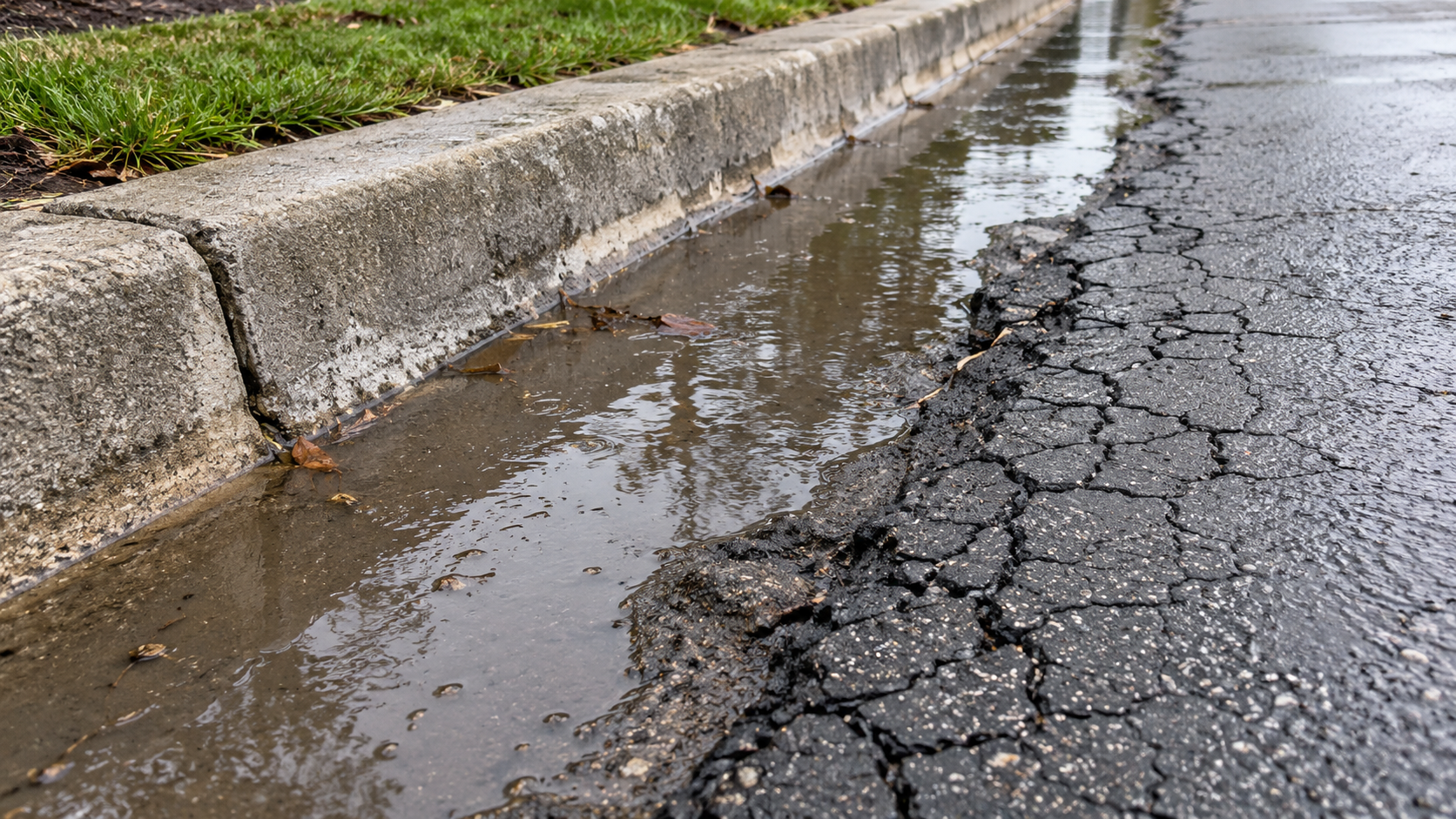
What are the warning signs your curb and gutter need attention?
You do not need to be a paving contractor to spot trouble early. The signs are visible from the ground on a dry day, and catching them early is the difference between a short curb repair and a much larger pavement job later. Here is what we tell people to look for.
| What you see | What it usually means | What it leads to if ignored |
|---|---|---|
| Cracked or crumbling curb section | Concrete is failing or has taken an impact | Water entry at the edge, base washout |
| Gap between curb and pavement | Separation at the joint | Runoff draining straight into the base |
| Standing water along the gutter line | Flow is blocked or the slope has shifted | Saturated base, edge softening |
| Sunken or dipping pavement edge | Base has already eroded or settled | Edge cracking, then alligator cracking |
| Alligator cracking near the curb | Loss of base support under the asphalt | Full-depth failure and patching or replacement |
If you catch it at the first two rows, you are looking at straightforward concrete work. If you wait until the last two rows, the repair now includes the pavement and sometimes the base underneath it. On our estimates we always point out which stage a property is in, because it changes the honest scope of work a lot.
What does a proper curb and gutter fix look like?
A real fix addresses the cause, not just the broken concrete. When we handle curb and gutter repair, we start by figuring out why the curb failed in the first place, because pouring new concrete over a drainage or base problem just buys you a repeat failure in a couple of seasons.
- Remove the failed section. We saw-cut clean edges and take out the broken curb and gutter back to sound concrete so the new work bonds to something solid.
- Check and correct the base and slope. If the base washed out or the gutter lost its fall toward the drain, we fix the grade before any concrete goes back. This is often where grading and leveling work comes in.
- Form and pour to the right profile. New concrete curb and gutter is formed to match the existing line and height and poured with proper reinforcement so it carries load and sheds water.
- Repair the pavement edge if needed. Where the asphalt has already cracked or sunk, we tie the curb work together with edge patching so the whole transition is sound.
Whether the right answer is a spot curb repair or a longer curb and gutter replacement depends on how far the damage runs and how healthy the surrounding concrete is. We would rather replace eight feet correctly than patch two feet and watch it fail again.
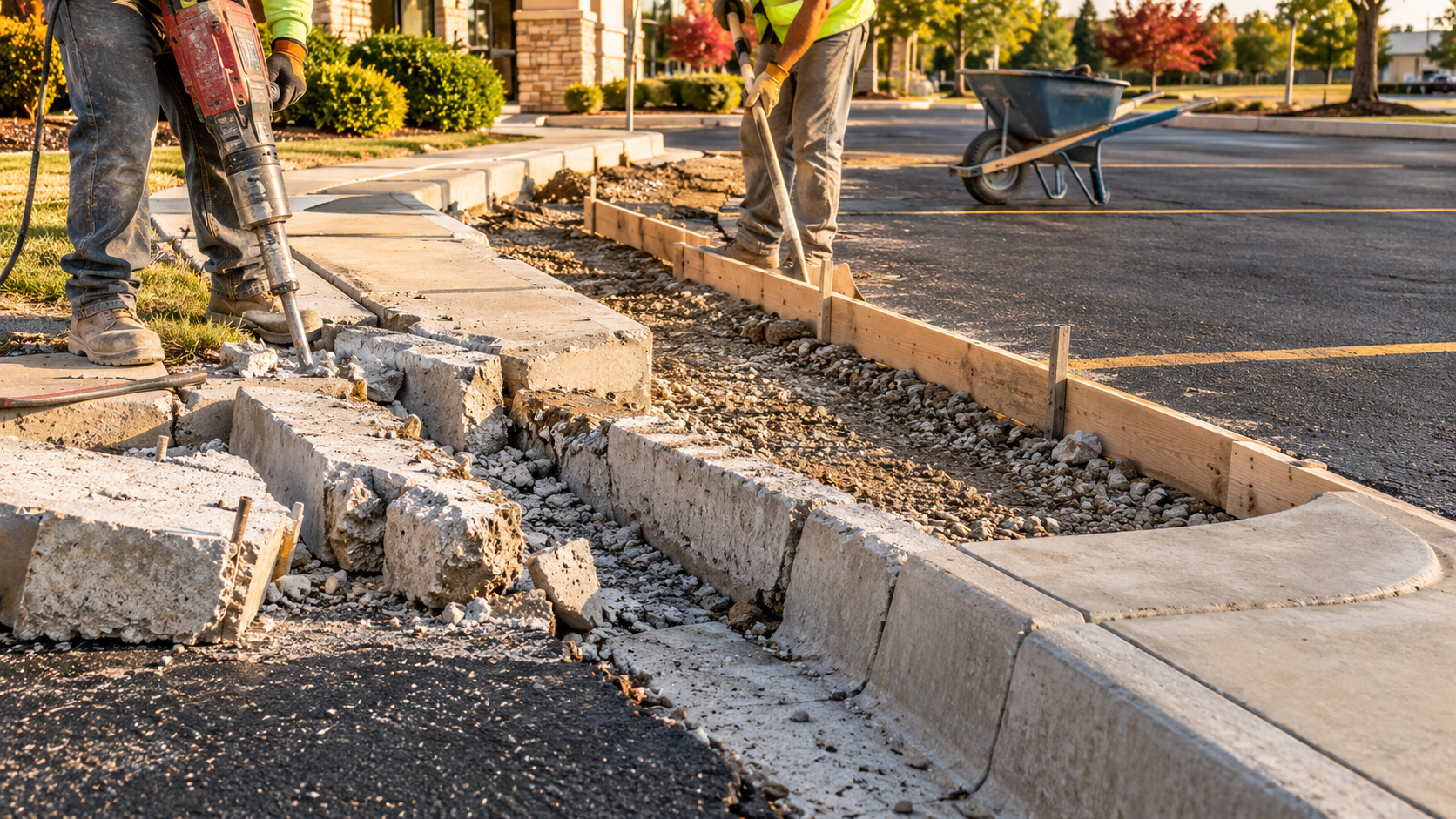
Can you fix the curb without redoing the whole pavement?
Often, yes, and that is exactly why we push people to deal with a broken curb early. If the curb is the only thing that has failed and the base and pavement behind it are still sound, we can replace the damaged curb and gutter section, restore the drainage path, and stop the chain reaction before it ever reaches the asphalt. That is the cheapest and smartest point to act. The job gets bigger, and more expensive, only once water has already been working on the base for a while. The curb is the inexpensive part. The pavement it protects is not.

Frequently Asked Questions
Is a cracked curb really worth repairing right away?
Yes, if the crack goes through the curb or there is a gap opening between the curb and the pavement. At that point the curb is letting water into the base, and every rain makes the hidden damage worse. A small curb repair now is far cheaper than the pavement work that follows base erosion. If it is just a surface chip that is not letting water through, it is less urgent, but it is still worth having looked at.
What causes curb and gutter to break in the first place?
In our area the usual culprits are freeze-thaw cycles working on small cracks, heavy vehicle tires riding up over the curb, soil settling or clay movement under the concrete, and age at old cold joints. Poor original drainage accelerates all of it. That is why we look at the cause during repair instead of just replacing the concrete and hoping.
How do I know if the damage has already reached my pavement?
Look at the asphalt within a foot or two of the curb. Edge cracking, a visible dip or sag, or interconnected alligator cracking near the gutter line all point to a base that has lost support. If you see those, the repair needs to include the pavement and possibly the base, not just the curb.
Should I repair or replace the curb and gutter?
It depends on how much of the run has failed and the condition of the concrete around it. An isolated broken section with sound concrete on either side is a good candidate for a spot repair. When the damage is spread out, the slope is wrong over a long stretch, or the concrete is crumbling in multiple places, a curb and gutter replacement of that run is the more durable call. We will tell you honestly which one your situation needs.
Do you handle both the concrete and the pavement repair?
We do, and that is the advantage of using one crew for it. We can replace the curb and gutter, correct the base and grade, and patch or repave the affected pavement edge as one coordinated job, so the drainage path and the surface are fixed together instead of in disconnected visits.
Get a Free Written Estimate
Noticed a cracked curb, standing water along the gutter, or cracking at your pavement edge? We will come look, trace the problem back to its source, and put honest numbers in writing for curb and gutter repair, drainage correction, and any pavement work it actually needs. Catch it early and keep the repair small.
Asphalt Pavers LLC, 434 S Belcrest Ave, Springfield, MO 65802
(417) 319-2693 · Mon-Sat 8:00 AM-5:00 PM
View us on Google Maps
Reviewed by the owner – October 7, 2026