

Site preparation for construction is the stage that quietly decides whether everything built after it stands straight, drains right, and lasts, yet it is the part of a project most owners never see finished. By the time the foundation is poured or the first load of asphalt shows up, the work that actually mattered is already buried under the pad. On our excavating jobs around Springfield we walk a lot from raw brush to a build-ready pad, and the sequence almost never changes: clear it, strip it, cut and fill to grade, build and compact the base, and control the water the whole way through. Get that order right and the rest of the build goes smoothly. Skip a step and you pay for it later in cracked slabs, settling pavement, and standing water.

What does site preparation for construction actually involve?
Site preparation for construction is the full process of turning a piece of raw or previously used land into a stable, level, well drained pad that a structure or pavement can be built on. It is not one task, it is a chain of them, and each one depends on the one before it being done correctly. On a typical Springfield lot the chain looks like this:
- Site clearing: removing brush, trees, stumps, old slabs, and debris down to workable ground.
- Stripping topsoil: pulling off the organic layer that will rot and settle if you build on it.
- Excavation: cutting down high spots and digging out soft or unsuitable soil.
- Grading and fill: moving material to shape the pad to the right elevation and slope.
- Compaction: rolling the subgrade and any imported base so it will not settle later.
- Drainage and erosion control: directing water away from the pad and keeping sediment on site during the work.
Every builder we work with cares about the finished floor and the finished parking lot. Our job is everything underneath that, and a good excavation services crew is what makes the visible work possible.
Why does site clearing come first and why does it matter?
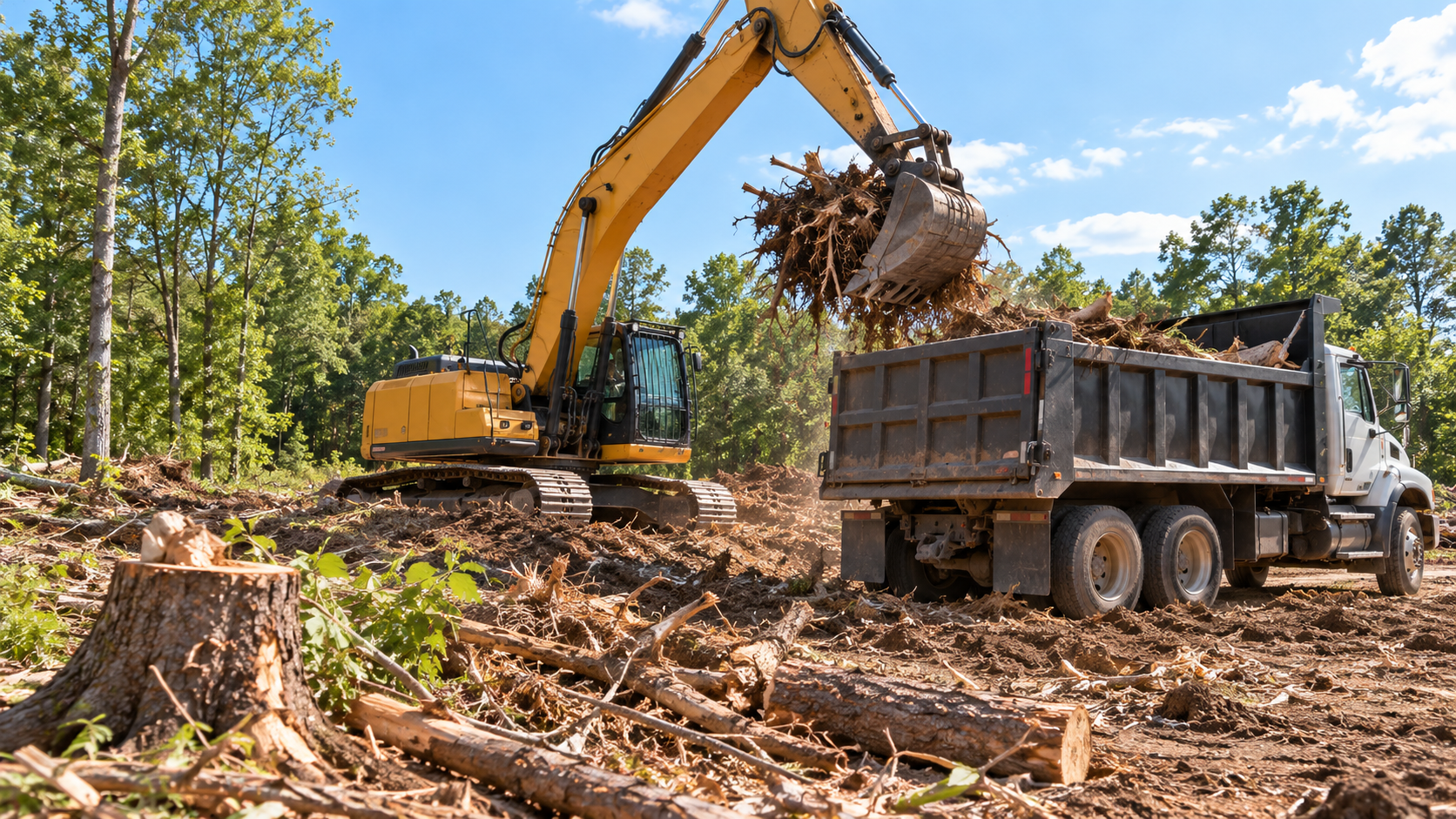
You cannot grade or excavate ground you cannot reach, so clearing is always the opening move. On an overgrown or wooded Springfield lot this means dropping trees, grinding or pulling stumps, hauling off brush, and removing any old foundations, fence lines, or buried debris from a previous use. The temptation on a tight budget is to clear only the footprint and leave the rest, but that usually backfires. Roots and buried organic material keep breaking down for years, and when they do, the ground above them settles.
Stump removal is the part people underestimate. A ground-down stump left in place is still a pocket of wood that will rot into a void. Where a structure or pavement is going, we pull stumps and root balls out completely and backfill with compactable material. Proper site clearing also sets up the next phase by giving the equipment room to work and a clean surface to start cutting from.
How do excavation and grading build a stable pad?
Once the lot is clear, the real shaping begins, and this is the heart of site preparation for construction. The first step is stripping topsoil. That dark, organic surface layer is great for a lawn and terrible under a building, because it holds water, compresses, and decomposes. We strip it, stockpile it for later landscaping, and expose the firmer subsoil underneath.
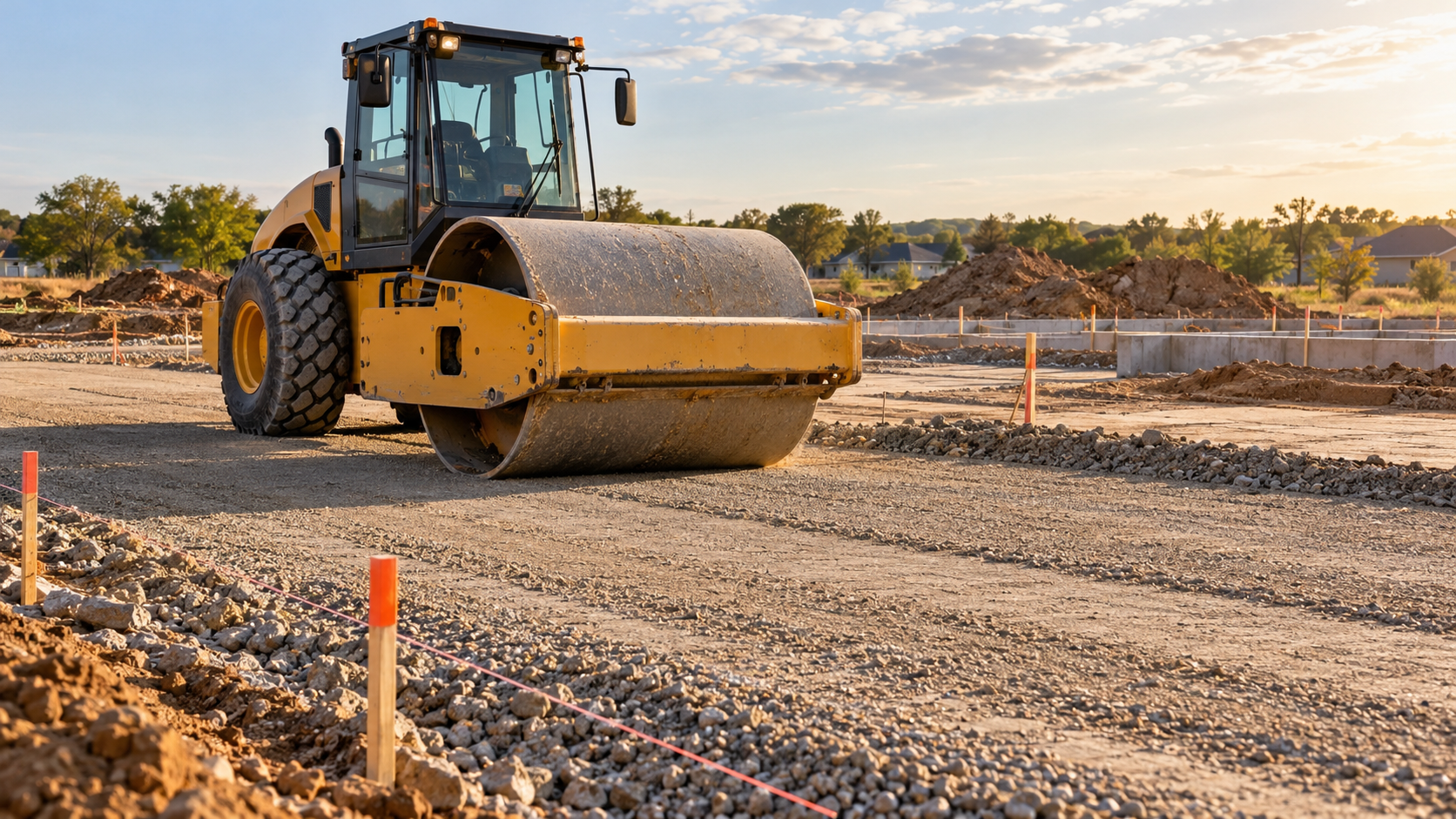
From there it is a balance of cut and fill. High areas get cut down, low areas get filled, and the goal is to reach the design elevation while moving as little material off site as possible. The soil you place as fill has to be the right kind of material and it has to go down in controlled layers, called lifts, with each lift compacted before the next one is added. Dumping three feet of loose fill and rolling the top does nothing for the two feet underneath, which is exactly how pads settle unevenly and crack what sits on them.
Our Springfield-area clay makes the compaction step non-negotiable. Clay swells when wet and shrinks when dry, so a pad built on poorly compacted or wrong-moisture clay will move with the seasons. Careful grading and leveling with proper compaction and moisture control is what turns loose dirt into something a slab or a parking lot can trust. When the pad is eventually paved, that prepared base is what lets our asphalt paving crew build a surface that stays flat.
What slope and drainage does a build-ready pad need?
A level pad is not actually dead flat. Water has to go somewhere, and if you do not plan where, it will choose the worst possible path, usually toward the building or ponding in the middle of a lot. During grading we build in positive drainage, meaning the ground slopes away from the structure and toward swales, inlets, or the site edge where water can leave safely.
Here are the rough targets we grade to on site preparation for construction work, adjusted for each lot:
| Area | Typical slope | Why |
|---|---|---|
| Ground away from a foundation (first 10 ft) | About 5 percent (6 in over 10 ft) | Keeps water off the structure |
| General lawn and open grade | 2 to 3 percent minimum | Prevents ponding, allows runoff |
| Asphalt parking lot or driveway | 1 to 2 percent minimum | Sheds water without being steep |
| Drainage swales | 1 percent or more along the flow line | Moves water without eroding |
Drainage and erosion control also protect the work while it is happening. Bare, graded soil washes fast in a Missouri downpour, so we use silt fence, inlet protection, and stabilized entrances to keep sediment on the lot. Those controls are not just good practice, they are required on most sites under the EPA stormwater rules for construction activity, which you can read about through the EPA construction stormwater program.
What safety and code steps belong in site prep?
Site preparation for construction is also where most of the serious safety risk on a project lives, especially around excavation. Any time we open a trench or a deep cut, the walls can fail without warning, which is why cave-in protection, sloping, and competent-person inspections are standard on our crews. The federal rules here are not optional, and the requirements are laid out plainly in the OSHA trenching and excavation standards.
Before any dirt moves we also call in utility locates so existing gas, water, electric, and communication lines are marked. Hitting a line is dangerous and expensive, and in new-construction areas the locate picture changes week to week as services get installed. Grading to the surveyor’s stakes and elevations keeps the pad matched to the approved plans, which is what keeps the project through inspection without rework.
How long does site preparation take and what drives the cost?
There is no single answer, because a flat, already-cleared half-acre is a different animal from a wooded, sloping commercial lot with bad soil. That said, the things that move the timeline and the budget are consistent:
- How much clearing is needed: heavy tree cover and old structures add days and haul-off cost.
- Cut and fill volume: steep or uneven lots move more dirt, and importing or exporting material is a major line item.
- Soil conditions: wet clay, rock, or soft spots that have to be dug out and replaced slow everything down.
- Drainage complexity: swales, detention, and tie-ins to municipal systems add scope.
- Weather: you cannot compact saturated soil, so a rainy stretch can stall grading entirely.
The honest advice we give builders and owners is to budget real time and money for this phase instead of treating it as the thing to cut when the number comes in high. Site prep is the one stage where saving a little up front reliably costs a lot later.

Frequently Asked Questions
What is the first step in site preparation for construction?
Site clearing is the first step. You have to remove trees, stumps, brush, and any old structures or debris before you can strip topsoil, excavate, or grade. Clearing gives the equipment access and gives the crew a clean surface to start shaping the pad from.
Why do you strip topsoil instead of building on it?
Topsoil is full of organic material that holds water, compresses, and decomposes over time. Build a slab or pavement on it and the ground underneath will settle unevenly as that material breaks down. We strip it off, stockpile it for later landscaping, and build on the firmer subsoil below.
How important is compaction during grading?
It is one of the most important steps. Fill placed without proper compaction, in layers at the right moisture, will settle later and crack whatever is built on it. On our Springfield clay soils, controlled compaction is what keeps a pad from moving with the seasons.
Does a construction pad need to slope for drainage?
Yes. A build-ready pad is shaped with positive drainage so water moves away from the structure, usually around 5 percent slope for the first ten feet near a foundation and a gentler slope across open areas and pavement. Without that slope, water ponds or runs toward the building.
Do I need permits or erosion control for site work?
Most sites do. Earth-disturbing construction typically falls under EPA and local stormwater rules, which call for erosion and sediment controls like silt fence and stabilized entrances. We also handle utility locates and grade to the approved plans so the site passes inspection.
Get a Free Written Estimate
Planning a new build, an addition, or a new parking lot? Before anyone pours or paves, let us walk the lot and put the clearing, excavation, grading, and drainage work in writing. We will tell you honestly what the ground needs to become a solid, build-ready pad, with no guesswork and no padded scope.
Asphalt Pavers LLC, 434 S Belcrest Ave, Springfield, MO 65802
(417) 319-2693 · Mon-Sat 8:00 AM-5:00 PM
View us on Google Maps
Reviewed by the owner – October 12, 2026