

Driveway drainage problems are one of the most common complaints we get on service calls around Springfield, and they almost always start the same way: water that should be running off your pavement is sitting on it instead. Standing water on a driveway or parking lot is not just an eyesore. It is the single fastest way to destroy asphalt, because water that ponds finds every seam and edge, works its way into the base, and turns small cracks into potholes over one Missouri freeze-thaw winter. Below we walk through why water pools where it does, how we diagnose it on a real site visit, and the grading and drainage fixes that actually solve it instead of hiding it for a season.
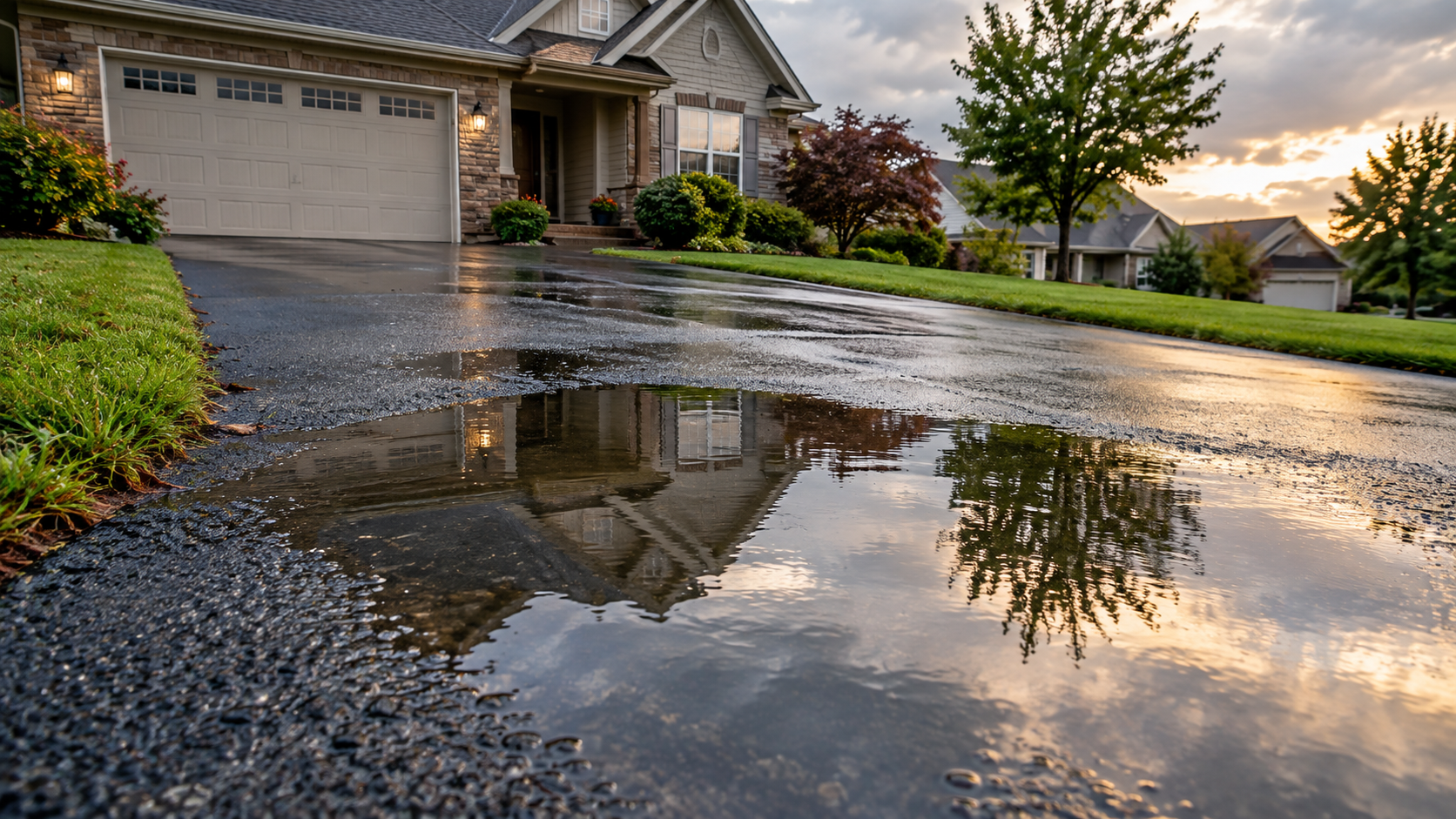
What causes driveway drainage problems in the first place?
When we pull up to a property with standing water on the driveway, we are looking for one of a handful of root causes. Ponding is a symptom, and treating the symptom without finding the cause is how people end up sealcoating over a low spot three times in a row. Here is what we usually find under Springfield driveways and lots that will not drain.
- Not enough slope. Pavement needs a minimum fall to shed water. When a driveway was poured or paved nearly flat, or the grade was never set correctly, water has nowhere to go.
- Settlement over clay soil. Our Ozarks clay swells when wet and shrinks when dry. That movement settles the base unevenly and creates low spots, or birdbaths, right in the middle of an otherwise sound driveway.
- Skipped or thin base work. If the aggregate base was never compacted properly, it consolidates under traffic and dishes downward, collecting water in the depression.
- Edge run-off from higher ground. Sometimes the driveway itself is fine, but water sheeting off a lawn, a hillside, or a neighbor’s lot runs across it and has no channel to follow.
- Failed or missing drainage structures. Clogged trench drains, crushed culverts, and downspouts dumping straight onto the pavement all send more water across the surface than it was designed to carry.
Why standing water on a driveway is more than cosmetic
People often ask us to just fill the low spot so the puddle goes away. We understand the instinct, but standing water on a driveway is actively shortening the life of the pavement, so it is worth understanding the damage chain before you decide how to fix it.
Water is the enemy of asphalt. Once it ponds, it seeps down through hairline cracks and pinholes into the stone base. In warm months that saturated base softens and loses strength, so traffic pushes the pavement down further and the birdbath grows. Then winter arrives, the trapped water freezes, expands, and levers the asphalt apart from the inside. That is the freeze-thaw cycle that turns a shallow puddle into alligator cracking and, eventually, a pothole. On concrete and around foundations, the same ponding leads to spalling and can push water toward your garage or basement. The University of Missouri Extension publishes practical guidance on site drainage and slope that lines up with what we see in the field: get the water moving, and most of these failures never start.
How do we diagnose driveway drainage problems on site?
Good driveway drainage solutions start with an honest diagnosis, not a guess. When our crew walks a property, we are mapping where water comes from, where it wants to go, and what is stopping it. Here is roughly how that visit runs.
- We look right after rain when we can. Nothing shows a drainage problem like a fresh puddle. If it is dry, we run a hose or read the stain lines and silt deposits that mark where water has been sitting.
- We shoot grades. We use a laser level to measure the actual fall across the surface so we know whether the slope meets the roughly 1 to 2 percent minimum that reliably sheds water, or whether it is flat or even reversed.
- We check the edges and surroundings. Downspouts, adjacent grades, curb lines, and landscaping all feed the pavement. A lot of asphalt driveway pooling water is really a landscaping or gutter problem in disguise.
- We probe the base where it has settled. A soft, spongy low spot tells us the base failed and needs to be rebuilt, not just topped off.
That diagnosis is what lets us match the fix to the cause. The same puddle can call for a simple regrade on one job and a full section rebuild with a drain on the next.
Grading and drainage fixes that actually work
Once we know why water is sitting, we can pick the right repair. Here is a straight comparison of the fixes we use most, what problem each one solves, and the honest trade-offs.
| Fix | Best for | What it involves |
|---|---|---|
| Surface regrade / overlay | Shallow birdbaths, slightly flat slope | Milling and repaving or a leveling overlay to restore fall |
| Base rebuild (dig-out) | Soft, settled low spots over failed base | Remove pavement, recompact or replace base, repave the section |
| Trench / channel drain | Water crossing at a garage or low entry | Cut a linear drain into the pavement piped to daylight |
| Catch basin + pipe | A true low point that cannot be graded out | Install a basin that collects and pipes water away |
| Regrade adjacent ground | Run-off from lawn, hill, or neighbor | Reshape soil, add a swale to route water around the pavement |
On most residential driveways, the real fix is correcting the grade so water sheds where it should, which is exactly the kind of grading and leveling work we specialize in. When the pavement is already cracking around the low spot, we combine the regrade with asphalt repair and patching so you are not paying to move a puddle around under damaged pavement. For commercial lots, a catch basin tied into the existing storm system is often the cleanest long-term answer.
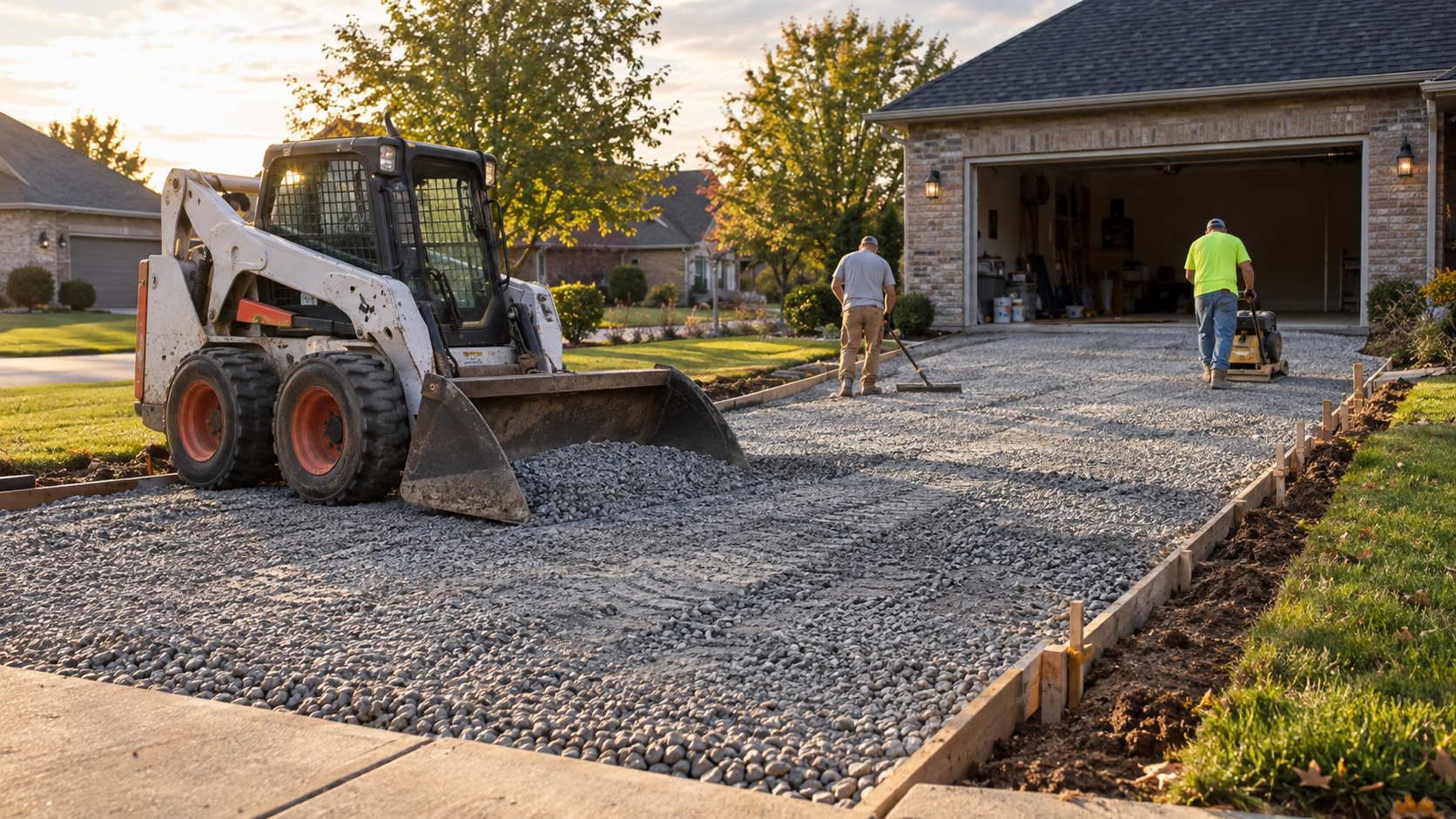
What proper slope looks like on Springfield driveways and lots
The number that matters most for driveway drainage is fall, or slope. As a working rule, we grade paved surfaces to shed at least 1 percent, and closer to 2 percent where we can get it, which is roughly a quarter inch of drop per foot. That is enough to move water without being steep enough to feel like a ramp. Parking lots get graded toward drains or the perimeter so water never has to travel across a whole field of stalls to escape. Around Springfield, where clay soil settles unevenly, we would rather build in a little extra fall up front than fight ponding later. Getting the slope right during install or repair is far cheaper than chasing birdbaths for years, and it is the difference between a driveway that dries in minutes and one that holds a puddle for days.
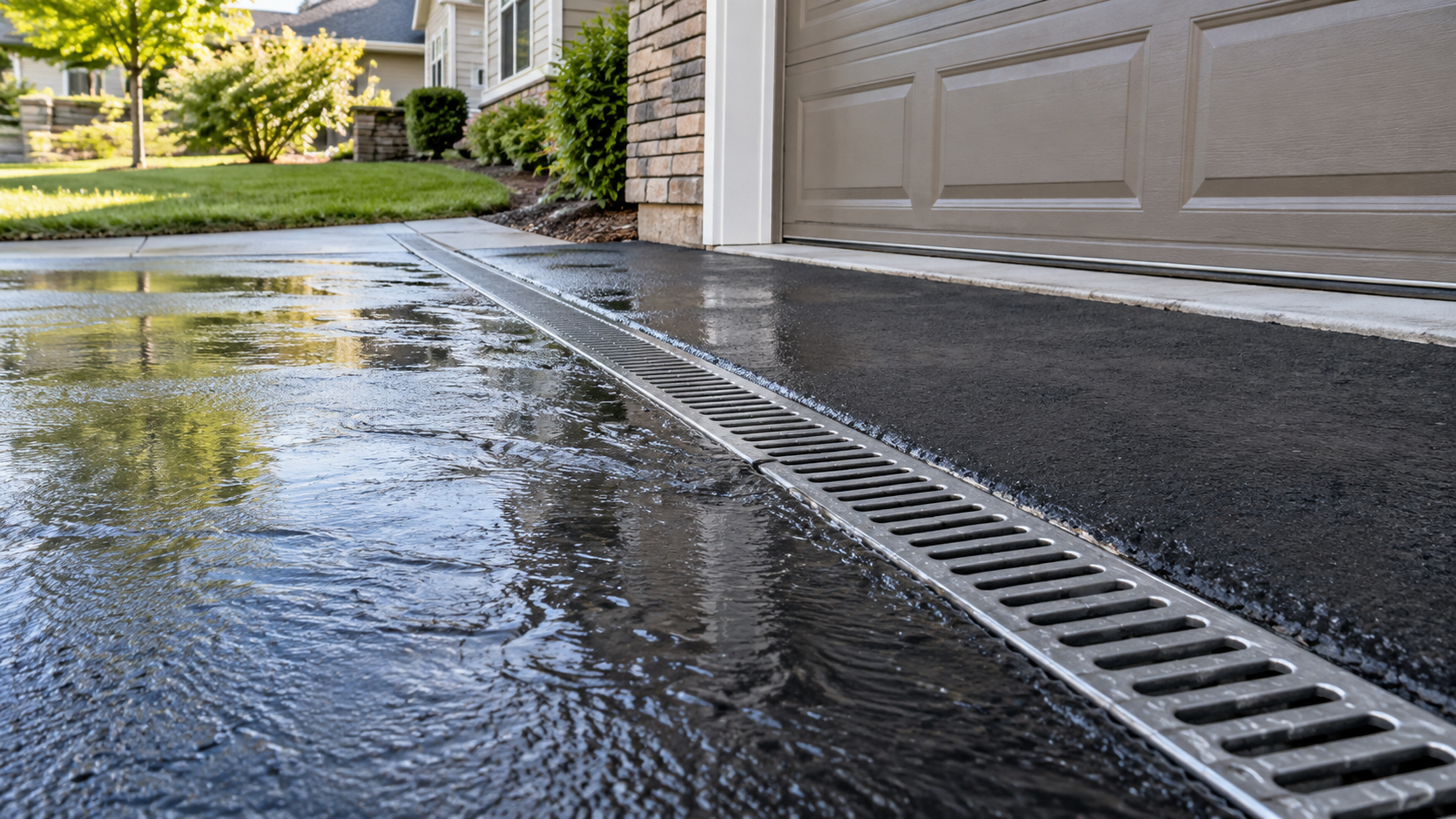
Can you fix parking lot drainage without repaving the whole lot?
Usually, yes. Parking lot drainage rarely means tearing out the entire surface. More often we target the failing areas: mill and repave the low sections, add or clean out catch basins, and re-establish fall toward the existing drains. If the whole lot is flat and ponding everywhere, a leveling overlay across the surface can reset the grade in one pass. We would rather spend your budget on the spots that are actually failing than sell you a full replacement you do not need. That honest scoping is a big part of why property managers keep calling us back.
Frequently Asked Questions
Why does water pool on my asphalt driveway?
Asphalt driveway pooling water almost always comes down to slope or settlement. Either the driveway was built too flat to shed water, or the base settled over our clay soil and created a low spot. Skipped base compaction and run-off from higher ground are the other common culprits. A quick grade check tells us which one you are dealing with.
Is standing water actually damaging my driveway?
Yes. Standing water seeps into the base, softens it, and then freezes and expands in winter, which cracks the pavement from the inside. Left alone, a birdbath turns into alligator cracking and eventually a pothole. Fixing the drainage is the cheapest repair you will ever make compared to what ponding costs over a few years.
Can a low spot in a driveway be fixed without full replacement?
Often, yes. If the base is still solid, we can mill and repave or add a leveling overlay to restore the slope. If the low spot is soft and settled, we dig out that section, rebuild the base, and repave just that area. Full replacement is only necessary when the whole surface has failed.
How much slope does a driveway need to drain properly?
We aim for at least 1 percent fall, and closer to 2 percent where the site allows, which is about a quarter inch of drop per foot. That is enough to move water off the surface quickly without feeling steep. Parking lots are graded toward drains or the perimeter so water never has to cross the whole lot.
Do you install drains, or just regrade?
Both. When grading alone will not solve it, such as a true low point or water crossing at a garage entry, we install trench drains, channel drains, or catch basins piped to daylight or the storm system. On many jobs we combine a regrade with a drain for a fix that holds up.
Get a Free Written Estimate
Tired of a puddle that will not go away? We will shoot the grades, find where the water is coming from, and hand you an honest written plan to fix the drainage before it costs you a repaved driveway.
Asphalt Pavers LLC, 434 S Belcrest Ave, Springfield, MO 65802
(417) 319-2693 · Mon-Sat 8:00 AM-5:00 PM
View us on Google Maps
Reviewed by the owner – September 18, 2026