

A written parking lot maintenance schedule is the difference between a lot that still looks sharp in ten years and one that gets torn out and repaved in six. We pave, seal, and stripe commercial lots across Springfield every season, and the pattern is always the same: the owners who plan maintenance around the calendar spend a little every year and almost never face a big surprise, while the ones who wait until the potholes show up pay for the neglect all at once. This guide lays out the year-round plan we actually recommend to facilities managers, month by month, so you can budget for it, hand it to your crew, and stop reacting to problems after they have already cost you.
Why does a commercial lot need a maintenance schedule at all?
Asphalt is a petroleum product, and from the day it cures it is fighting three enemies: sunlight, water, and traffic. Ultraviolet light dries out the binder that holds the surface together, water works into every crack and freezes, and the weight of trucks and cars flexes the pavement thousands of times a day. None of that damage announces itself early. By the time a lot looks bad, the cheap fixes are already off the table. The whole point of commercial parking lot maintenance is to stay ahead of that curve with small, timed interventions instead of one expensive rescue. The Asphalt Institute makes the same case in its pavement guidance: preventive maintenance applied on schedule extends service life far more cost effectively than reconstruction after failure.
There is a money argument here too. Sealcoating and crack filling cost a small fraction of resurfacing per square foot. Every year you push the base into failure by skipping upkeep, you trade a low four-figure maintenance bill for a five or six-figure replacement. A written maintenance schedule is really just a plan to keep spending on the cheap side of that equation.
What does a year-round parking lot maintenance schedule look like?
Here is the season-by-season maintenance schedule we hand facilities managers in the Springfield area. The exact dates flex with the weather each year, but the sequence holds. Sweeping and inspection happen continuously; the bigger jobs cluster into the windows where our climate cooperates.
| Season | Core tasks | Why this timing |
|---|---|---|
| Spring (Mar-May) | Full inspection, sweep, crack fill, pothole patching, catch-basin check | Find and repair winter damage before it spreads; dry, mild days are ideal for crack sealing |
| Summer (Jun-Aug) | Sealcoating, larger repairs, drainage corrections | Warm surface and long cure windows let sealer and hot mix bond properly |
| Fall (Sep-Nov) | Final crack fill, restriping, ADA and fire-lane refresh, debris removal | Seal every gap before the first freeze; fresh paint reads clearly through winter |
| Winter (Dec-Feb) | Snow and ice management, gentle plowing, drainage monitoring | Protect the surface from plow gouging and standing meltwater; plan next year’s budget |
Notice that no single season carries the whole load. That spread is deliberate. It keeps each visit affordable, and it means the pavement is never more than a few months from its next check. Below we walk through what each window actually involves.
What spring maintenance sets up the whole year
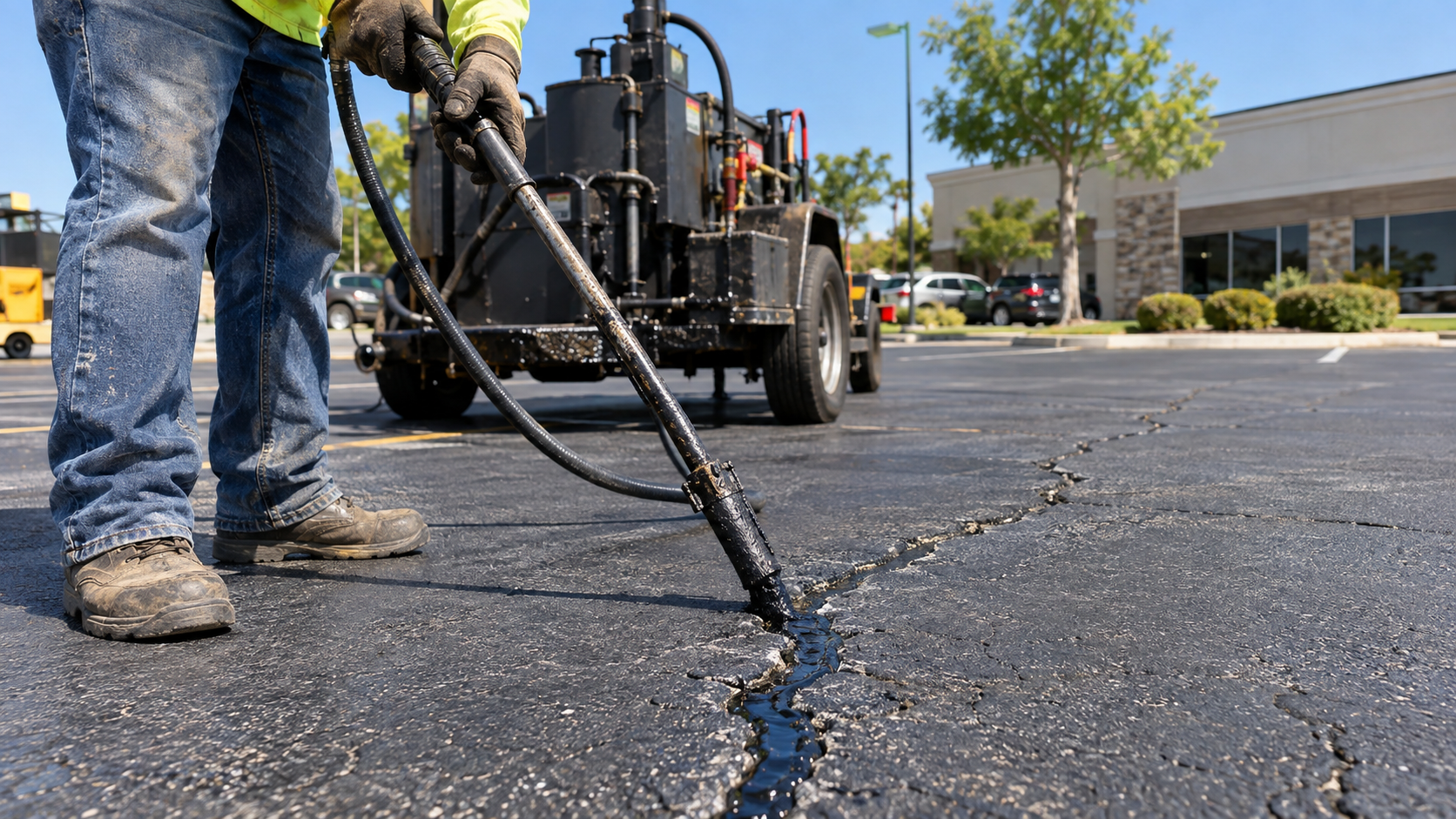
Spring is inspection season. After a Missouri winter of freeze-thaw cycles and plow traffic, we walk the entire lot and mark what moved. This is the most important stop on the whole maintenance calendar because everything downstream depends on catching problems now, while they are still small. Our spring checklist looks like this:
- Deep clean and sweep. Sand, salt residue, and winter debris come off first so we can actually see the surface and so nothing gets sealed into the pavement later.
- Crack sealing. Every crack wider than a pencil gets routed and filled with hot rubberized crack filler. Cracks are how water reaches the base, and water in the base is how lots fail.
- Pothole and patch repair. Winter turns small cracks into potholes fast. We saw-cut and patch the failures now rather than throwing cold mix at them and watching it pop out by June. Our asphalt repair and patching crew handles these full-depth so they hold.
- Drainage check. We clear catch basins and note any birdbaths or low spots where water is pooling, because standing water is the fastest way to destroy asphalt from the top down.
Get spring right and the rest of the year is maintenance in the true sense. Skip it, and small defects compound all summer.
When should sealcoating happen in the schedule?
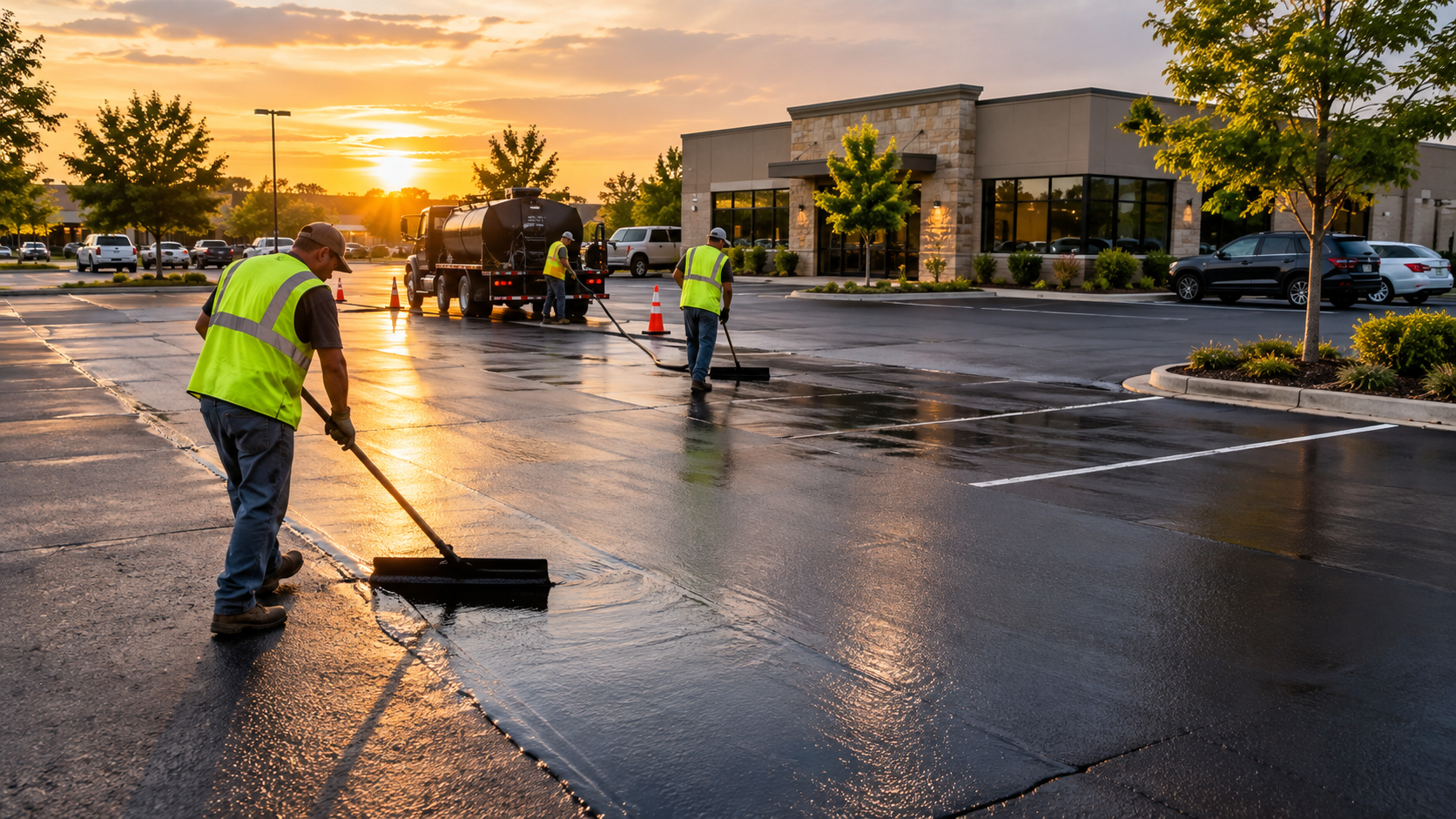
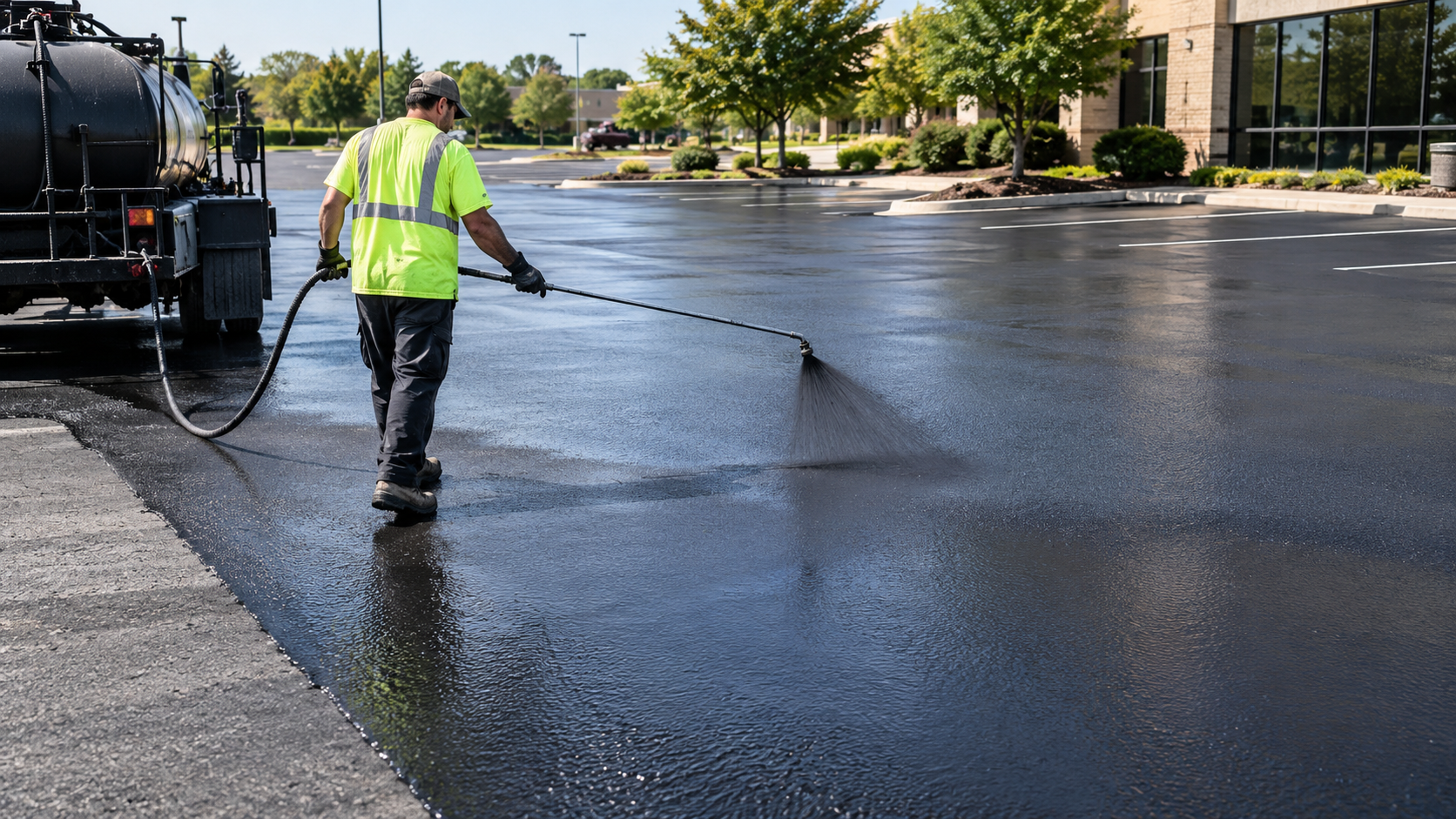
Sealcoating is the summer centerpiece of any asphalt maintenance plan, and timing matters more than people expect. Sealer needs warm pavement and a long dry cure window to bond and harden, which in Springfield means roughly late spring through early fall, with the deepest summer being the safest bet. We do not seal over unrepaired cracks, so sealcoating always follows the spring crack-fill work, never the other way around.
A commercial lot generally needs a fresh coat every two to three years, not every single year. Over-sealing wastes money and can build up a brittle film, while waiting too long lets UV and oxidation strip the surface bare. The right cadence depends on traffic volume and sun exposure, which is exactly the kind of judgment our commercial lot sealcoating team makes on a walk-through. A good seal coat restores that deep black finish, fills surface voids, and gives the whole lot a maintained, professional look that customers notice.
We also use summer for the heavier lifts that need warm weather: larger patch sections, milling and overlay of failed zones, and any grading fixes to correct drainage. Doing them in the warm months gives the new asphalt the cure time it needs before cold weather arrives.
Why is fall the deadline that facilities managers miss?
Fall is the hard cutoff on the parking lot maintenance schedule, and it is the season most owners underestimate. Everything you leave open going into winter gets worse over winter, guaranteed. Water sits in unfilled cracks, freezes, expands, and pries the pavement apart. So fall is about closing gaps and getting striping fresh before the weather turns. Our fall priorities:
- Final crack fill. One last pass to seal anything that opened over the summer. This single task prevents more winter damage than any other.
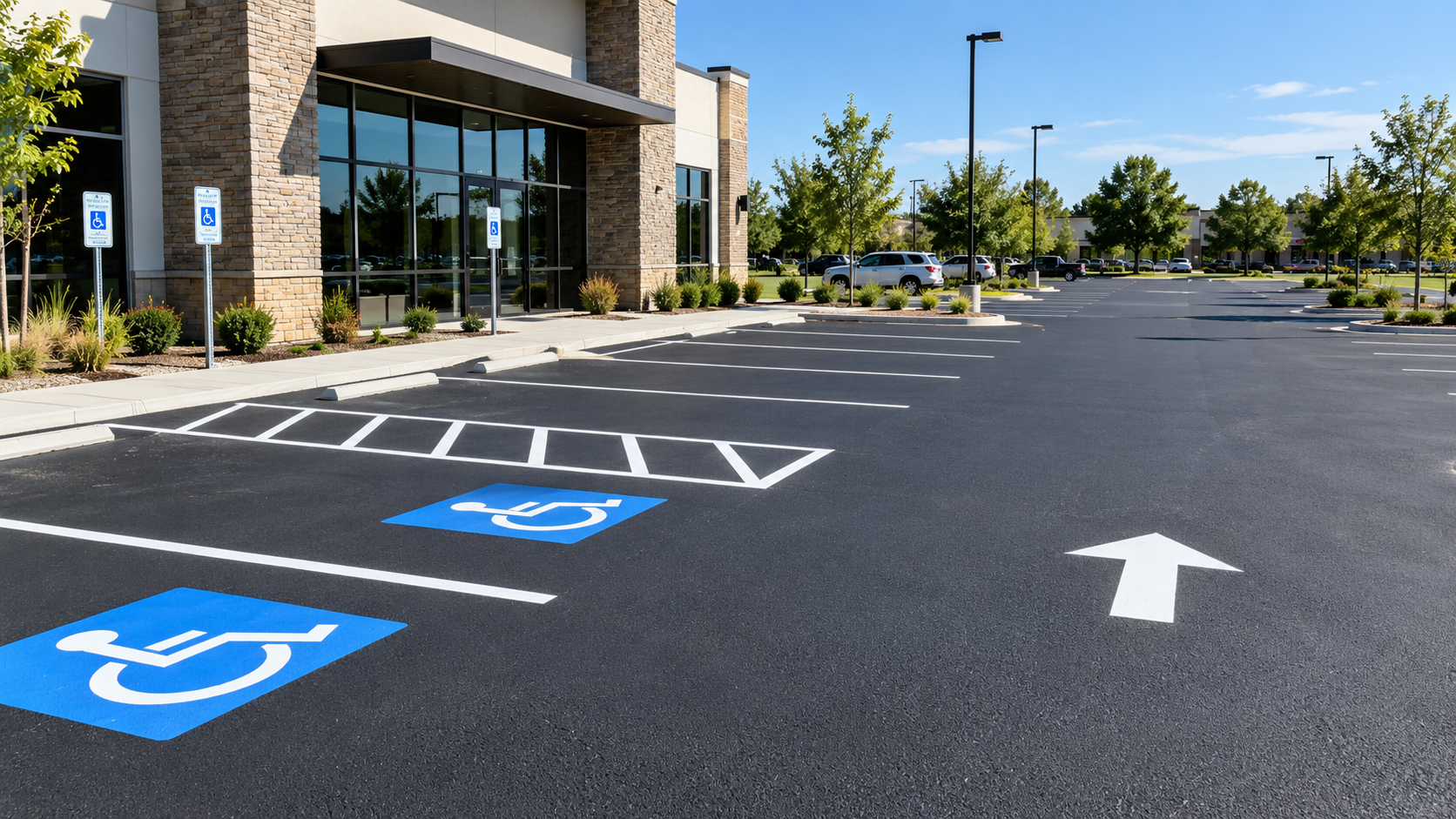
- Restriping. Faded stalls, arrows, and lettering get repainted while temperatures still allow paint to cure. Sharp lines going into the busy holiday shopping season also help your lot handle more cars cleanly. Our parking lot striping crew schedules this around your business hours.
- ADA and fire-lane refresh. Accessible stalls, access aisles, and fire lanes must stay clearly marked and compliant. Fall is the natural time to bring faded markings back to standard before an inspection or a snow season buries them.
- Debris and drainage clearing. Leaves clog catch basins fast in October. Clearing them keeps meltwater moving instead of pooling on the surface all winter.
What can you actually do during winter?
Winter is not a maintenance dead zone, even though the big asphalt work stops. The goal shifts to protecting the surface you spent all year maintaining. Smart snow and ice management is the core of it. We coach clients to have plow operators use rubber-edged or shoe-equipped blades and to keep the blade slightly off the surface so it does not gouge the asphalt or catch on seams. Pile snow where meltwater will drain off the lot, not back across it, because refreezing meltwater is a leading cause of new spring cracks.
Winter is also planning season. With the year’s damage fresh in mind, this is when we sit down with facilities managers to budget next year’s parking lot maintenance schedule, line up the spring inspection, and decide whether any zone is heading toward resurfacing so it can go into the capital plan early instead of becoming an emergency.
How do you turn this into a budget you can defend?
The reason a written parking lot maintenance schedule works is that it converts unpredictable emergencies into planned line items. Instead of a surprise repave request landing on your desk in July, you have a known rhythm: inspection and crack fill in spring, sealcoating every couple of years in summer, striping and final sealing in fall, and protection in winter. That predictability is what lets you defend the spend to ownership, because every dollar has a job and a date. Here is the short version of the preventive pavement maintenance logic:
- Sweeping and inspection: ongoing, low cost, catches everything early.
- Crack filling: yearly, cheap, stops water intrusion that destroys the base.
- Sealcoating: every two to three years, moderate cost, doubles surface life.
- Striping and ADA: yearly to biennial, keeps the lot safe, compliant, and sharp.
- Patching and repair: as needed, always cheaper the sooner it happens.
Follow that schedule and a properly built commercial lot can run twenty years or more before it needs full reconstruction. Ignore it and the same lot can be failing in half that time.
Frequently Asked Questions
How often should a commercial parking lot be sealcoated?
For most Springfield commercial lots, every two to three years is the sweet spot. High-traffic lots or those in full sun may lean toward the two-year end, while lightly used lots can stretch to three. Sealing every year is usually unnecessary and can build a brittle film, so we base the interval on an actual walk-through rather than a fixed rule.
What is the single most important task on a parking lot maintenance schedule?
Crack filling. It is inexpensive, but it stops water from reaching the base, and base failure is what forces expensive reconstruction. If a facilities manager could only fund one recurring task, we would tell them to seal every crack every year and let everything else follow from there.
Can parking lot maintenance be done without closing the business?
Yes. We schedule crack filling, striping, and sealcoating in sections, and we often work nights, early mornings, or weekends so most of your lot stays open. A little coordination up front keeps your customers parking while we work around them.
When is it too late to maintain and time to resurface instead?
When cracking becomes widespread alligator patterning, the surface is raveling loose across large areas, or potholes keep returning after patching, the base has usually failed and sealcoating will not save it. At that point milling and overlay or full replacement is the honest answer, and we will tell you when maintenance is no longer the smart spend.
Does a maintenance schedule really save money?
Consistently, yes. Sealcoating and crack filling cost a small fraction of resurfacing per square foot, and they push the surface’s life out by years. Every season of preventive pavement maintenance you complete delays the day you have to fund a full repave, which is by far the largest pavement expense a property owner ever faces.
Get a Free Written Estimate
Want a parking lot maintenance schedule built around your lot and your budget? We will inspect the pavement, map out the crack filling, sealcoating, and striping by season, and put honest numbers to each step in writing so you can plan the whole year at once.
Asphalt Pavers LLC, 434 S Belcrest Ave, Springfield, MO 65802
(417) 319-2693 · Mon-Sat 8:00 AM-5:00 PM
View us on Google Maps
Reviewed by the owner – September 23, 2026