

If you manage a commercial property, knowing how often to restripe parking lot markings is one of those maintenance calls that quietly affects safety, ADA compliance, and the first impression every customer forms before they even reach your door. On most Springfield lots we service, fresh striping lasts one to two years before it starts to fade, but the real answer depends on traffic, sun exposure, and whether the lot gets plowed all winter. Here is how we think about restriping timelines, the wear we actually see on local lots, and how we schedule the work so an open business never loses a parking day.
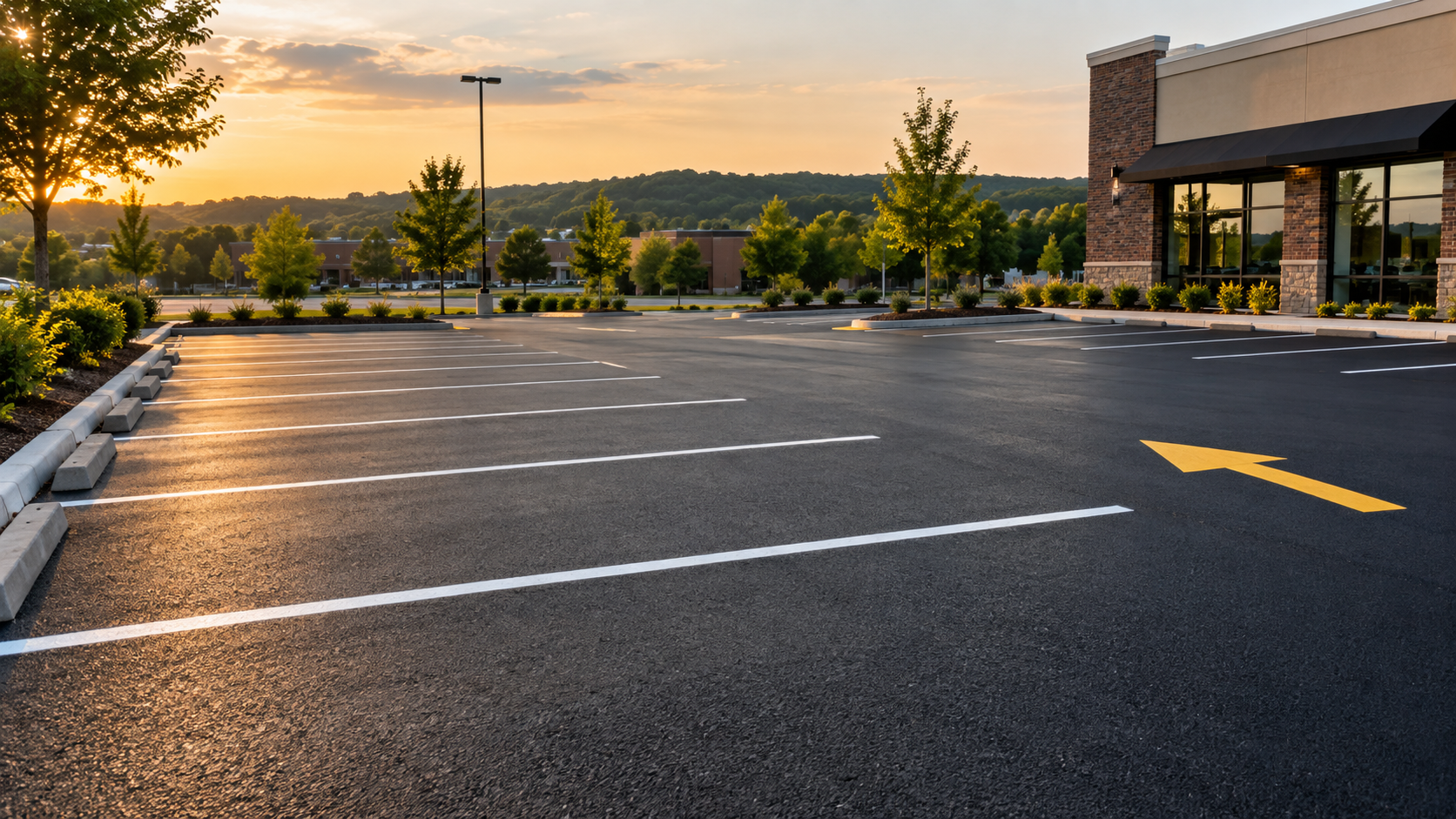
How Often to Restripe Parking Lot Lines in Springfield
The short answer we give property managers is every one to two years for a standard commercial lot, and closer to every year for high-traffic retail, medical, or restaurant lots. Paint fades on a predictable curve: it looks crisp for the first several months, still acceptable through the first year, and by the second winter the lines are usually worn enough that stalls, arrows, and crosswalks start losing definition. If your lot doubles as a snow-plow route, expect the faster end of that range, because a steel plow edge scrapes paint off far quicker than tires and sun alone.
Newly installed or freshly sealcoated asphalt is a slightly different case. The first striping on new pavement can wear a little faster because the surface is still tight and paint has less texture to grip, so we often plan the first parking lot restriping a bit sooner than the long-term cadence you settle into afterward.
What Wears Parking Lot Striping Down Faster
Not every lot ages at the same rate. When we walk a property to quote commercial parking lot striping, these are the factors that tell us whether a lot needs new lines every year or can comfortably stretch to two:
- Snow plows. This is the number one paint killer in Springfield. A plow blade rides directly on the line paint and shears it off, especially at stall ends and along drive lanes. Lots that get plowed hard every winter often need spring restriping.
- UV and sun exposure. Ultraviolet light breaks paint down and fades color, particularly yellow. South-facing rows and open lots with no shade lose contrast the fastest.
- Traffic volume. Every tire that turns across a line abrades it. A busy retail or fast-food lot simply racks up more wear cycles than a low-turnover office lot.
- Water pooling and drainage. Standing water sits on paint and accelerates breakdown, which is one more reason we look at grading when we assess a lot.
- Paint type and application. Thin, single-coat water-based paint on a dirty surface will not last. Proper prep and the right mil thickness are half the battle.
Durable pavement markings depend heavily on surface prep and coating thickness, a point echoed in the Federal Highway Administration guidance on pavement marking performance. We clean and, where needed, sealcoat before we stripe so the paint bonds to a clean surface instead of to dust and old flaking lines.
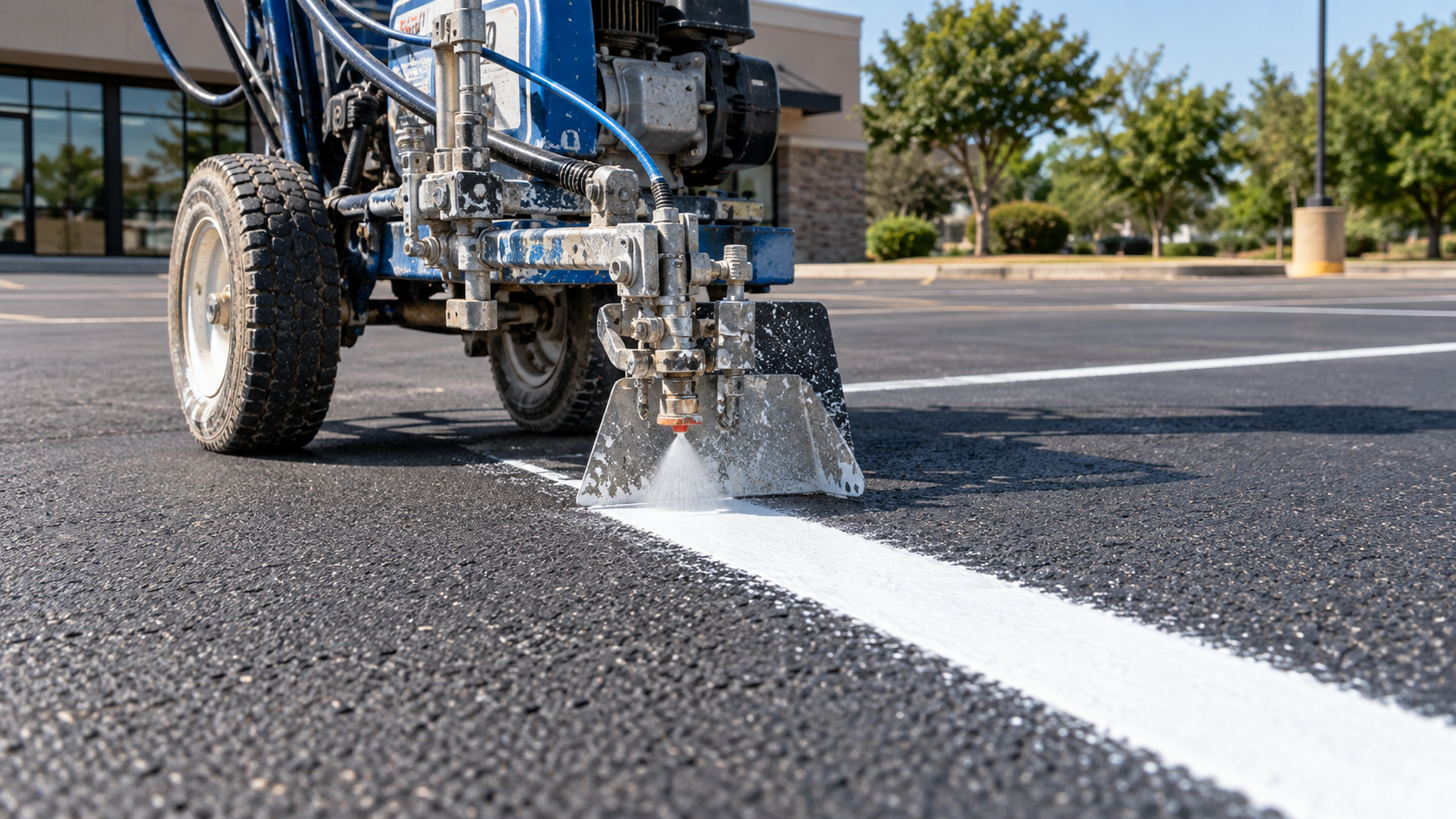
Signs It Is Time to Restripe Your Lot
You do not need a calendar to know a lot is overdue. On our estimate visits, these are the cues that tell us a property has waited too long between restriping cycles:
- Stall lines are faded enough that drivers park crooked or straddle two spaces.
- Directional arrows and “no parking” text are hard to read from a moving car.
- ADA accessible stalls, access aisles, or the wheelchair symbol have faded, which is a compliance problem, not just a cosmetic one.
- Fire lane markings and curb paint have gone from red to pink.
- A recent sealcoat has covered the old lines entirely and the lot needs a full relayout.
That fourth point matters more than most owners realize. Faded accessible parking is one of the first things an inspector or a visitor with a disability notices, and the U.S. Department of Justice keeps the current requirements posted at ADA.gov. If your accessible stalls, van space, or access aisle striping has worn, restriping is also a chance to confirm the layout still meets the standard. We cover that work in detail on our handicap parking space marking page.
Typical Restriping Cadence by Lot Type
| Lot Type | Traffic Level | Suggested Restripe Interval |
|---|---|---|
| Office / professional | Low, steady | Every 2 years |
| Retail / shopping center | High turnover | Every 1 year |
| Restaurant / fast food | Very high turnover | Every 9 to 12 months |
| Medical / clinic | High, ADA critical | Every 1 year |
| Church / event lot | Peak-day only | Every 2 to 3 years |
| Any plowed lot | Winter plow wear | Add a spring touch-up |
Restriping Around an Open Business: Night and Weekend Scheduling
The question we hear right after “how often” is “how do you do this without closing my lot?” For occupied properties we schedule striping after hours, overnight, or on the slowest day of the week, and we section the lot so part of it stays open while another part cures. Line paint dries to the touch quickly, but we still keep traffic off fresh lines for a window so tires do not track or smear them, which is why night and early-weekend work is usually the smoothest option for a business that cannot afford lost spaces.
For larger properties we phase the job: stripe the back rows and employee parking first, then rotate to the customer-facing front rows once the first section is set. Coordinating that around your hours is a normal part of how we quote commercial work, and it is one reason we ask about your busy days before we ever pick a date. You can see the full scope on our parking lot striping service page.
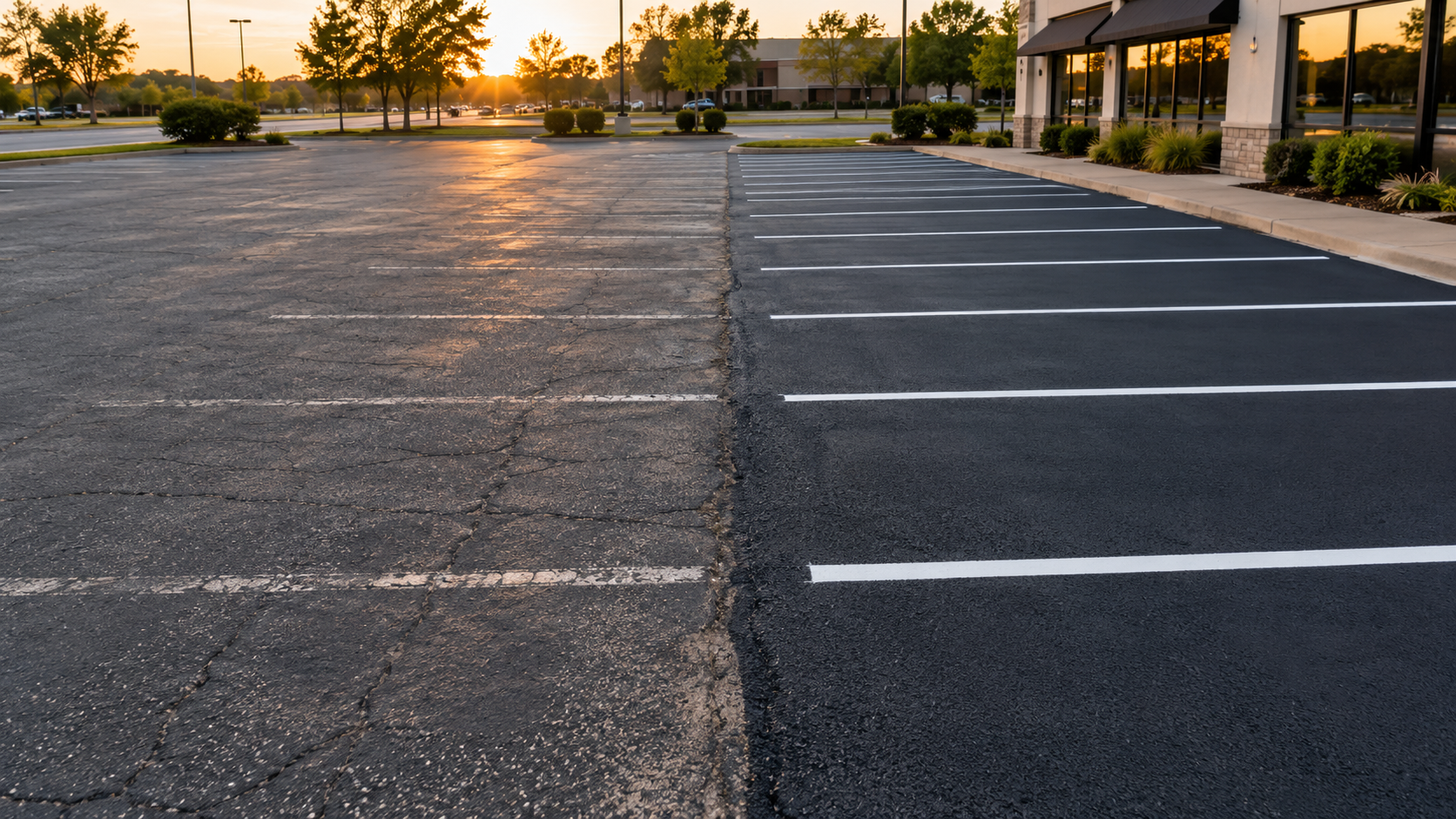
Restripe Alone, or Sealcoat and Restripe Together?
Restriping is the fast, lower-cost half of lot maintenance, and on a healthy surface it is all you need on the one-to-two-year cycle. But if the asphalt itself is graying, raveling, or overdue for protection, the smart move is to sealcoat first and restripe on top of the fresh surface. Sealcoat hides the old lines completely, so you get a clean black canvas and brand-new, high-contrast striping in one visit rather than painting over a tired surface you will have to redo sooner.
A practical rule we use: if the sealcoat is due within the next season anyway, wait and do both together so you are not paying to stripe a surface you are about to cover. If the pavement is in good shape and only the lines are worn, a standalone restripe is the economical choice. We walk owners through that call on our commercial lot sealcoating page, and we are happy to give an honest recommendation rather than upselling the bigger job.
Frequently Asked Questions
How often should a commercial parking lot be restriped?
Most Springfield commercial lots need restriping every one to two years. High-traffic retail, restaurant, and medical lots trend toward yearly, while low-traffic office and church lots can often stretch to two or three years. Plowed lots usually need a spring touch-up.
How long does parking lot paint actually last?
Under normal traffic, quality line paint stays crisp for the first several months and acceptable through about a year. Sun exposure, snow plowing, and heavy turnover all shorten that life, so real-world durability varies lot to lot.
Can you restripe my lot without closing it?
Yes. We schedule after hours, overnight, or on your slowest day, and we phase larger lots so part stays open while another section cures. Keeping traffic off fresh lines briefly is all it takes for a clean result.
Do I need to sealcoat before restriping?
Not always. If the pavement is sound and only the lines are worn, a standalone restripe is fine. If the surface is graying or the sealcoat is due soon, doing both together gives you a better, longer-lasting result for less total cost.
Are faded ADA parking markings a compliance risk?
Yes. Faded accessible stalls, access aisles, and the wheelchair symbol can put you out of compliance with the ADA standards published at ADA.gov. Restriping is a good time to confirm your accessible parking still meets current requirements.
How much does it cost to restripe a parking lot?
Cost depends on the number of stalls, the amount of ADA and directional markings, and whether the lot needs cleaning or sealcoating first. We give a free written estimate after measuring your lot so the number is based on your actual layout.
Get a Free Written Estimate
Ready to sharpen up your lot? We will measure your parking area, check your ADA layout, and put every line in writing before any work begins.
Asphalt Pavers LLC, 434 S Belcrest Ave, Springfield, MO 65802 · (417) 319-2693 · Mon-Sat 8:00 AM-5:00 PM · Find us on Google
Reviewed by the owner – 2026-09-09