

Learning how to choose a paving contractor is the single best thing you can do before you spend a dollar on a new driveway or parking lot in Springfield, because the difference between a good crew and a bad one does not show up for a year or two, long after the check has cleared. By then the flat, skipped base is already settling, the thin mat is already cracking, and the phone number on the flyer no longer works. We write estimates in this market every week, and we also get called out to fix the jobs that went wrong, so we see both sides. Below are the ten questions we would ask if we were hiring a paving contractor ourselves, plus the red flags that should end the conversation on the spot.
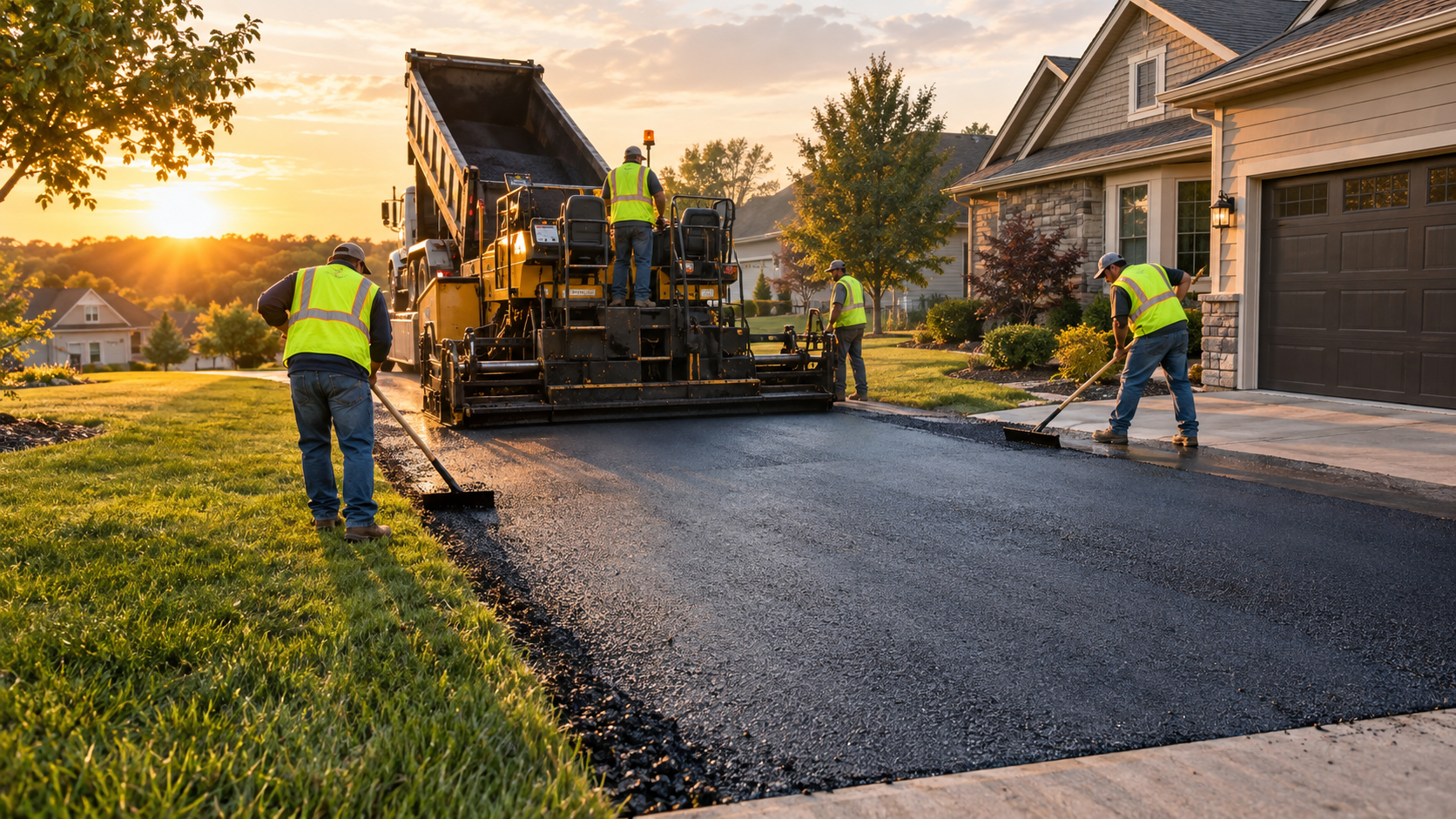
Why does choosing the right paving contractor matter so much?
Asphalt is one of the few purchases where you genuinely cannot judge the work by looking at it on the day it is finished. A fresh driveway laid over a weak, uncompacted base looks exactly like one built on a proper stone foundation. The difference is buried under the surface, and it only reveals itself when the pavement starts to alligator crack, hold water, or crumble at the edges a season or two later. That is why choosing an asphalt contractor is really about trust and process, not about who has the shiniest truck. The right questions pull that hidden process into the light before you commit.
How to choose a paving contractor: the 10 questions to ask
Here is the list we hand friends and family who ask how to choose a paving contractor. Work through it with anyone you are considering, and pay as much attention to how comfortably they answer as to the answers themselves.
- Are you licensed and insured, and can I see proof? A legitimate company carries general liability and workers compensation coverage and will email you a certificate without hesitation. If a worker is hurt on your property and the contractor is uninsured, that liability can land on you.
- Do you have a local address and phone number? A permanent Springfield presence means you can find them next year when you have a question. Out-of-town crews working out of a truck are gone the moment the job is done.
- Can you show me recent local jobs? Real references and addresses you can drive past beat a glossy brochure every time. We are happy to point people to work in their own part of town.
- What does your base preparation include? This is the most important question on the list. The answer should cover excavation, grading, a compacted aggregate base of a stated depth, and proper slope for drainage. Vague answers here are the biggest warning sign of all.
- How thick will the asphalt be, and is it in writing? Thickness should be specified in the estimate, not left to the day of the job. Cutting the mat thin is the easiest way for a lowball bid to make its money back.
- Do you provide a detailed written estimate? Everything that matters should be on paper: square footage, base depth, asphalt thickness, drainage, and total price. A number scrawled on the back of a card is not a contract.
- Who does the work, your crew or subcontractors? There is nothing wrong with subs, but you deserve to know who will actually be on your property and who stands behind the result.
- What warranty do you offer? Ask what is covered, for how long, and what voids it. A contractor confident in their base work will stand behind it in writing.
- What is your timeline and how does weather change it? Honest paving contractors will not promise to pave in the rain or in freezing temperatures just to hit a date. Flexibility here is a sign of experience, not disorganization.
- How and when do you expect payment? A reasonable deposit is normal. Demanding the full amount in cash up front is not.
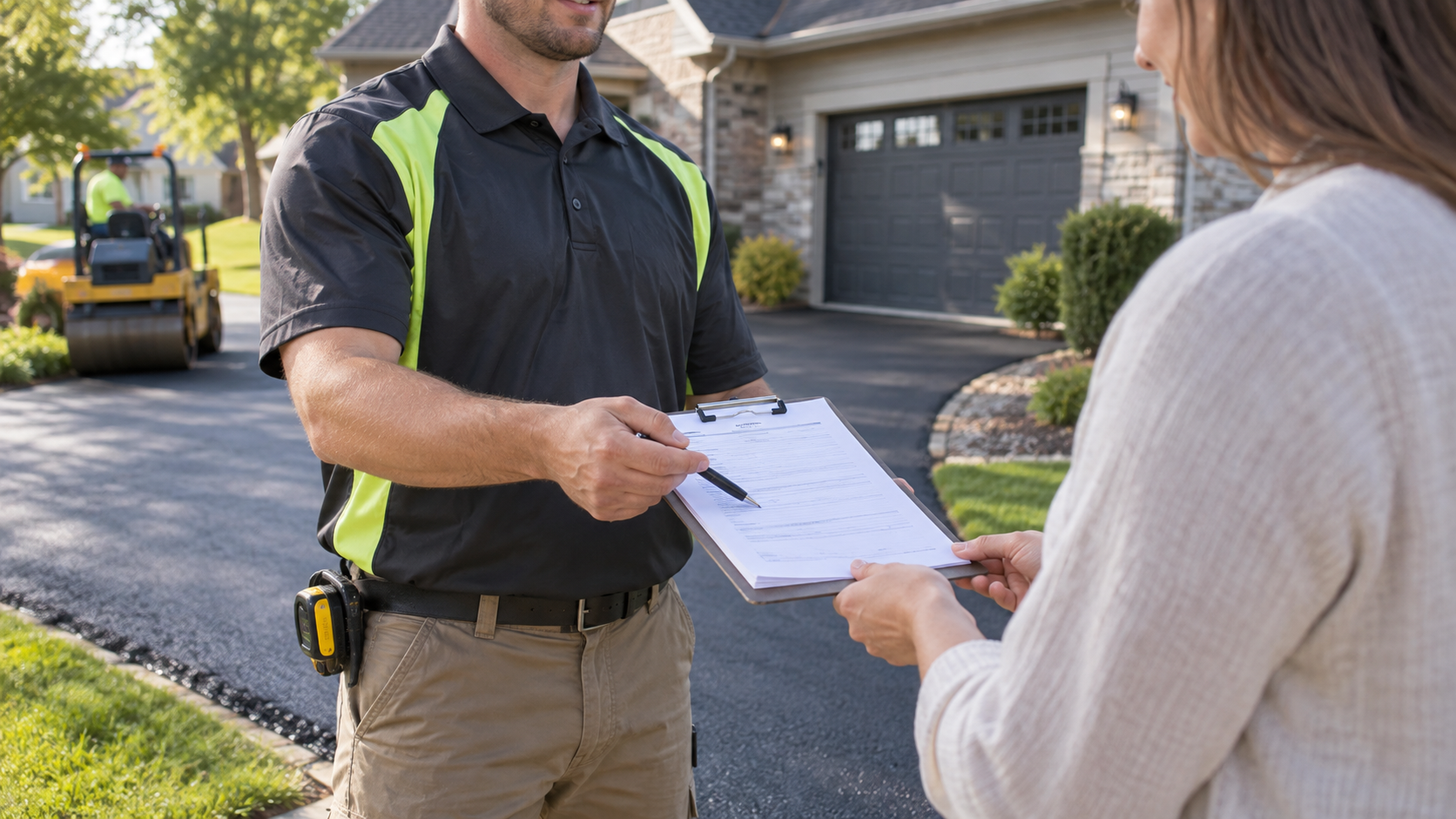
How can you spot the red flags before you sign?
Every summer, traveling paving crews sweep through Missouri with a familiar pitch: they have leftover asphalt from a job down the road and can give you a deal if you decide right now. This scam is common enough that the Missouri Attorney General warns homeowners about it directly. Knowing how to choose a paving contractor is as much about recognizing these warning signs as it is about asking good questions. Watch for the following.
- Door-to-door pressure and “leftover material” offers. Reputable companies schedule and order material for your specific job. Nobody has quality hot mix left over by accident.
- Cash-only, full payment demanded up front. This is how the crew that never comes back gets paid before you notice the problems.
- No written contract or a suspiciously vague one. If base depth and asphalt thickness are not on the page, they are not part of the deal.
- Prices far below every other bid. A number that undercuts everyone usually means corners will be cut where you cannot see them, in the base and the mat thickness.
- No verifiable local presence. No physical address, an out-of-state plate, and a phone that goes to voicemail forever are all signs the crew will be untraceable by the time trouble shows up.
- “Sign today or the price goes up.” High-pressure deadlines exist to stop you from getting a second opinion. A real contractor will let their estimate stand for a reasonable window.
If you want to verify a company before you commit, the Better Business Bureau and the Missouri Attorney General’s office are both worth a few minutes of your time to check complaint history and confirm a business is who they say they are.
What separates a written estimate from a real quote?
When we talk about a written estimate, we do not mean a total price with nothing behind it. A useful estimate lets you compare bids on the same terms instead of guessing. Here is what should appear on any paving contractor’s proposal, and why each line matters.
| Line item | What to look for | Why it matters |
|---|---|---|
| Square footage | The measured area being paved | Lets you compare price per square foot fairly |
| Base preparation | Excavation, grading, aggregate depth | The foundation that decides how long the pavement lasts |
| Asphalt thickness | Stated compacted depth of the mat | Thin mats crack early; this is where lowballers cut |
| Drainage and slope | How water will shed off the surface | Standing water is the fastest way to ruin asphalt |
| Payment terms | Deposit amount and final balance | Protects you from cash-up-front scams |
| Warranty | Coverage, length, and exclusions | Shows the contractor stands behind the work |
When you line up two or three estimates that all include these details, the right choice usually becomes obvious. A bid that is missing base depth or asphalt thickness is not cheaper, it is just hiding where it saved money. If you want to see how we scope a job, our paving services page walks through the process, and you can always request a free written estimate to compare against anyone else.
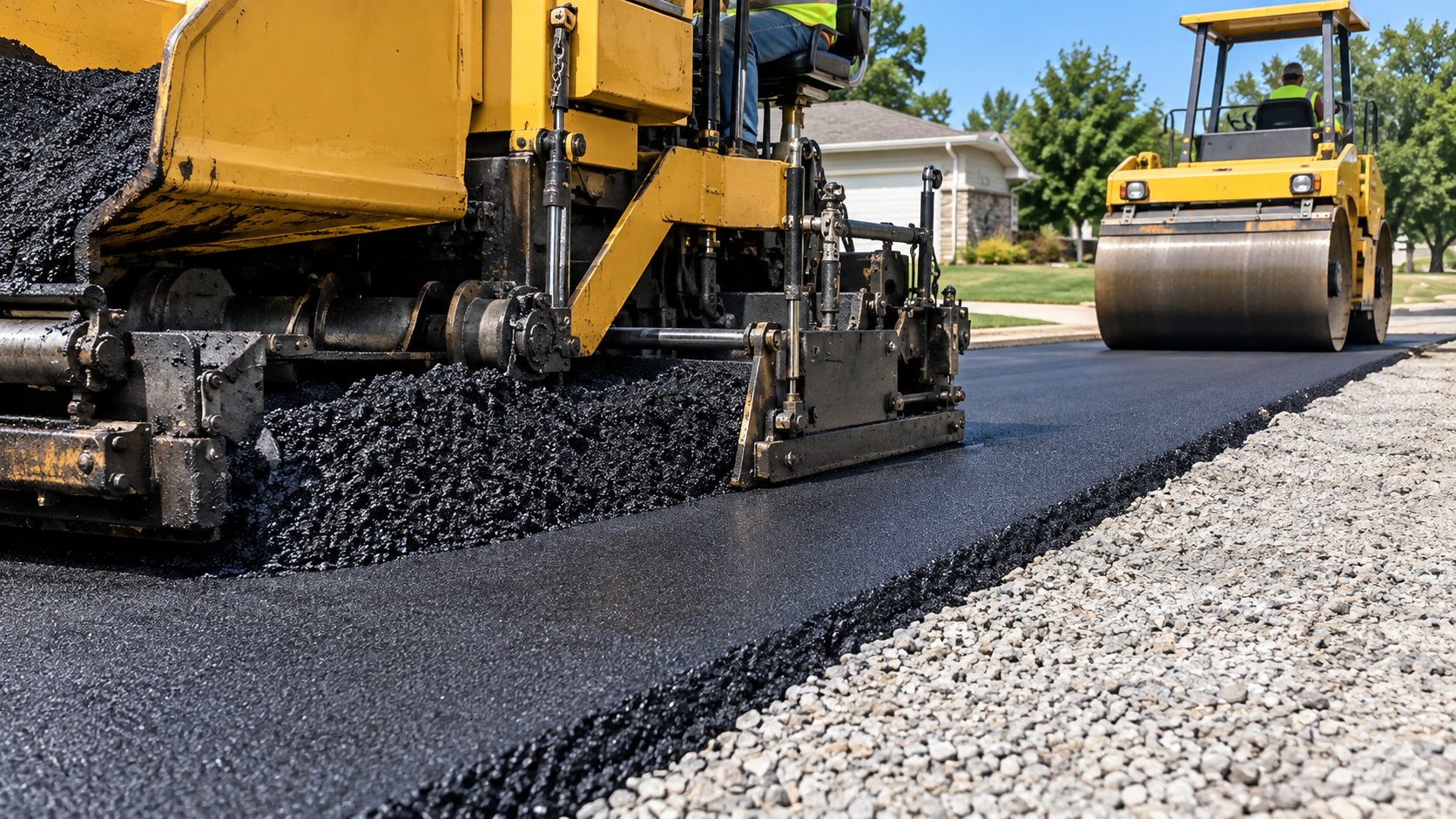
Why does local experience matter in Springfield specifically?
Paving is not the same everywhere, and this is where hiring a local paving contractor pays off. Springfield sits on Ozarks clay soil that swells when wet and shrinks when dry, which is brutal on any pavement built without proper base work and drainage. Add Missouri freeze-thaw winters, and a driveway that would survive fine in a drier climate can fail here in a couple of seasons. A crew that works this ground every week knows how deep to build the base, how much fall to grade in, and when the paving season honestly ends for the year. That local knowledge is not something an out-of-town crew passing through can fake. When you read our story and background, you will see that everything we do is built around the specific conditions in this part of Missouri, because that is the only place we work.
Frequently Asked Questions
How do I choose a paving contractor I can actually trust?
Start by confirming they are licensed, insured, and locally based, then ask for a detailed written estimate that spells out base preparation and asphalt thickness. The contractors worth trusting answer these questions comfortably and can point you to recent local jobs. If someone dodges the base-prep question or pressures you to sign immediately, keep looking.
How many quotes should I get before hiring?
We recommend at least two or three written estimates. That is enough to see the range of fair pricing and to spot a bid that is suspiciously low. Just make sure every quote lists the same details, square footage, base depth, and mat thickness, so you are comparing the actual work and not just the bottom-line number.
What is the biggest red flag with paving contractors?
Door-to-door offers of “leftover asphalt” at a discount if you decide today. Legitimate companies order material for your specific job and never have quality hot mix left over by chance. Combine that pitch with cash-up-front and no written contract and you are looking at the classic traveling paving scam.
Should a paving contractor be licensed and insured?
Yes, and you should ask to see proof. General liability and workers compensation coverage protect you if something goes wrong or a worker is injured on your property. A reputable contractor will send you a certificate of insurance without any pushback.
Is the cheapest paving bid ever the right choice?
Rarely. Price should be one factor, not the only one. A bid far below the others almost always saves money in the base or the mat thickness, the parts you cannot see, which is exactly where corners cost you the most a year or two down the road. Value comes from work that lasts, not from the lowest number.
Get a Free Written Estimate
Comparing paving contractors in Springfield? Put us on your list. We will measure the job, spell out the base prep and asphalt thickness in writing, and give you an honest estimate you can hold up against anyone else’s.
Asphalt Pavers LLC, 434 S Belcrest Ave, Springfield, MO 65802
(417) 319-2693 · Mon-Sat 8:00 AM-5:00 PM
View us on Google Maps
Reviewed by the owner – September 21, 2026