

If you have ever wondered why asphalt driveway cracks keep coming back no matter how many times you fill them, the honest answer around Springfield almost always starts underground. We have dug out enough failed driveways across Greene County to know the crack you see is usually the last symptom, not the cause. Below we walk through the three things we find over and over when we open up a cracked drive: our clay soil, the freeze-thaw cycle that hammers southwest Missouri every winter, and base work that was rushed or skipped before the asphalt ever went down.
What actually makes an asphalt driveway crack?
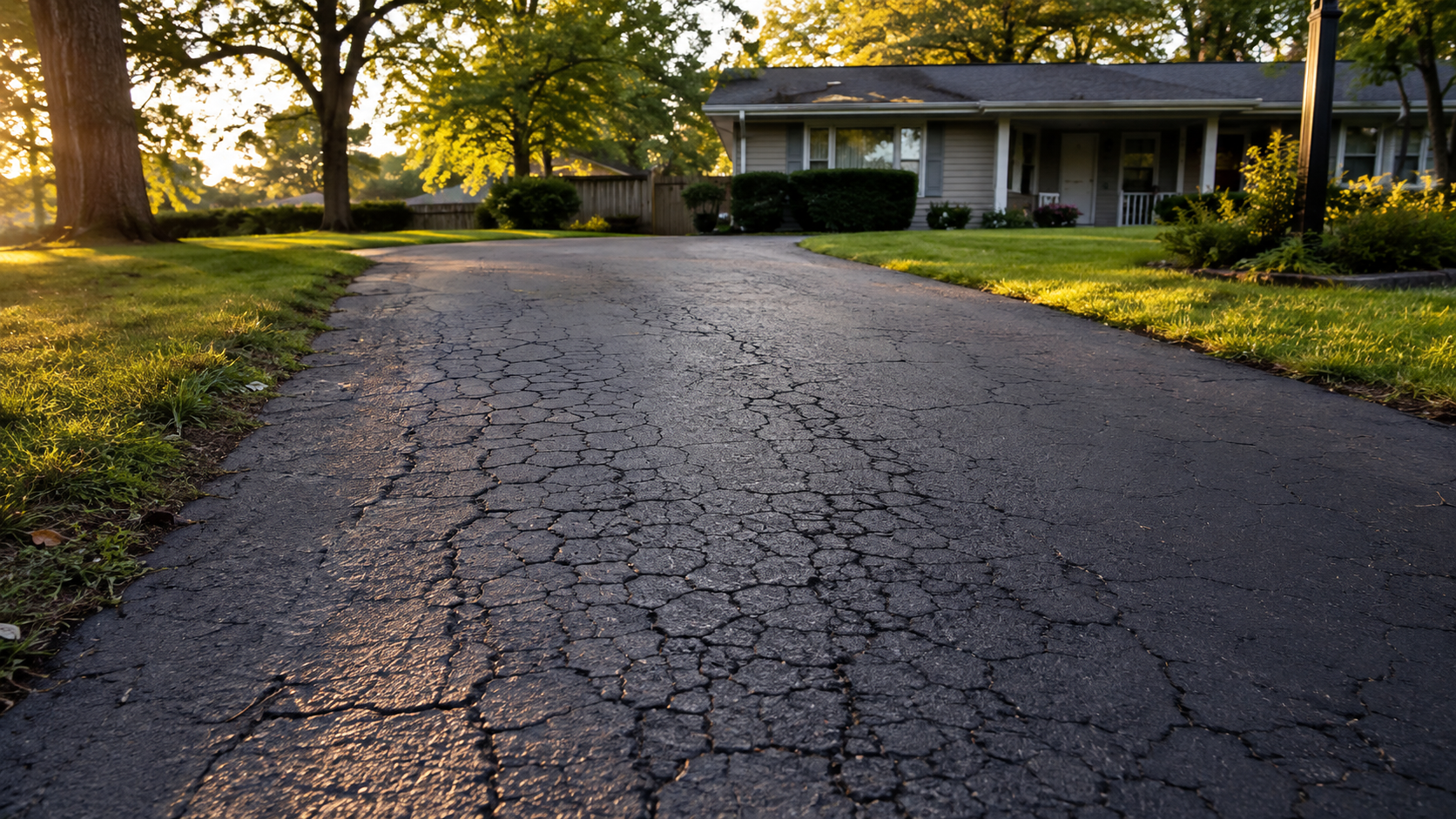
Asphalt is flexible by design, so a healthy driveway can ride small ground movements for years. Cracking starts when the surface is asked to bridge more movement than it can handle, and that movement almost always comes from what is under the mat. When people ask us why asphalt driveway cracks appear, the type of crack tells us a lot about what went wrong below.
| Crack type | What it looks like | What it usually means |
|---|---|---|
| Alligator cracking | Interconnected web, like reptile skin | Weak or saturated base, load failure |
| Edge cracks | Cracks a few inches in from the outside | Unsupported edge, soft shoulder, poor drainage |
| Longitudinal cracks | Long lines running with the driveway | Base movement, sometimes a cold seam |
| Transverse cracks | Lines running across the drive | Temperature shrinkage, freeze-thaw stress |
| Potholes | Bowl-shaped holes, broken edges | Water got into the base and washed it out |
Almost every one of these traces back to two forces working together: water getting somewhere it should not, and a base that cannot hold the load once that water shows up. Keep those two ideas in mind.
Why asphalt driveway cracks start with Springfield’s clay soil
The single biggest reason asphalt driveway cracks show up faster here than in a lot of the country is the ground we build on. Much of the Springfield plateau and the surrounding Ozarks sits on clay-heavy soils that swell when they get wet and shrink when they dry out. Expansive clay can lift and drop a driveway noticeably between a soggy spring and a dry August, and asphalt laid on top of it has to move right along with it.
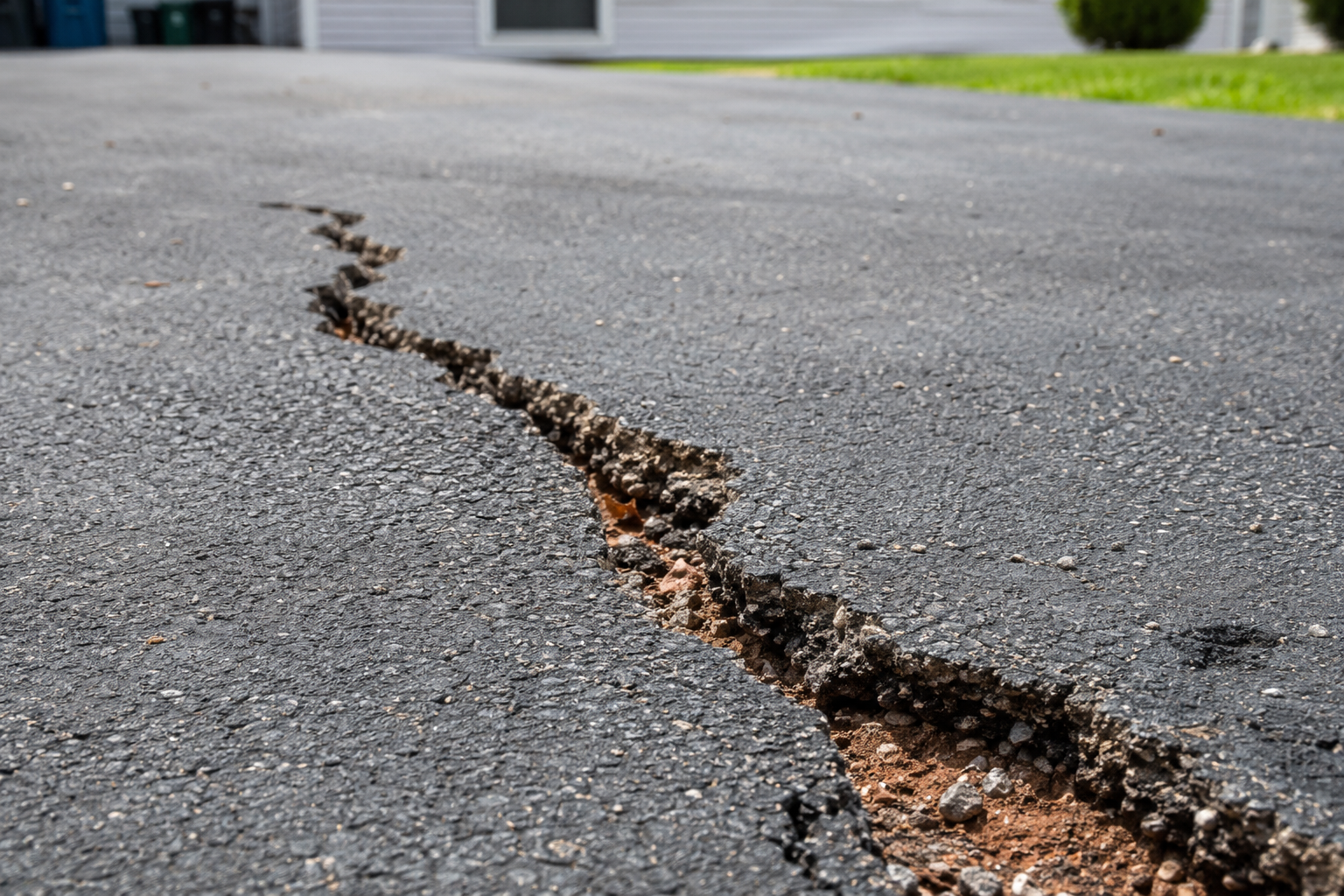
When we grade a site, this is the first thing we plan around. If you want the technical background, the U.S. Geological Survey and the University of Missouri Extension both document how expansive clay soils behave and why they cause so much trouble for anything built on them. Here is what that clay does to a driveway in plain terms:
- It moves with moisture. Wet clay expands and pushes up, dry clay contracts and pulls away. Repeat that a few seasons and the surface fatigues.
- It holds water. Clay drains slowly, so water that reaches the base tends to sit there instead of draining off, softening everything above it.
- It loses strength when saturated. A clay subgrade that felt firm in July can turn to pudding after a wet March, and that is exactly when driveways start to fail.
You cannot change the soil under your property, but you can build for it. That means a properly compacted aggregate base, good slope, and drainage that carries water away instead of into the ground under your driveway. When we handle the dirt work ourselves through grading and leveling, we are really building the foundation that keeps the clay from telegraphing every wet-dry swing straight up into your new asphalt.
How does freeze-thaw pull a driveway apart?
The second force is our winters. Springfield does not have the deep, stay-frozen ground of the far north. What we get is worse for pavement in some ways: repeated freeze-thaw cycles where the temperature swings above and below freezing through December, January, and February. Every one of those cycles works like a slow crowbar.
Here is the sequence we see under a failed driveway every winter. Water finds a hairline crack and soaks into the base. When it freezes, that water expands and pushes the crack wider. When it thaws, the void it leaves fills with more water and the base loses support. Freeze it again and the crack grows again. A thin surface crack in November can be a real structural problem by March, and our clay soil makes it worse because it holds the water right where the freezing does the most damage.
This is why we tell homeowners that a small crack is not a cosmetic issue you can ignore until spring. An open crack in the fall is an invitation for water to get into your base right before the season that is hardest on it, which is the whole reason our crack filling and repair calls spike every October.
What does skipped base work look like when we dig it out?
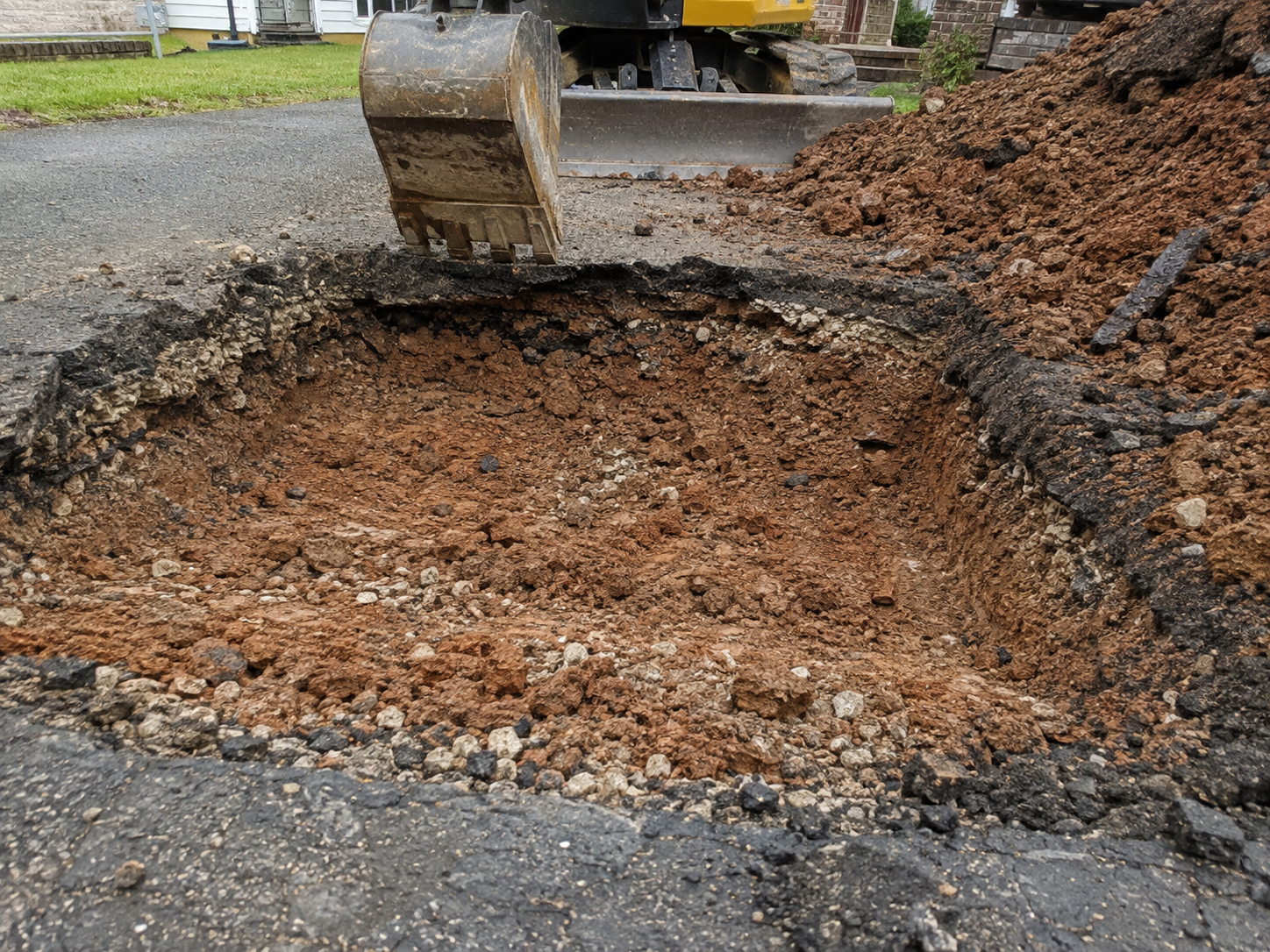
Clay and freeze-thaw are natural. The third cause is not, and it is the one that frustrates us most because it was avoidable. A huge share of the early failures we get called to were built on a base that was too thin, poorly compacted, or skipped almost entirely. Somebody laid two inches of asphalt over loosely graded dirt, it looked great on day one, and it started coming apart within a couple of winters.
When we excavate one of these, the story is always similar. Here is what we typically find under a driveway that cracked early:
- Too little stone. A proper driveway needs a compacted aggregate base, usually several inches of graded stone, to spread the load. We routinely find an inch or nothing.
- No compaction. Even when stone is present, if it was not compacted in lifts it settles unevenly and the asphalt cracks along the low spots.
- Organic material left in place. Roots, topsoil, and buried debris rot and settle, leaving voids the surface collapses into.
- No positive drainage. A base built in a bowl stays wet, and a wet base under clay is a failure waiting to happen.
None of this is visible once the asphalt is down, which is why cheap paving jobs can look identical to good ones for the first year. The difference is buried. Doing the base right is the core of honest asphalt paving, and it is the number one thing that separates a driveway that lasts twenty years from one that alligators in three. When a base has already failed, patching the top will not save it, and that is where our asphalt repair and patching crew has to go back to the dirt and rebuild from the bottom up.
Can you stop cracks before they spread?
Yes, and the earlier you act the cheaper it is. Once you understand why asphalt driveway cracks form, the maintenance plan almost writes itself: keep water out and keep the base supported. On our estimates we walk homeowners through a simple order of operations we actually believe in, not an upsell.
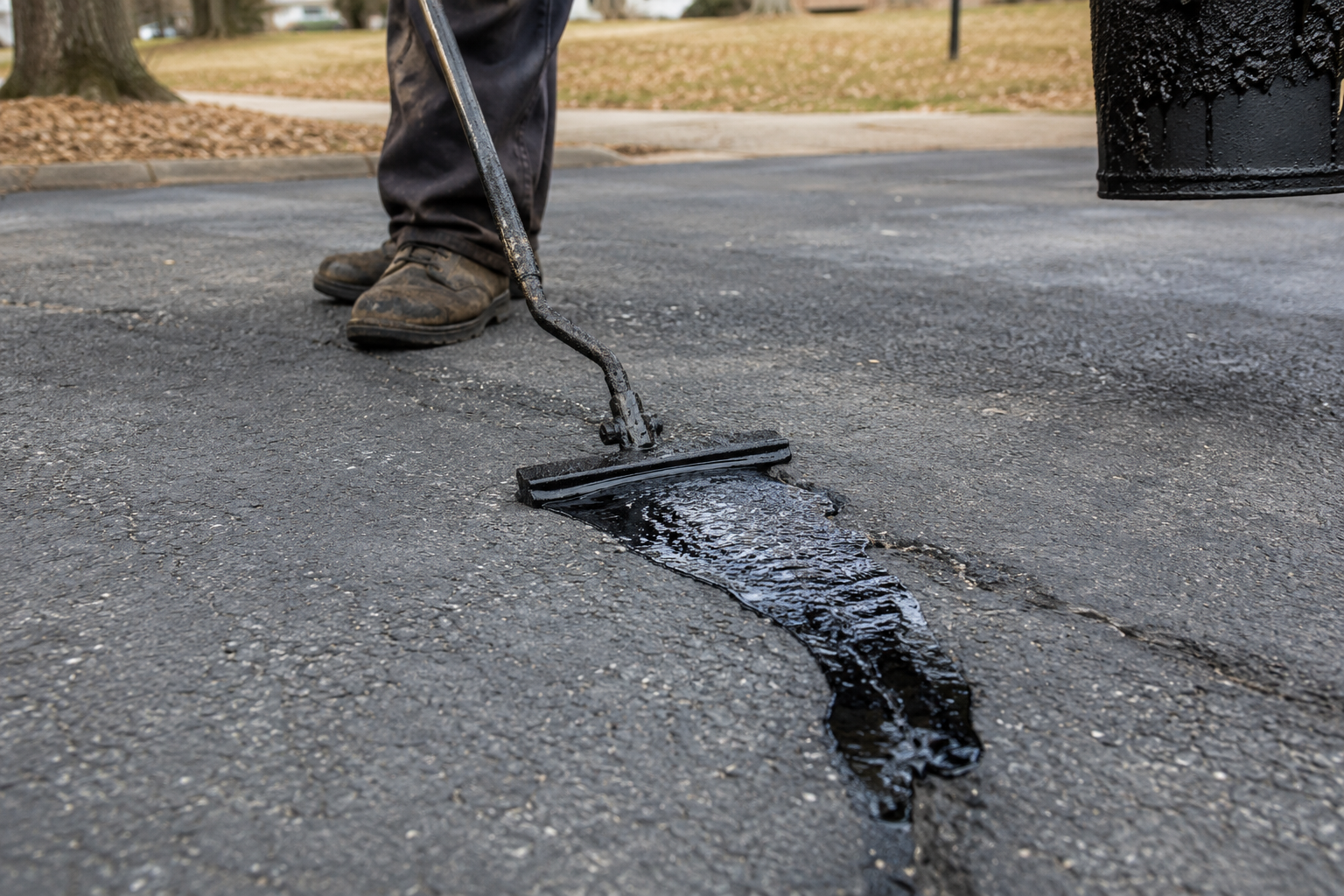
- Fill cracks early. A hot rubberized crack filler seals the path water uses to reach your base. Doing this before winter is the highest-value dollar you can spend on a driveway.
- Sealcoat on schedule. A quality sealcoat every few years protects the surface binder from UV and water, slowing the fine cracking that lets water in to begin with.
- Fix drainage. If water pools on or beside your driveway, correcting the grade does more for its lifespan than any surface treatment.
- Patch small failures fast. A soft spot the size of a dinner plate is a cheap saw-cut patch today and a pothole next spring.
When is a crack telling you to repair, not repave?
We would rather tell you the truth than sell you the biggest job. Not every cracked driveway needs to be torn out. If the cracks are surface shrinkage and transverse lines with a base that is still solid underneath, crack filling and a sealcoat will buy you years. If we find widespread alligator cracking, sinking, and a base that flexes underfoot, that surface is riding a failed foundation, and the only honest fix is to remove it and rebuild the base correctly. We will tell you which camp you are in and show you what we see.
Frequently Asked Questions
Why does my driveway crack in the same spots every year?
Recurring cracks in the same place almost always mean the movement is coming from below, usually a soft or wet spot in the base or an area where clay swells and shrinks the most. Filling the surface crack helps, but if it keeps returning the real fix is under the asphalt.
Does sealcoating fix cracks?
No, and anyone who tells you it does is overselling it. Sealcoat is a thin protective coating for the surface. It slows new cracking by blocking UV and water, but it cannot bridge or repair an existing crack. Cracks get filled first with a flexible crack filler, then the driveway gets sealcoated. The order matters.
How does Springfield’s clay soil affect my driveway?
Our clay-heavy Ozarks soil swells when wet and shrinks when dry, which flexes anything built on it. It also drains slowly, so water lingers in the base and softens it. The way you beat clay is a well-compacted stone base and drainage that keeps water moving away from the driveway.
Should I fill cracks before winter?
Absolutely. An open crack in the fall lets water into your base right before the freeze-thaw season that does the most damage. Filling cracks in September or October is one of the cheapest ways to keep a small problem from becoming a spring pothole. Built on a proper base with reasonable maintenance, an asphalt driveway here should last fifteen to twenty-plus years, and the ones that fail early almost always come down to skipped base work or unmanaged water.
Get a Free Written Estimate
Seeing cracks you are not sure about? Our crew will walk your driveway, check the base and drainage, and give you an honest written estimate on whether it needs a fill, a patch, or a rebuild. No pressure and no upsell.
Asphalt Pavers LLC, 434 S Belcrest Ave, Springfield, MO 65802. Call us at (417) 319-2693. Hours: Mon-Sat 8:00 AM-5:00 PM. Find us on Google Business Profile.
Reviewed by the owner – 2026-08-26