

Figuring out the concrete to asphalt conversion cost is usually the first question we get when a Springfield homeowner is tired of patching a cracked, heaving concrete slab. The honest answer is that it depends on what is under that slab and what you want it to do, but on most residential jobs we quote the finished work lands somewhere between $3.50 and $7.00 per square foot. That range covers demolition, haul-off, base work, and fresh hot-mix asphalt. Below we walk through exactly what drives that number, how the process runs on a real jobsite, and the cases where we tell people to keep their concrete instead of converting it.
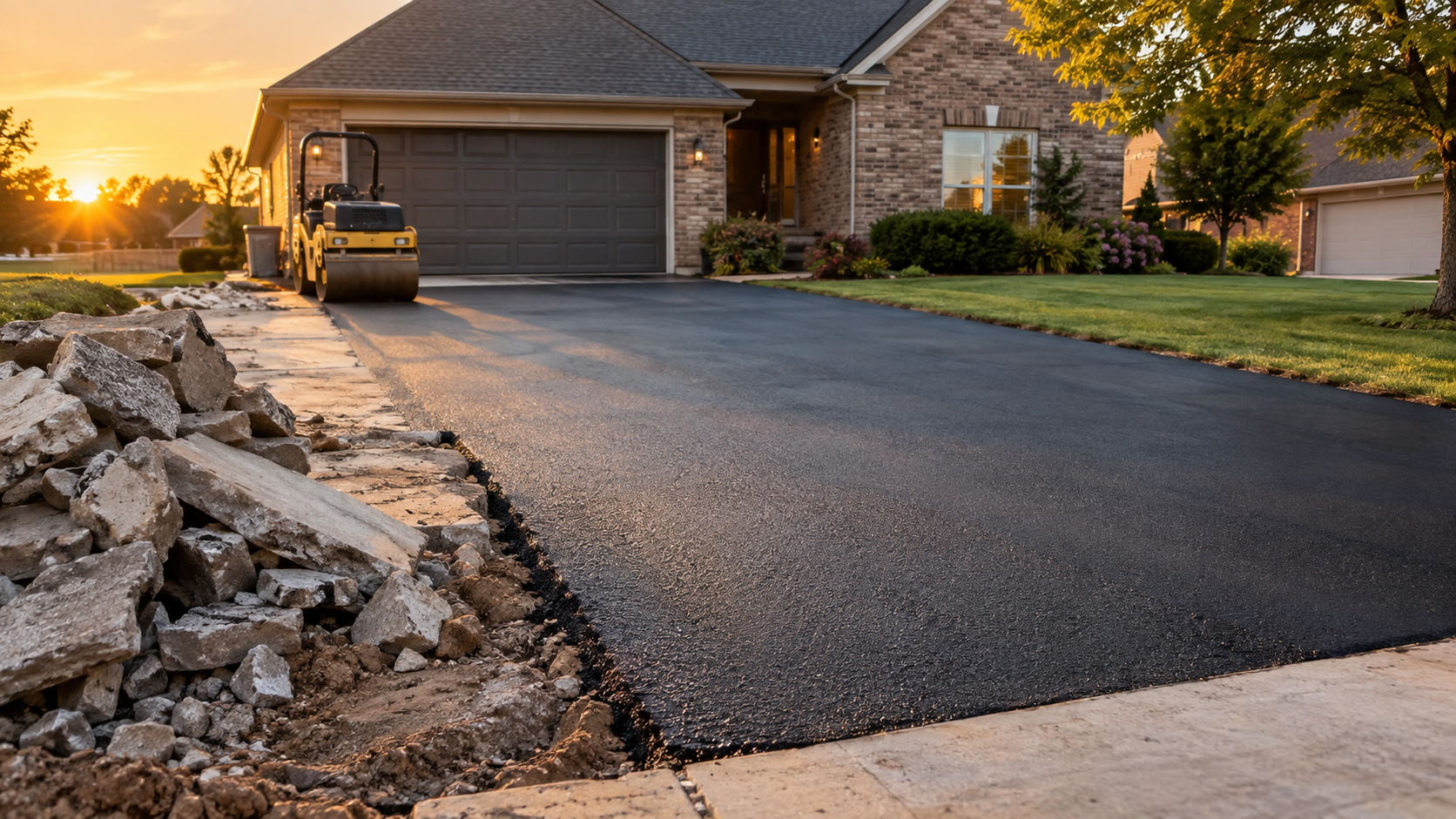
What does concrete to asphalt conversion cost in Springfield?
There is no flat price because no two driveways start the same way. The cost to convert a concrete driveway to asphalt is built from a stack of line items, and the biggest swing is almost always the demolition and disposal of the old slab. Reinforced concrete with rebar or wire mesh is slower to break out and heavier to haul, so it costs more than a thin, unreinforced patio pour. Here is how we typically break a conversion estimate down on our written quotes.
| Line item | What it covers | Typical share of cost |
|---|---|---|
| Demo and haul-off | Breaking out the slab, loading, dump fees | 25% to 40% |
| Base prep and grading | Compacted aggregate base, slope correction | 20% to 30% |
| Asphalt material and paving | Hot-mix, laydown, compaction | 30% to 40% |
| Mobilization and edges | Equipment transport, tie-ins, cleanup | 5% to 15% |
For a standard two-car driveway of roughly 600 square feet, that math tends to land a full concrete to asphalt conversion cost in the $2,400 to $4,200 window. Bigger commercial lots come down on a per-foot basis because the fixed mobilization cost spreads across more area. On our estimates we always separate the demo line so you can see it, because that is where the surprises live.
Can you pave asphalt over concrete instead of tearing it out?
Sometimes, and it is worth asking about because an asphalt over concrete driveway overlay skips the most expensive step: demolition. When the existing slab is structurally sound, sits at the right height, and drains properly, we can place a 2 to 3 inch asphalt overlay directly on top. That can cut the paving over concrete cost by 30% or more versus a full tear-out.
The catch is that concrete moves at its control joints and cracks, and asphalt will eventually telegraph those joints back to the surface as reflective cracking. We are honest about that trade-off. If your slab is already broken into shifting pieces, an overlay just buys you a season or two before the same cracks reappear. In that case a full-depth conversion is the smarter money. The Asphalt Institute covers overlay and reflective cracking behavior in depth if you want the engineering side of it.
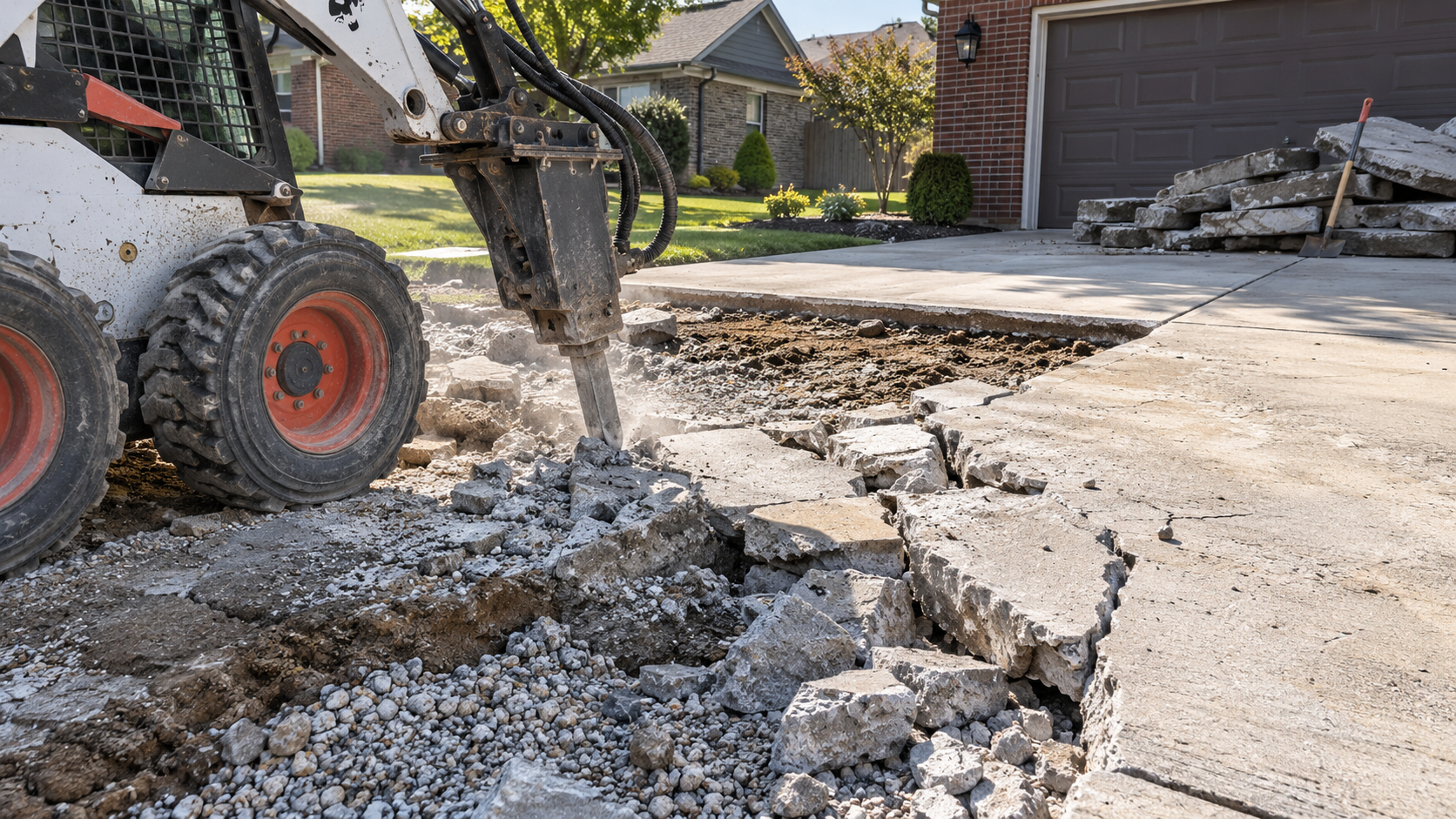
How does the conversion process actually work?
When a conversion is the right call, here is the sequence our crew runs, usually across one to two days depending on size and weather.
- Saw-cut and demo: We saw-cut clean edges where the new asphalt will tie into sidewalks or garage aprons, then break the slab into haulable pieces.
- Haul-off and dig: The old concrete leaves the site. We excavate to the depth the new pavement section needs, which is deeper than the slab was because asphalt relies on a stone base rather than its own rigidity.
- Base and grading: We bring in and compact an aggregate base, correcting slope so water sheds off instead of pooling. This is where a good grading and leveling job earns its keep.
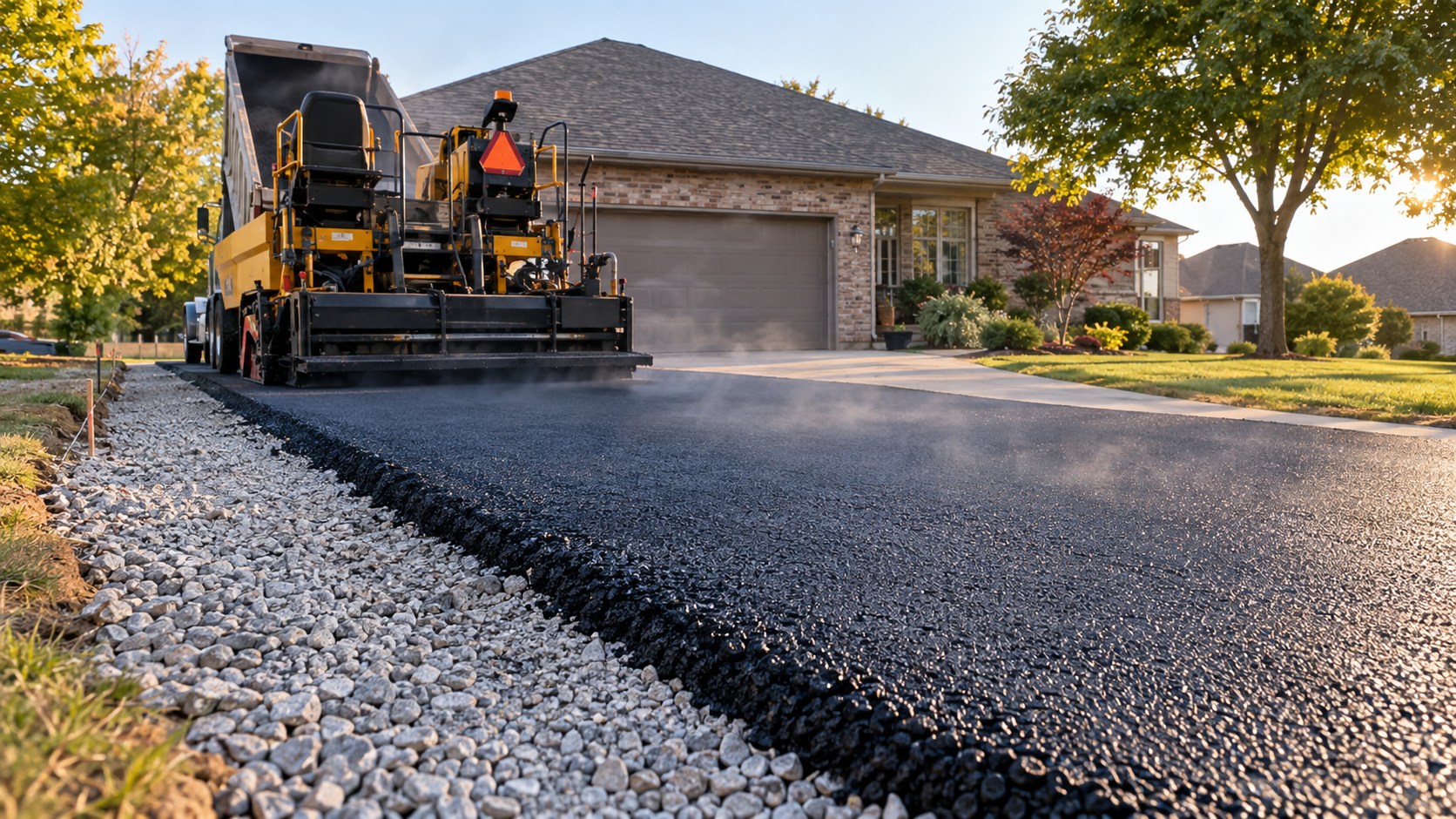
- Paving and compaction: Hot-mix asphalt goes down in a lift, then gets rolled while it is still hot to lock in density. Proper compaction is what separates a driveway that lasts 20 years from one that ravels early.
If you want the full paving side of that story, our asphalt paving page walks through the laydown and cure detail. For the conversion specialty specifically, see our concrete to asphalt conversion service.
Why do Springfield homeowners convert concrete to asphalt?
The reasons we hear on estimate calls are pretty consistent, and most of them come down to how our local clay soil and freeze-thaw cycles treat rigid concrete.
- Cracking and heaving: Concrete is rigid, so when the ground moves under it during a Missouri freeze-thaw swing, it cracks and lifts at the joints. Asphalt flexes with the ground instead.
- Cheaper repairs later: A worn asphalt surface can be sealcoated or overlaid. Fixing spalled or cracked concrete usually means cutting out and repouring whole sections.
- Faster return to use: New asphalt is drivable in a day or two versus the longer cure schedule concrete needs to reach strength.
- Appearance: A fresh black driveway simply looks sharp against a home, and it hides the patchwork history of a slab that has been repaired a few times.
When is keeping your concrete the smarter move?
We install both surfaces, so we have no reason to push you off good concrete. There are real cases where converting is a waste of money, and we will tell you so on the estimate:
- The slab is young and sound. If your concrete is only a few years old with hairline cracks and good drainage, spend the money on crack repair, not a tear-out.
- Heavy point loads. Concrete handles concentrated static loads, like a parked RV jack or a dumpster, better than asphalt over the long haul.
- Hot, tight spaces. Asphalt softens in extreme heat, so a small pad that bakes all day and takes sharp turning loads may do better in concrete.
- Decorative finishes. If you have stamped or colored concrete you love, there is no asphalt equivalent, and converting throws that away.
The University of Missouri Extension publishes practical guidance on soils and site drainage that is worth a read if you are weighing a big outdoor project. You can browse it at extension.missouri.edu.
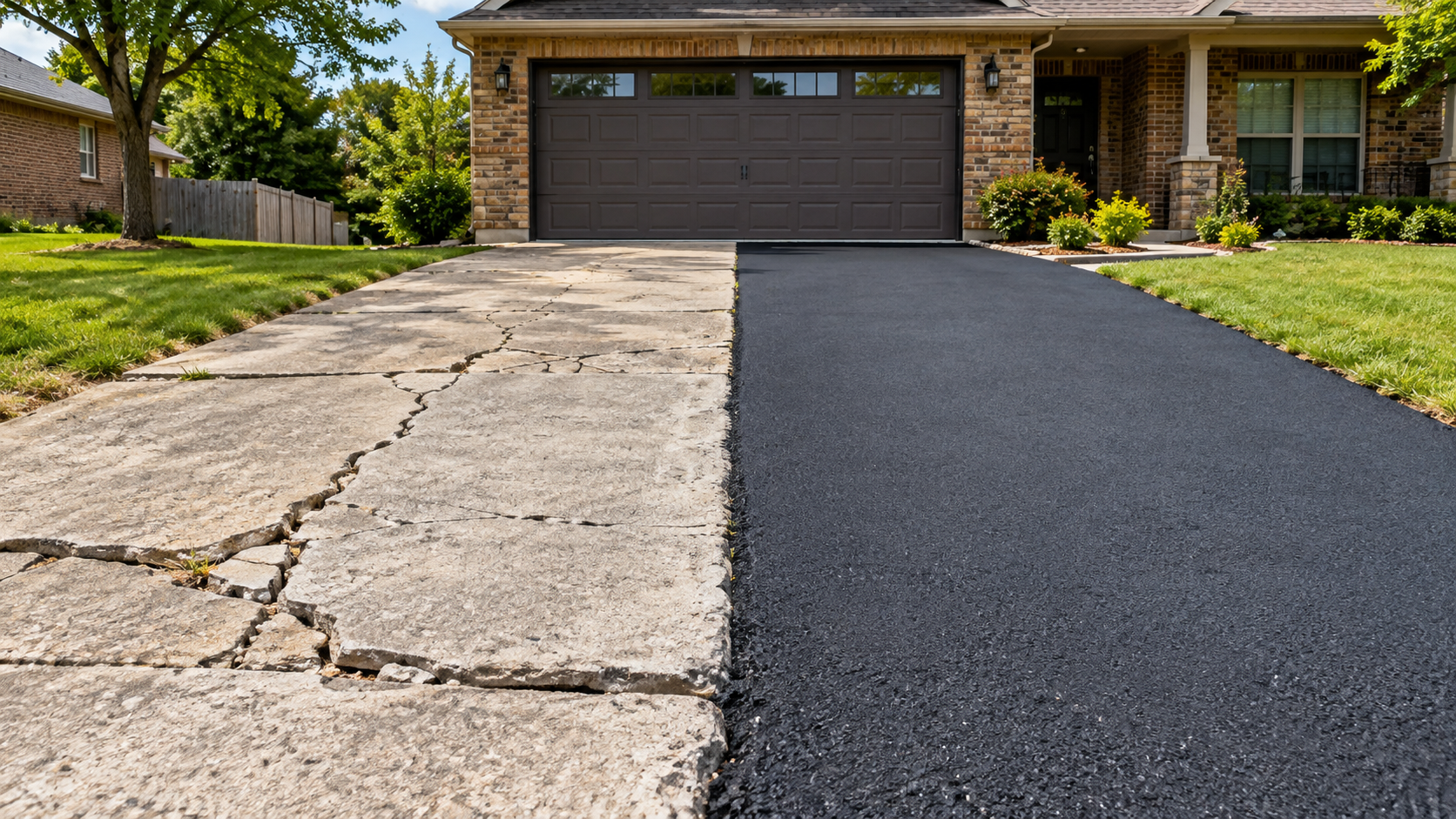
Concrete to asphalt conversion cost versus repouring concrete
A fair comparison is not just the sticker price on day one, it is the lifetime cost. Repouring a driveway in concrete usually costs more up front than converting the same area to asphalt, often noticeably more per square foot once you include forming and finishing. Asphalt is quicker to install and cheaper to maintain with periodic sealcoating. Concrete lasts a long time when it is done right on stable soil, but our clay does not always cooperate, and repairs are pricier when it fails. For most Springfield residential driveways the conversion economics favor asphalt, which is exactly why we get the call.
Frequently Asked Questions
How much does it cost to convert a concrete driveway to asphalt?
Most residential conversions in the Springfield area run about $3.50 to $7.00 per square foot for the finished job, which puts a typical 600 square foot driveway in the $2,400 to $4,200 range. Demolition and haul-off of the old slab is the biggest variable, so a written on-site estimate is the only accurate way to price it.
Is it cheaper to pave over concrete or tear it out?
Paving an asphalt overlay directly over sound concrete is cheaper because it skips demolition, often by 30% or more. The trade-off is reflective cracking, where the old concrete joints eventually show through the asphalt. If the slab is already broken or shifting, a full tear-out is the better long-term value.
How long does a concrete to asphalt conversion take?
Most residential conversions take one to two days: demo and haul-off, base prep and grading, then paving. You can usually drive on the new asphalt within a day, though we ask you to wait before parking heavy vehicles or turning tight while it fully cures.
Will asphalt crack the same way my concrete did?
Not in the same way. Concrete is rigid and cracks at joints when the soil moves. Asphalt is flexible and moves with the ground, so with a properly compacted stone base it handles our freeze-thaw cycles far better. Periodic sealcoating and crack filling keep it in good shape.
Do I need a permit to convert my driveway in Springfield?
Requirements vary by location and whether you are changing the footprint or drainage. We handle a lot of conversions and can tell you what your specific property needs, and we build the grade so runoff stays on your lot and off your neighbors.
Get a Free Written Estimate
Thinking about converting a cracked concrete driveway to asphalt? We will measure it, check the base, and hand you an honest written number, including the demo line so there are no surprises.
Asphalt Pavers LLC, 434 S Belcrest Ave, Springfield, MO 65802
(417) 319-2693 · Mon-Sat 8:00 AM-5:00 PM
View us on Google Maps
Reviewed by the owner – September 16, 2026