

The asphalt vs concrete driveway question is the one we field more than any other on Missouri estimates, and because our crew installs both surfaces we can give you a straight answer instead of a sales pitch. Most contractors only pour one material, so they talk up whatever they sell. We do not have that problem. On this page we lay out how the two materials really compare on cost, lifespan, repairs, and how each one holds up to Ozarks freeze-thaw cycles, and we tell you honestly where concrete wins so you can pick the right driveway for your home.
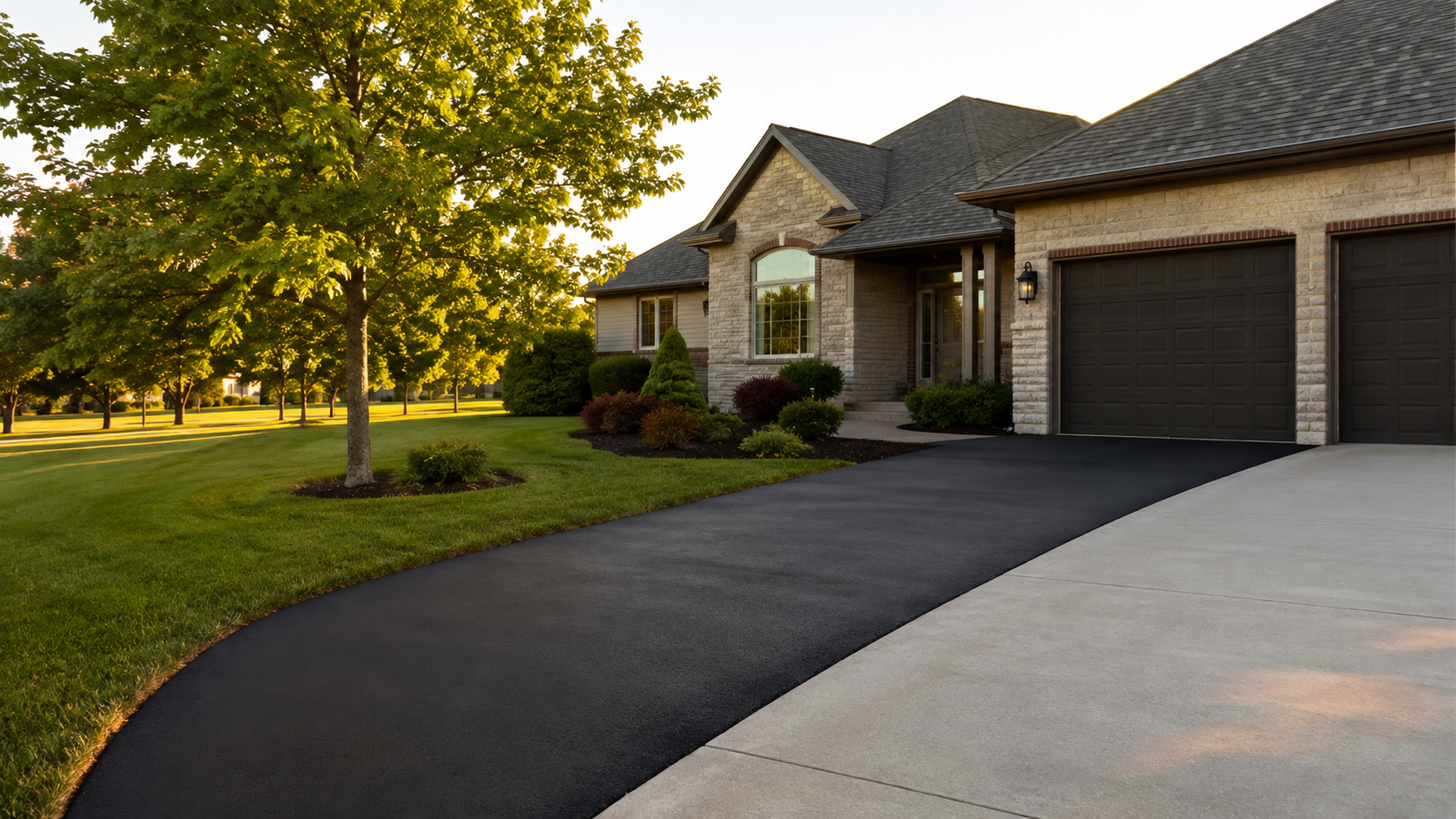
Asphalt vs concrete driveway: what is the real difference?
At the surface both give you a paved, low-mud driveway, but they behave very differently once Missouri weather goes to work on them. Asphalt is a flexible pavement bound with petroleum-based binder, so it moves a little with the ground and with temperature swings. Concrete is a rigid slab that holds its shape until stress cracks it. That single difference, flexible versus rigid, drives almost every other trade-off in the concrete vs asphalt driveway debate, from up-front price to how each one ages in our clay soil. Neither is universally better. The right choice depends on your budget, your timeline, and how you use the drive.
| Factor | Asphalt driveway | Concrete driveway |
|---|---|---|
| Up-front cost (per sq ft) | $4.00 – $7.00 | $7.00 – $12.00 |
| Typical lifespan | 15 – 20 years | 25 – 40 years |
| Ready to drive on | 1 – 2 days | 5 – 7 days |
| Maintenance | Sealcoat every 2 – 3 years | Occasional seal, joint care |
| Repairs | Easy, blends in well | Harder, patches show |
| Best in heat | Can soften on hot days | Stays firm |
| Best in freeze-thaw | Flexes, resists cracking | Prone to surface scaling |
Which driveway costs less up front?
Asphalt almost always wins the up-front asphalt vs concrete driveway cost comparison. On the same footprint we usually quote asphalt 30 to 40 percent below concrete, because the material is cheaper and the install is faster. A standard 600 square foot residential asphalt drive commonly lands in the $3,000 to $4,500 range on our written estimates, while the same pad in concrete often runs $4,800 to $7,000 once forming, rebar or mesh, and finishing labor are counted. Concrete simply asks for more material cost, more labor hours, and more cure time before you can use it.
That said, cheaper up front is not the whole story. A concrete slab can last decades longer, so the cost per year of service can narrow the gap over a long ownership horizon. When we walk a homeowner through the numbers, we lay out both the sticker price and the long-run cost so the decision is honest. If you want the full asphalt side of that math, our asphalt paving service page breaks down what goes into a driveway build.
How does each hold up to Missouri freeze-thaw?
This is where our first-hand experience matters most, because freeze-thaw is the single biggest thing that shortens driveway life in southwest Missouri. We watch water get into pavement, freeze overnight, expand, thaw the next afternoon, and do it again dozens of times each winter. That cycle is brutal on rigid surfaces.
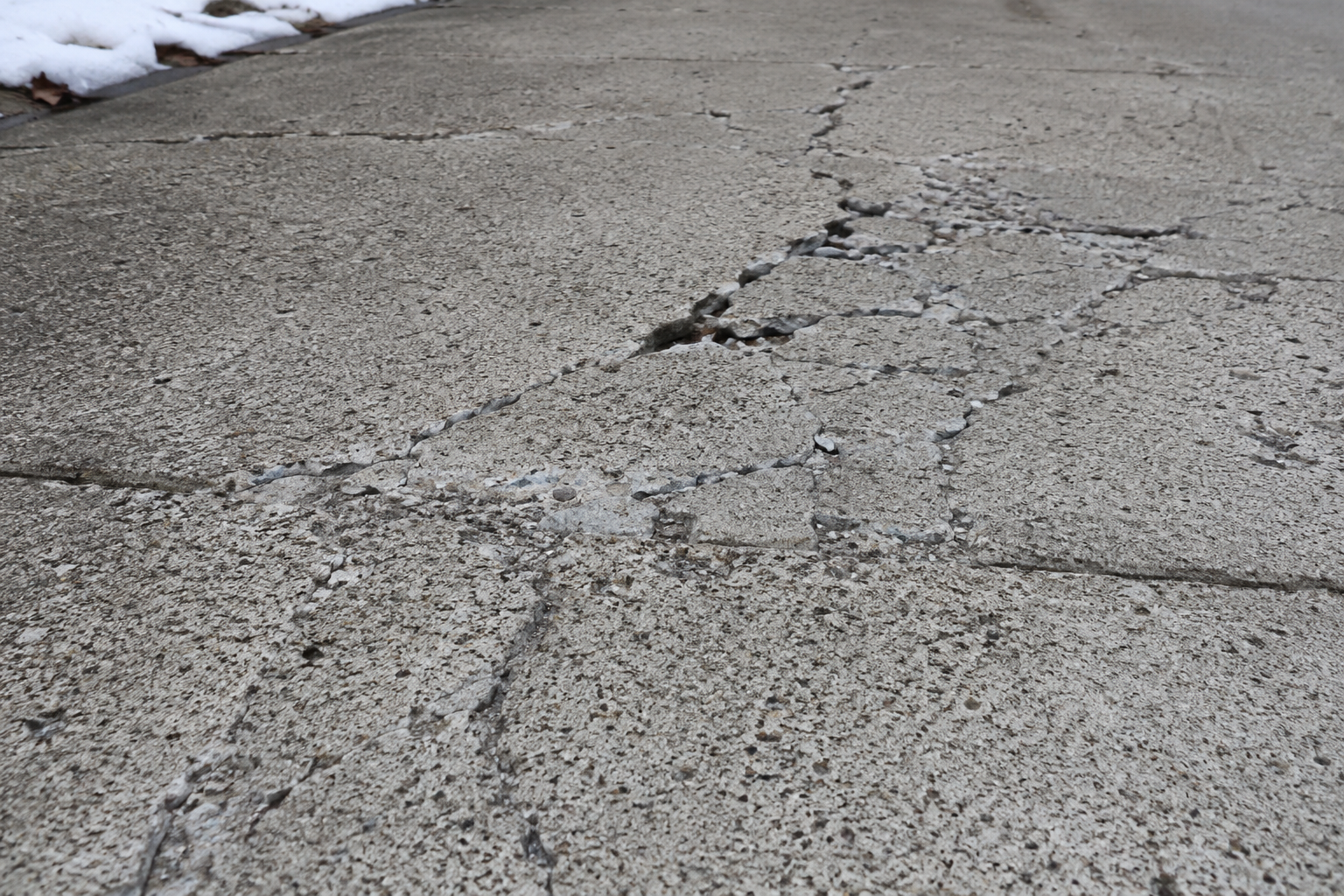
On the concrete drives we service, the classic failure we see is surface scaling and spalling, where the top layer flakes off after repeated freeze-thaw, often made worse by deicing salt. Once a concrete slab cracks, the crack tends to grow and the patch never quite disappears. Asphalt behaves better here. Because it flexes, it rides out the expansion and contraction with fewer structural cracks, and when it does crack we can fill and seal it so the repair blends into the surface. The Asphalt Institute notes that flexible pavements are engineered to distribute load and tolerate movement, which lines up with exactly what we dig up under real Springfield driveways. You can read more on pavement material behavior from the Asphalt Institute and on soil and site conditions from University of Missouri Extension.
None of this cancels out good base work. A flexible surface over a lazy base still fails. Whichever material you pick, the compacted aggregate base under it decides how long it lasts in our clay.
Where does concrete actually win?
We install both, so we will say plainly where concrete is the smarter buy. Pretending asphalt is always right would cost you money in the wrong situations.
- Long service life. A well-poured concrete driveway can last 25 to 40 years, comfortably outliving asphalt when it is built and maintained right.
- Hot, sun-baked exposure. Asphalt can soften and scuff on the hottest days, especially under a boat trailer jack or a sharp-turning tire. Concrete stays firm in the heat.
- Decorative finishes. If you want stamped patterns, exposed aggregate, or a specific color, concrete gives you finish options asphalt cannot match.
- Light-colored curb appeal. Some homeowners simply prefer the lighter look of concrete against the house, and that is a valid reason.
If you already have concrete that is failing and you are weighing a switch, we cover the economics on our concrete to asphalt conversion page, including when keeping the concrete is the better call.
Where does asphalt win?
For a large share of Missouri homeowners, asphalt is the better everyday value. Here is where the flexible surface pulls ahead in the asphalt or concrete driveway decision.
- Lower up-front cost. The single biggest reason folks choose asphalt is the smaller check on install day.
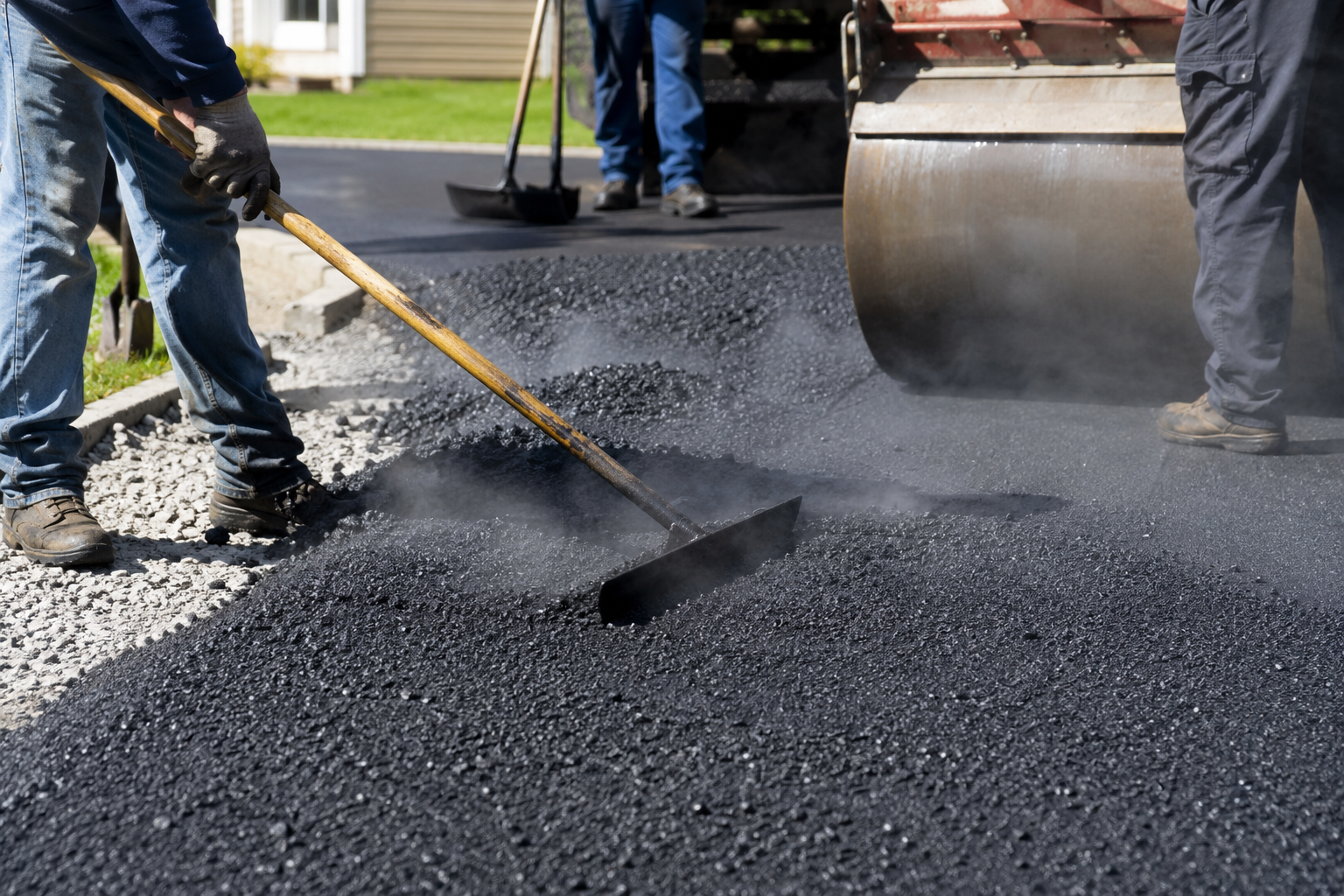
- Fast install and quick use. We can often pave a driveway in a day or two, and you drive on it within 24 to 48 hours instead of waiting a week for concrete to cure.
- Easy, invisible repairs. Cracks get filled, worn surfaces get overlaid, and a fresh sealcoat makes an aging drive look nearly new. Concrete repairs rarely hide that well.
- Freeze-thaw tolerance. As covered above, the flexibility helps it survive Missouri winters with fewer structural cracks.
- Winter heat retention. The dark surface absorbs sunlight and can help snow and ice melt off a little faster.
How do maintenance and repairs compare?
Both surfaces need care, but the work looks different. Asphalt wants a sealcoat every two to three years to protect the binder from sun and water, plus crack filling as needed. It is inexpensive upkeep that pays off in years of extra life. Concrete needs less frequent sealing but rewards you for keeping the control joints clean and sealed and for rinsing off deicing salt in winter. The repair story is where the two really split. When asphalt ages, we overlay or patch and the result blends in. When concrete cracks or scales, patches tend to stand out, and a full slab replacement is a bigger, messier job. If you want to keep either surface healthy, our team handles the paving side start to finish and can point you to the right maintenance rhythm on your first estimate visit.
So which should you pick?
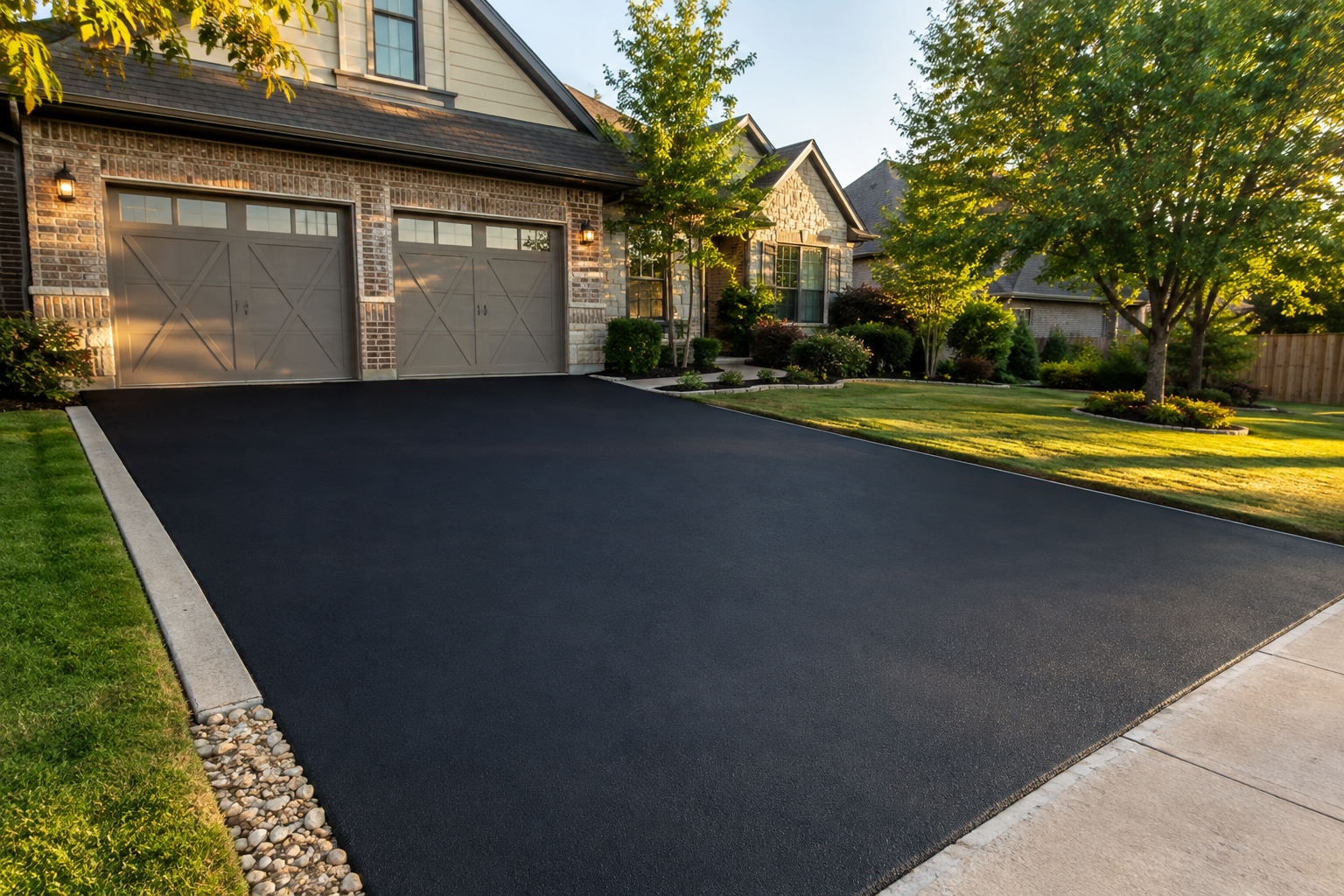
Here is the honest short version we give homeowners at the truck. Choose asphalt if you want the lower up-front cost, a fast install, easy repairs, and strong freeze-thaw performance, which fits most Springfield driveways. Choose concrete if you want the longest possible lifespan, a decorative finish, or you have a hot, heavy-load use case where a rigid slab earns its higher price. Either way, the base work under the surface matters more than the logo on the truck, so make sure whoever you hire is not skipping it. We are glad to price both and let the numbers make the case.
Frequently Asked Questions
Is an asphalt or concrete driveway cheaper?
Asphalt is cheaper up front, usually 30 to 40 percent less than concrete on the same footprint. A 600 square foot asphalt drive often runs $3,000 to $4,500 on our estimates, while concrete for the same pad typically lands higher once forming and finishing labor are counted.
Which lasts longer, asphalt or concrete?
Concrete generally lasts longer, often 25 to 40 years versus 15 to 20 for asphalt. That longer life is one of the main reasons to consider concrete despite the higher up-front price, provided both are built over a proper compacted base.
Does asphalt or concrete handle Missouri winters better?
Asphalt tends to handle freeze-thaw better because it flexes with expansion and contraction, while concrete is more prone to surface scaling and spalling, especially with deicing salt. Good drainage and base work help both survive our winters.
Can you drive on a new driveway right away?
You can usually drive on fresh asphalt within 24 to 48 hours. Concrete needs about 5 to 7 days to cure before vehicle traffic, so if timing matters, asphalt gets you rolling much sooner.
Can I switch from concrete to asphalt?
Yes, and sometimes it makes financial sense when a concrete slab is failing. We look at demolition, haul-off, base, and paving costs versus repouring, and we tell you honestly when keeping the concrete is the smarter move.
Do you install both asphalt and concrete driveways?
We do, which is why we can compare them without bias. On your estimate we can price the driveway both ways and walk you through the trade-offs for your specific lot, budget, and how you use the drive.
Get a Free Written Estimate
Still weighing the asphalt vs concrete driveway choice? Our crew will measure your site, check the soil, and price it both ways so you can decide with real numbers, no pressure.
Asphalt Pavers LLC, 434 S Belcrest Ave, Springfield, MO 65802. Call us at (417) 319-2693. Hours: Mon-Sat 8:00 AM-5:00 PM. Find us on Google Business Profile.
Reviewed by the owner – 2026-08-21