

Crack filling vs sealcoating is the single most common point of confusion we clear up on estimate calls, and getting it right before winter is what separates a driveway that shrugs off Springfield’s freeze-thaw from one that spiderwebs by spring. The two jobs sound similar and often get bundled together, but they solve completely different problems. One keeps water out of the cracks you already have; the other protects the unbroken surface from the sun, rain, and traffic that age it. This post lays out what each one actually does, when you need which, and the honest sequence we follow so you do not spend money in the wrong order.

Crack filling vs sealcoating: what is the real difference?
The short version is that crack filling repairs and sealcoating protects. They are not competing options; they are two different steps that address two different kinds of wear. When homeowners ask us which one they need, the honest answer is usually a question back: does your driveway have visible cracks, or is the surface just fading and thinning? That single distinction decides where your dollars should go first.
Crack filling (also called crack sealing) means forcing a flexible filler down into open cracks so water cannot get under the pavement. Driveway crack repair is a targeted fix. Sealcoating, on the other hand, is a thin protective coat rolled or sprayed over the entire surface. Asphalt sealcoating shields the binder from UV rays, oxidation, and water, and it restores that deep black finish. You can crack fill without sealcoating, and there are times you should. But you should almost never sealcoat over open cracks and call it done.
| Factor | Crack Filling | Sealcoating |
|---|---|---|
| Job it does | Seals individual cracks against water | Protects the whole surface from UV and water |
| Where it goes | Only into the cracks | Across the entire driveway |
| Main enemy it fights | Freeze-thaw water intrusion | Sun, oxidation, surface wear |
| Typical lifespan | Several years per fill | 2 to 3 years per coat |
| When it is urgent | As soon as cracks open, before winter | When surface fades or every 2-3 years |
Why does water intrusion make crack filling the winter priority?
Water is what turns a hairline crack into a pothole, and it does its worst work in winter. When a crack is left open, rain and snowmelt run straight down into the base under your asphalt. Then the temperature drops, that trapped water freezes, and it expands roughly nine percent as it turns to ice. That expansion pries the crack wider and lifts the pavement around it. A thaw follows, the water re-saturates the loosened base, and the next freeze does even more damage. Across a Springfield winter that cycle can repeat dozens of times.
This is why we push crack filling as the fall priority. A crack you fill in October keeps that water out through every freeze until spring. The same crack left open can double or triple in size over one winter and start undermining the base, which turns a cheap fill into a patch or a section replacement. If the cracks have already gone past filling, our crack filling and repair crew will tell you honestly whether a fill still makes sense or whether the spot needs patching first.
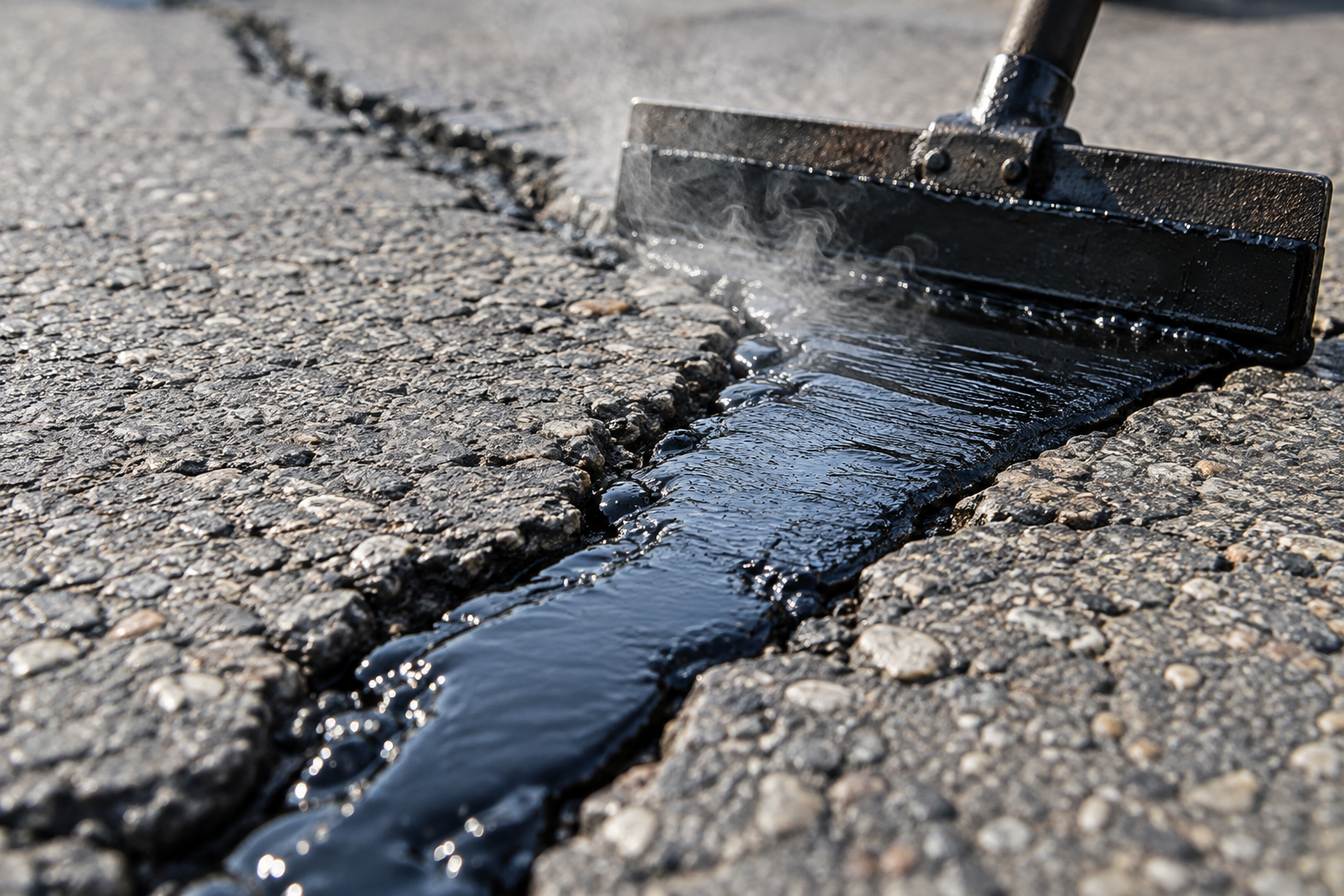
How do we crack fill: hot rubberized filler up close
Not all crack fillers are equal, and the difference shows by the second winter. The bargain approach is a cold pourable filler from a jug, which is fine for a tiny hairline but stays brittle and pulls away from the crack walls when the pavement moves. What we use on estimates that matter is a hot-applied rubberized crack filler, melted in a kettle and poured hot so it bonds to the sides of the crack and stays flexible.
Here is the sequence we follow on a real driveway:
- Clean the crack. We blow it out with compressed air or a wire wheel so the filler bonds to clean asphalt, not dirt and old vegetation.
- Rout wide or deep cracks. Working cracks get widened slightly into a reservoir so the filler has something to hold onto.
- Melt and pour hot. The rubberized material goes in hot and flows to the bottom of the crack, then skins over as it cools.
- Level the bead. We squeegee it flush so it sheds water and does not track under tires.
Because it stays rubbery, hot filler flexes with the pavement through every freeze-thaw cycle instead of cracking loose. Manufacturers of these materials, such as SealMaster, publish application and temperature specs for exactly this reason, and following them is what makes a fill last years instead of one season.
When does sealcoating actually make sense?
Sealcoating is the right call when the surface itself is aging but structurally sound. If your driveway is turning gray, drying out, or showing fine surface raveling but does not have significant open cracks, a fresh seal coat locks out UV and water and buys years of life. The Asphalt Institute describes surface treatments like this as preventive maintenance that slows oxidation, which matches what we see: sealed driveways simply age slower.
A few honest guidelines we give homeowners on sealcoating:
- Timing: most driveways want a fresh coat every two to three years, not every year. Over-sealing builds up a brittle film that peels.
- Temperature: sealer needs warm days and warm nights to cure, which is why late fall is often too cold and we schedule it earlier in the season.
- New asphalt: a brand new driveway must cure six to twelve months before its first seal. Our driveway sealcoating team will look and tell you if yours is ready.
And here is the part other companies skip: sometimes sealcoating is not the answer at all. If the pavement is full of alligator cracking or the base has failed, no amount of seal coat fixes it, and we will say so rather than sell you a coat that hides the problem for a month.

Crack filling vs sealcoating: which comes first?
When a driveway needs both, sequence matters. You always crack fill first, then sealcoat over the top. Filling the cracks first closes the water paths; the sealcoat then ties the whole surface together and blends the filled lines into a uniform finish. Sealcoating over open cracks just drapes a thin film across a gap that reopens by the first freeze, so the crack telegraphs right back through.
Before winter specifically, our advice is simple. If you can only do one thing this fall, fill the cracks. That is the job that prevents freeze-thaw damage over the coming months. Save the full sealcoat for warmer weather next season when it can cure properly. If both can be done while temperatures still allow, fill first and seal within a few days. For bigger surface failures that go beyond either job, our asphalt repair and patching crew handles the patching before any sealing happens.
Frequently Asked Questions
Do I need crack filling and sealcoating, or just one?
It depends on your driveway. If you have visible cracks, you need crack filling to keep water out, especially before winter. If the surface is just fading with no real cracks, sealcoating alone protects it. Many driveways benefit from both, and in that case you fill the cracks first, then sealcoat over the top.
Can you sealcoat over cracks without filling them first?
You can, but you should not. Sealcoat is a thin coating, not a filler, so it cannot bridge an open crack. The crack reopens with the first freeze-thaw cycle and shows right back through the new coat. Always crack fill first so the sealcoat has a sound surface to protect.
Is crack filling worth it before winter in Springfield?
Yes, and fall is the ideal time. Filling cracks before the first freeze keeps snowmelt and rain out of the base, which is exactly what freeze-thaw needs to turn a small crack into a pothole. A fill done in October protects the driveway through the entire winter.
How long does hot rubberized crack filler last?
A properly cleaned and hot-applied rubberized fill typically holds for several years because it stays flexible and moves with the pavement. Cheap cold pourable fillers get brittle and often fail within a season or two. Cleaning the crack and applying the material hot are what make the difference.
How often should I sealcoat my driveway?
For most Springfield driveways, every two to three years is the right cadence. Sealing more often than that builds up a brittle film that can peel, while waiting too long lets UV and water age the surface. A quick look at the color and texture tells us whether yours is due.

Get a Free Written Estimate
Not sure whether your driveway needs crack filling, sealcoating, or both before winter? We will walk the pavement, tell you honestly what it needs and in what order, and put real numbers in writing with no pressure.
Asphalt Pavers LLC, 434 S Belcrest Ave, Springfield, MO 65802
(417) 319-2693 · Mon-Sat 8:00 AM-5:00 PM
View us on Google Maps
Reviewed by the owner – September 28, 2026