

Freeze thaw asphalt damage is the single biggest reason Springfield driveways and parking lots that looked fine in October are cracked, sunken, and pocked with potholes by April. Our winters here do not just get cold; they swing back and forth across the freezing line over and over, and that constant flip between frozen and thawed is exactly what pries pavement apart from the inside. This post walks through the mechanics of how a Missouri winter destroys asphalt, what the local climate data actually shows, and the short list of things you can do this fall to get ahead of it before the first hard freeze.
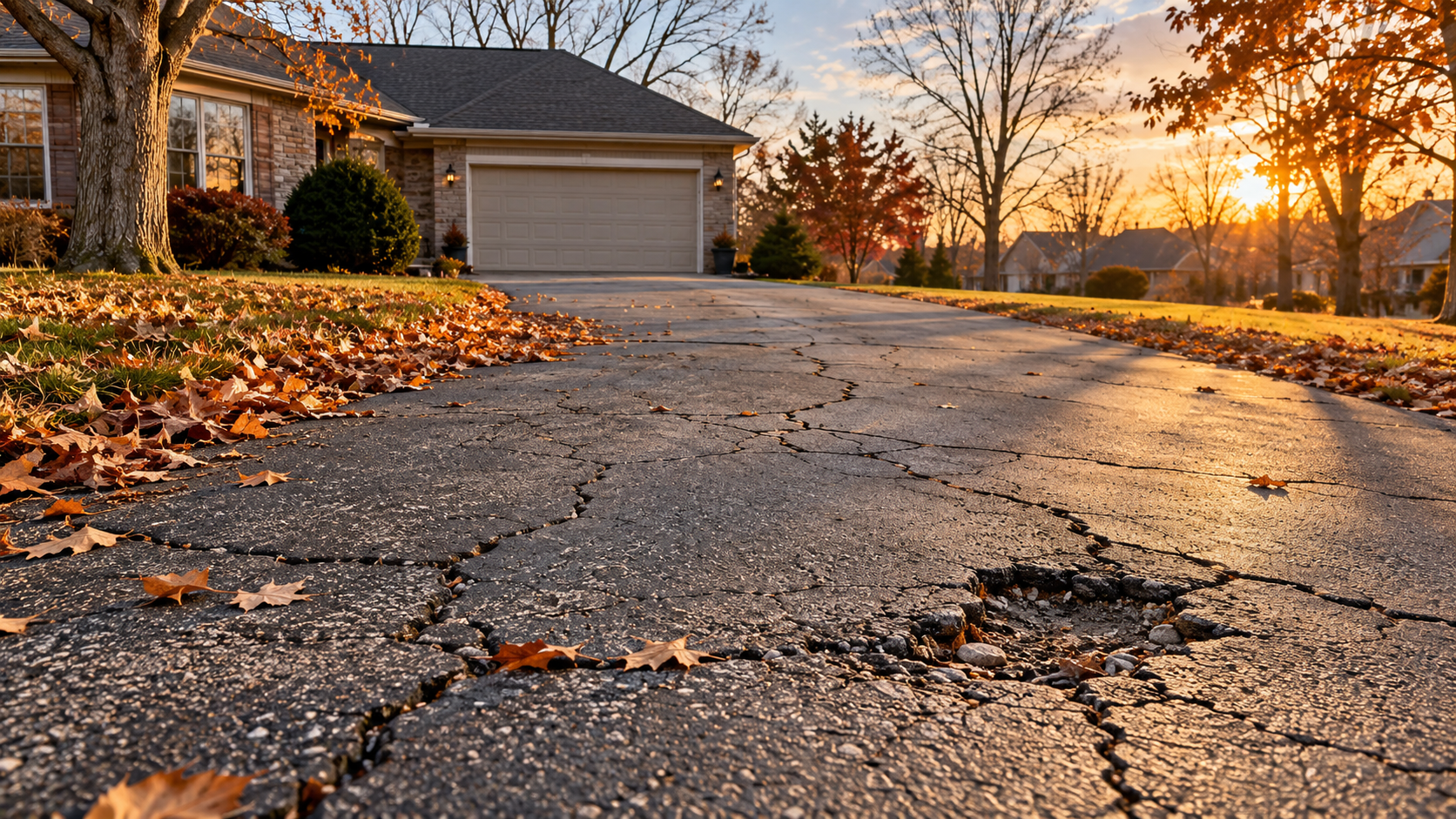
What causes freeze thaw asphalt damage in Missouri?
Freeze thaw asphalt damage starts with one ingredient that has nothing to do with cold: water. Asphalt is a flexible surface sitting on a compacted stone base, and both layers are supposed to shed water away from the pavement. The trouble begins when water finds a way in through an open crack, a failed edge, or a low spot that ponds after rain. Once that water is sitting in or under the pavement and the temperature drops below freezing, it turns to ice and expands roughly nine percent by volume. That expansion has to go somewhere, so it pushes the crack walls apart and lifts the asphalt around it.
Then the temperature climbs back above freezing, the ice melts, and the pavement settles into a slightly larger void than it started with. More water seeps into that bigger gap, the next freeze expands it again, and the cycle repeats. This is the freeze-thaw cycle, and across a single Springfield winter it does not happen once. It happens dozens of times. Every pass loosens the base a little more, widens the cracks a little further, and moves the pavement one step closer to a pothole.
Why does Springfield’s climate make winter asphalt damage worse?
Not every cold climate is equally hard on asphalt. A place that freezes in November and stays frozen until March actually protects pavement in a strange way, because the water under it stays locked as ice and never gets the chance to cycle. Southwest Missouri is the opposite. According to the National Weather Service Springfield office, our winters routinely bounce between daytime highs above freezing and overnight lows well below it, so the ground surface crosses the 32 degree line again and again through December, January, and February.
That daily swing is the worst possible pattern for pavement. Each afternoon thaw lets meltwater work down into cracks and base; each overnight freeze expands it. On top of the temperature swings, Springfield gets a mix of rain, sleet, and snow rather than one steady dry snowpack, which keeps feeding liquid water into the pavement all season. The combination of frequent freeze-thaw crossings and wet winter precipitation is why winter asphalt damage shows up so aggressively on local driveways and lots.
| Stage | What happens | What you see later |
|---|---|---|
| Water enters | Rain or snowmelt seeps into an open crack or low spot | Darker damp lines, ponding after storms |
| Freeze | Trapped water turns to ice and expands about 9 percent | Cracks widen, edges lift |
| Thaw | Ice melts, base softens, pavement settles into a bigger void | Spongy or depressed areas |
| Repeat | Cycle runs dozens of times per winter | Alligator cracking, potholes by spring |

What does freeze-thaw damage actually look like by spring?
When we get called out in March and April, the damage from a winter of freeze-thaw follows a predictable progression, and knowing the stages helps you catch it early. Here is what we find, roughly in order of severity:
- Widened cracks. Hairlines that were barely visible in the fall come out of winter two or three times wider, with crumbling edges where ice worked them loose.
- Alligator cracking. Interconnected cracks that look like reptile skin signal that the base underneath has been saturated and weakened by repeated freeze-thaw.
- Heaving and depressions. Sections that lifted during freezes and never fully settled, or low spots where the base washed out and the surface sank.
- Potholes. The end stage, where the surface finally gives way over a void that the freeze-thaw cycle hollowed out all winter.
Almost every one of these traces back to water that was allowed to sit in the pavement through the cold months. That is the good news, because water intrusion is the one part of the equation you can control before winter starts. When the damage has already reached alligator cracking or potholes, our asphalt repair and patching crew can cut out and rebuild the failed sections, but the far cheaper path is stopping the water before the freeze ever gets to it.
How do you get ahead of freeze thaw asphalt damage this fall?
Preventing freeze thaw asphalt damage comes down to keeping liquid water out of the pavement before the first hard freeze. None of these steps are exotic; they are the same fall checklist we run for our own maintenance customers, and the window to do them closes as soon as nights get consistently cold.
- Fill the cracks first. This is the highest-value move. A crack sealed in October has no path for water to enter, so the freeze-thaw cycle has nothing to work on. Our crack filling and repair team uses hot rubberized filler that stays flexible and moves with the pavement instead of popping loose on the first cold snap.
- Fix ponding and drainage. Any spot that holds water after a rain is a freeze-thaw hot spot waiting to happen. Correcting slope or adding drainage keeps meltwater running off instead of soaking in.
- Patch the soft spots now. A small area that already feels spongy will become a pothole over winter. Patching it in the fall is a fraction of the spring cost.
- Seal a sound surface while it is still warm enough. If your pavement is structurally fine but graying, a sealcoat adds a water-shedding layer, though it must go down while temperatures still allow it to cure.
The theme across all of these is timing. The Asphalt Institute describes crack sealing and surface maintenance as preventive measures that extend pavement life, and their value is highest right before the season that does the most harm. Do the work in the fall and you spend a little to protect the surface; wait until spring and you are paying to rebuild what the freeze-thaw cycle took apart. If you want a straight answer on what your driveway or lot needs before winter, reach out through our contact page and we will walk it with you.
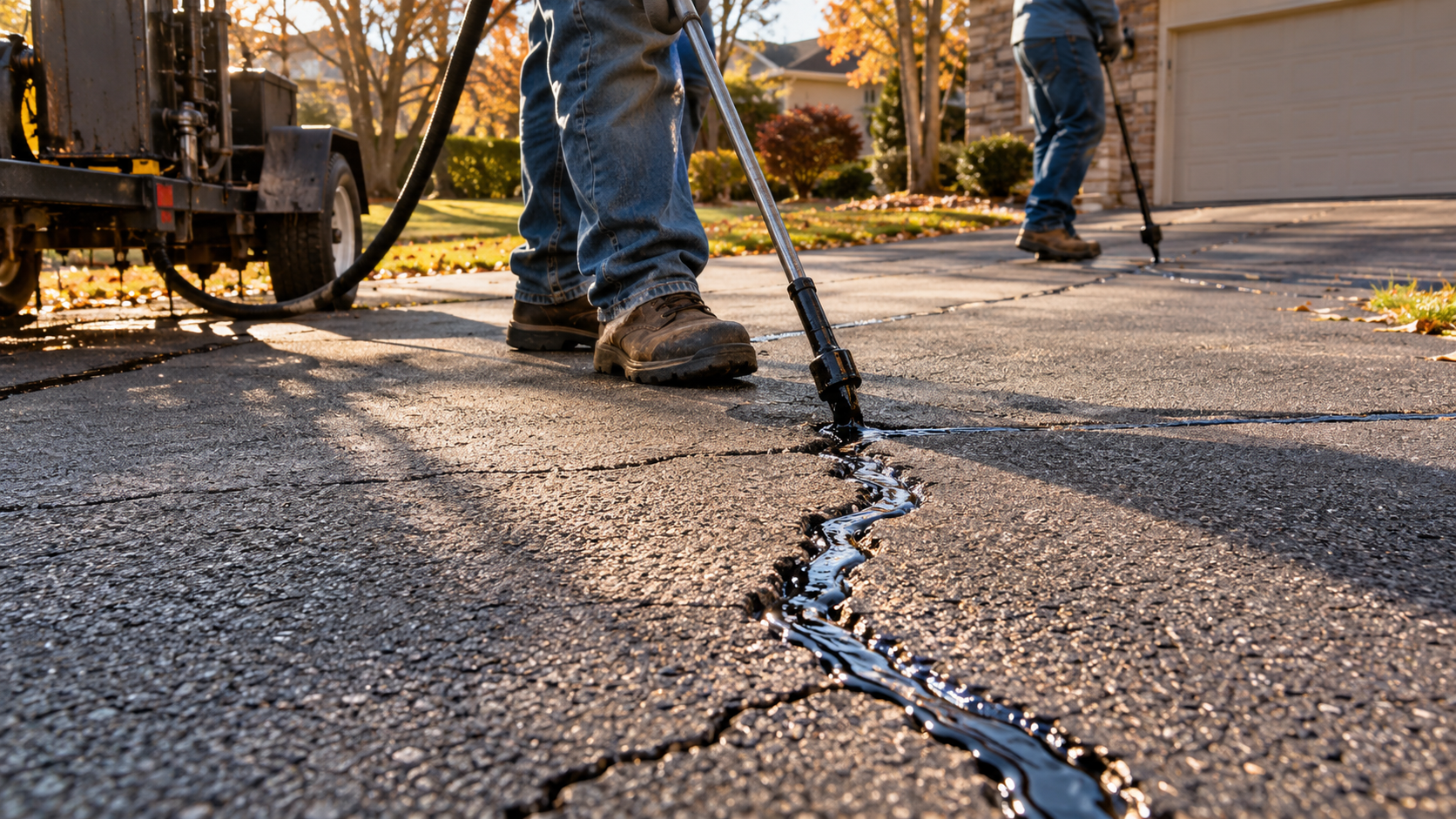
Is it too late to prevent damage if winter has already started?
Not necessarily, but your options narrow fast once temperatures drop. Crack filling with hot rubberized material needs the pavement and air to be warm enough for a good bond, and sealcoating needs warm days and nights to cure, so both get harder to do well as the season turns. That said, we can often still make emergency patches and fill working cracks during warm spells to limit the damage until spring. The honest answer we give homeowners who call us in January is that we will stabilize what we can now, then come back and do the lasting repair once the weather cooperates. It is always cheaper and cleaner to get ahead of freeze thaw asphalt damage in the fall than to chase it through the winter.
Frequently Asked Questions
What exactly is the freeze-thaw cycle and why does it damage asphalt?
The freeze-thaw cycle is the repeated crossing of the freezing point that happens through a Missouri winter. Water gets into cracks or the base, freezes and expands about nine percent, then thaws and lets more water in. Each cycle widens cracks and weakens the base, and over a winter it runs dozens of times, which is what turns small cracks into potholes.
Does freeze thaw asphalt damage happen even if I never see standing water?
Yes. You do not need obvious puddles for water to get into pavement. Rain and snowmelt seep into hairline cracks, failed edges, and porous surfaces you might not notice. Once that moisture is inside and the temperature drops, the freeze-thaw cycle goes to work regardless of whether you ever saw the water pool on top.
When is the best time to prevent winter asphalt damage in Springfield?
Fall, before the first hard freeze. Filling cracks and correcting drainage in September and October seals the pavement while it is still warm enough for the work to bond and cure. Once nights stay below freezing, your options shrink to temporary fixes, so the early-fall window is the one you want to hit.
Can sealcoating alone stop freeze-thaw damage?
No, not by itself. Sealcoat is a thin protective film that helps a sound surface shed water and UV, but it cannot bridge open cracks. If you have cracks, water still gets in underneath the sealcoat. You have to fill the cracks first, then sealcoating can protect the intact surface around them.
My driveway already cracked over the winter. What are my options?
It depends on how far it went. Isolated cracks can often still be cleaned and filled, while alligator cracking or potholes usually mean the base failed and that section needs to be cut out and rebuilt. We look at the pavement, tell you honestly whether a fill will hold or whether it needs patching, and price only the work it actually needs.
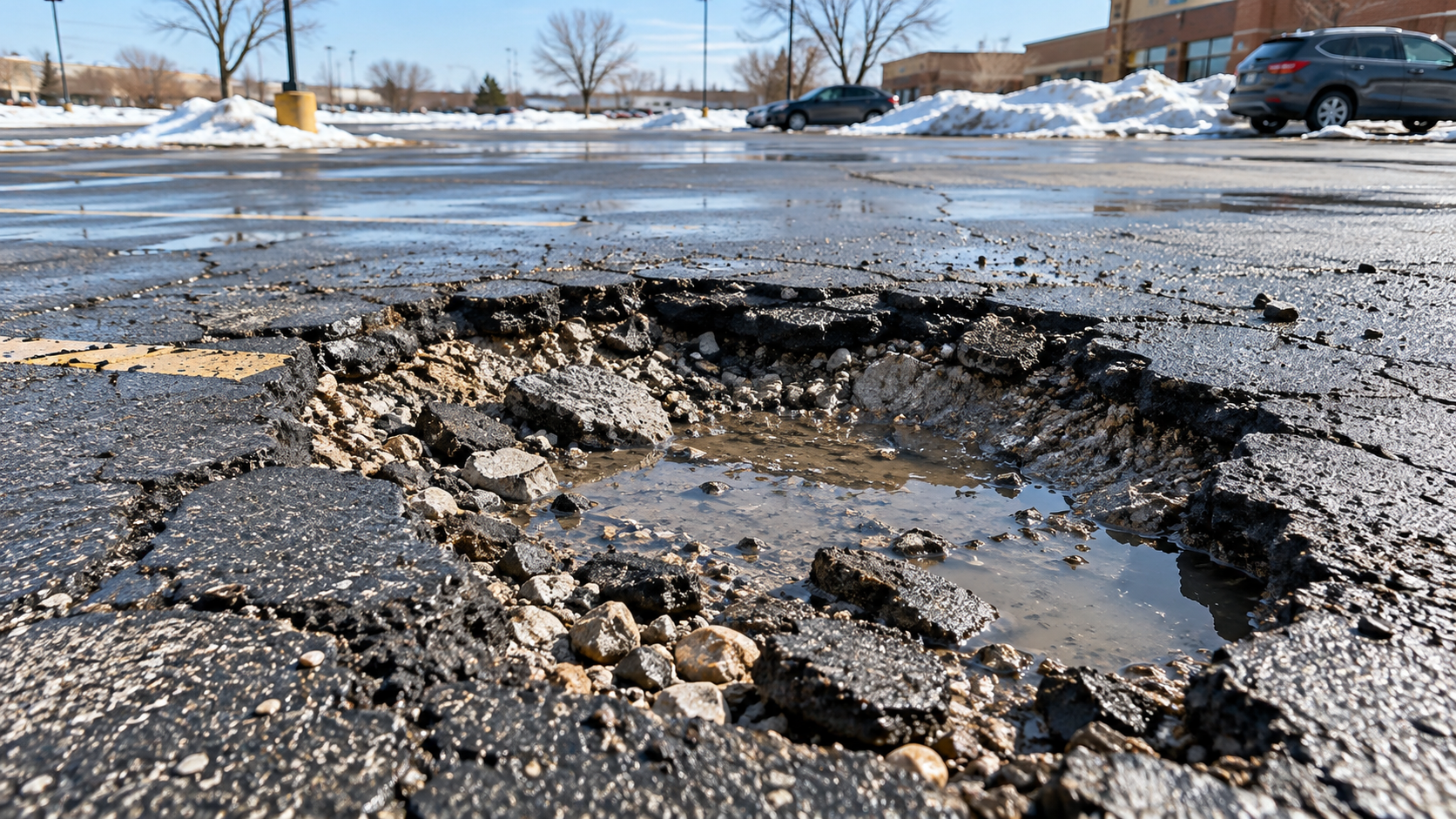
Get a Free Written Estimate
Want to protect your driveway or parking lot before Springfield’s first freeze? We will walk the pavement, point out where water is getting in, and put honest numbers in writing for the crack filling, patching, or drainage work it actually needs. No pressure, no upsell.
Asphalt Pavers LLC, 434 S Belcrest Ave, Springfield, MO 65802
(417) 319-2693 · Mon-Sat 8:00 AM-5:00 PM
View us on Google Maps
Reviewed by the owner – September 30, 2026