

The most common maintenance question we field on an estimate is how often to sealcoat driveway asphalt in Missouri, and the honest answer is every two to three years for most homes, not every single year. Sealcoating is real protection against UV, water, and traffic wear, but it is a thin maintenance coat, and putting one down too often causes its own problems. Below we walk you through the cadence our crew actually recommends, the reasons behind it, what over sealing does to a driveway, and how to read your own surface so you seal when it counts and skip the years you do not need it.
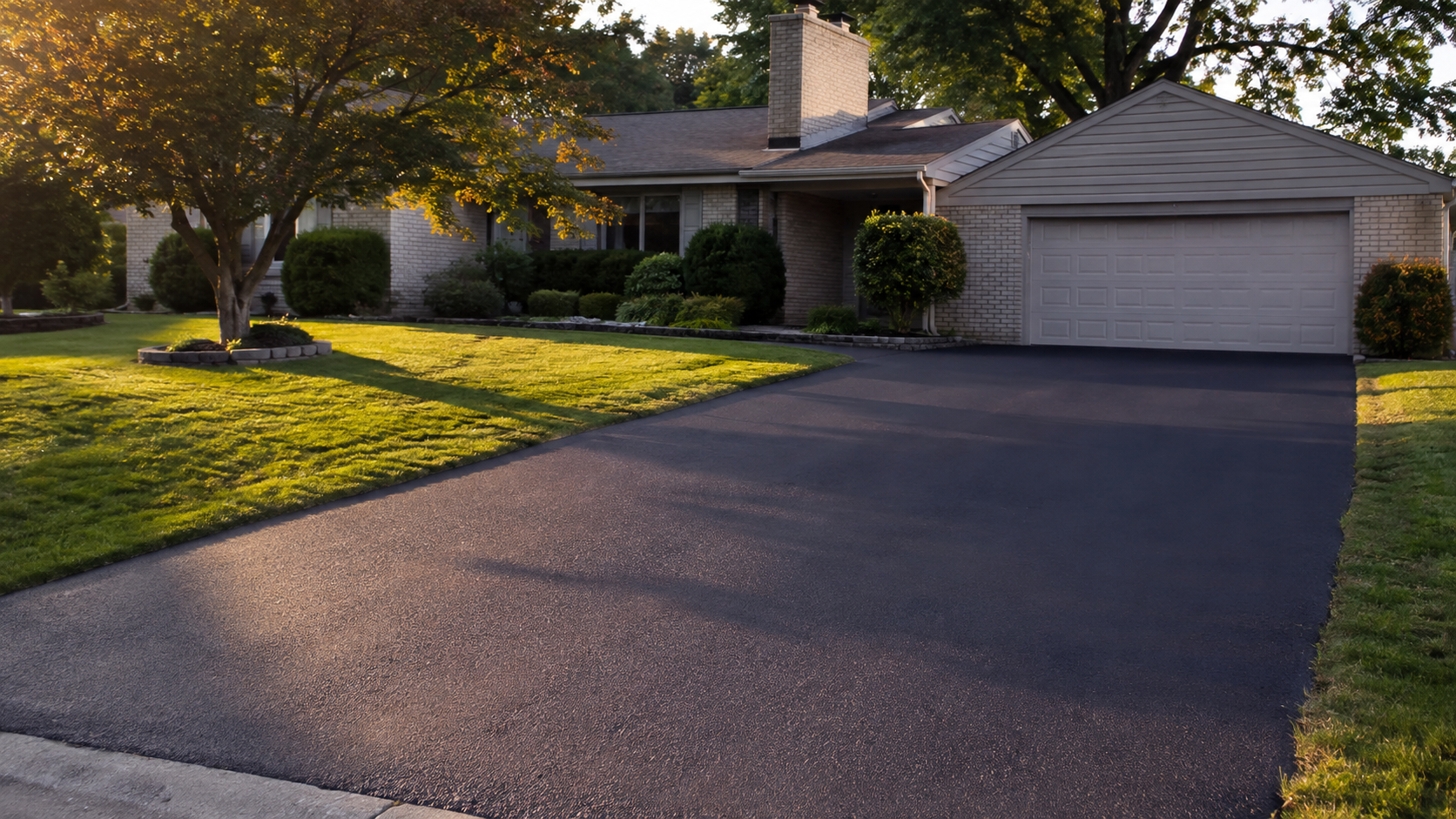
How often to sealcoat driveway asphalt in Missouri?
For a typical residential driveway in the Springfield area, a two to three year sealcoating cadence is the sweet spot. That range is not a guess. It lines up with what most sealer manufacturers publish and with what we see hold up on real driveways through our freeze-thaw winters. A fresh coat protects the asphalt binder for a couple of seasons, then UV and water slowly wear it thin, and that is your window to reapply. Newly paved asphalt is the exception: it needs to cure for 6 to 12 months before its first coat ever goes down.
Where your driveway lands inside that two to three year range depends on how hard it lives. Here is the timing table we work from when a homeowner asks how often they should reseal.
| Driveway situation | Reseal cadence we recommend |
|---|---|
| Average residential, some tree shade, light traffic | Every 3 years |
| Full sun all day, heavy UV exposure | Every 2 to 3 years |
| Heavy use, trucks, RVs, turning tires | Every 2 years |
| Brand new asphalt (first year) | Wait, do not seal yet |
| Sealed last year and still dark | Skip, it is not due |
The point of that table is simple: driveway sealcoating frequency is about wear, not the calendar. Two driveways paved the same week can need resealing years apart depending on sun, drainage, and how many tires turn on them.
Why is the sealcoating cadence two to three years and not every year?
Sealcoat does one job well: it replaces the protective surface layer that UV and traffic strip away, keeping water and sun off the asphalt binder that holds everything together. That protective film does not vanish in twelve months. On a normal driveway it takes roughly two to three years for the coat to thin out to where the surface is exposed again. Resealing before that is spending money to coat a surface that is still protected.
Sealer manufacturers back this up. Product data sheets from suppliers like SealMaster and the pavement maintenance guidance from the Asphalt Institute describe sealcoating as a periodic maintenance step tied to surface wear, not an annual ritual. The reseal signal is the surface itself losing its color and starting to absorb water, and in Missouri that generally shows up on that two to three year rhythm.
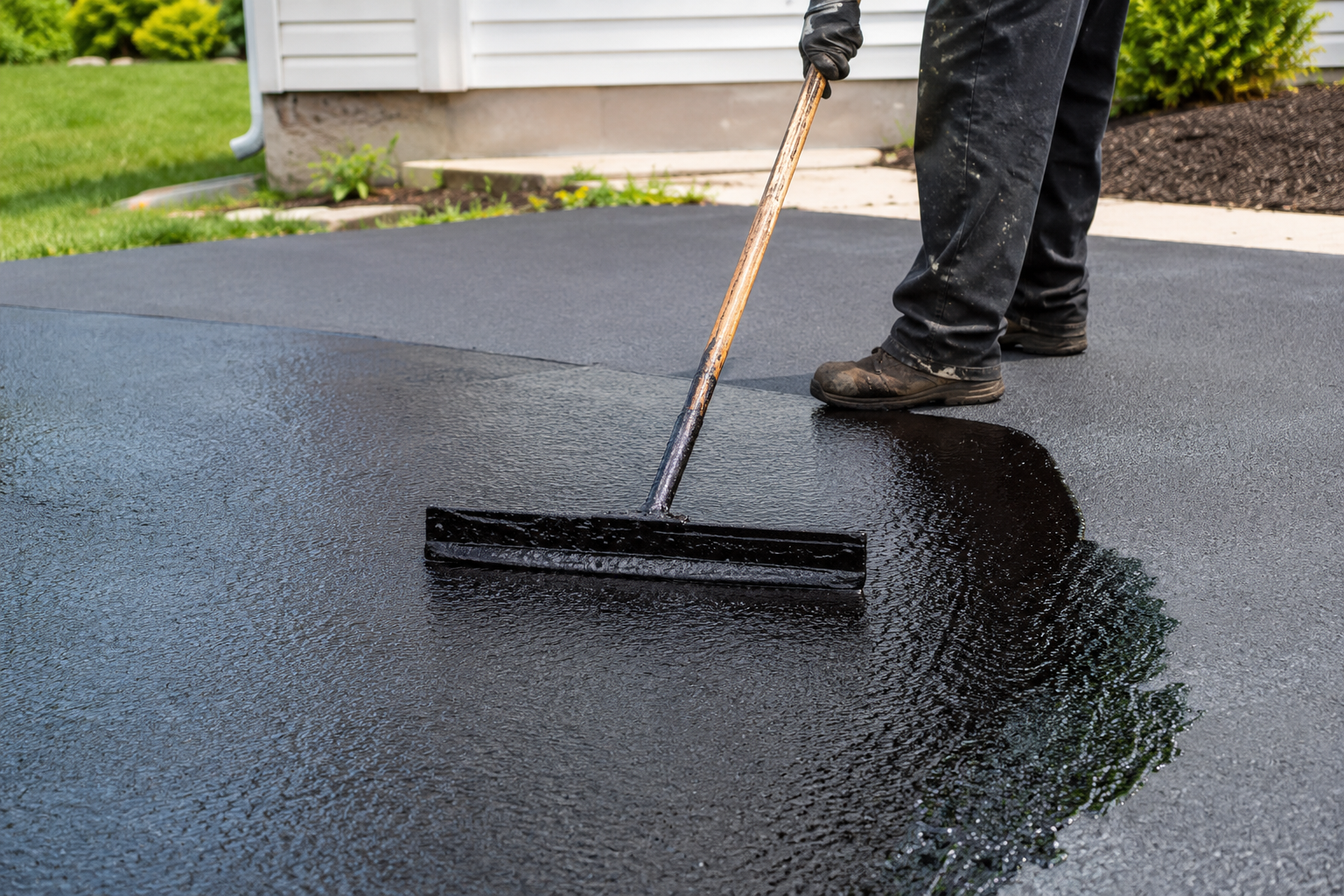
What does over sealing a driveway actually do?
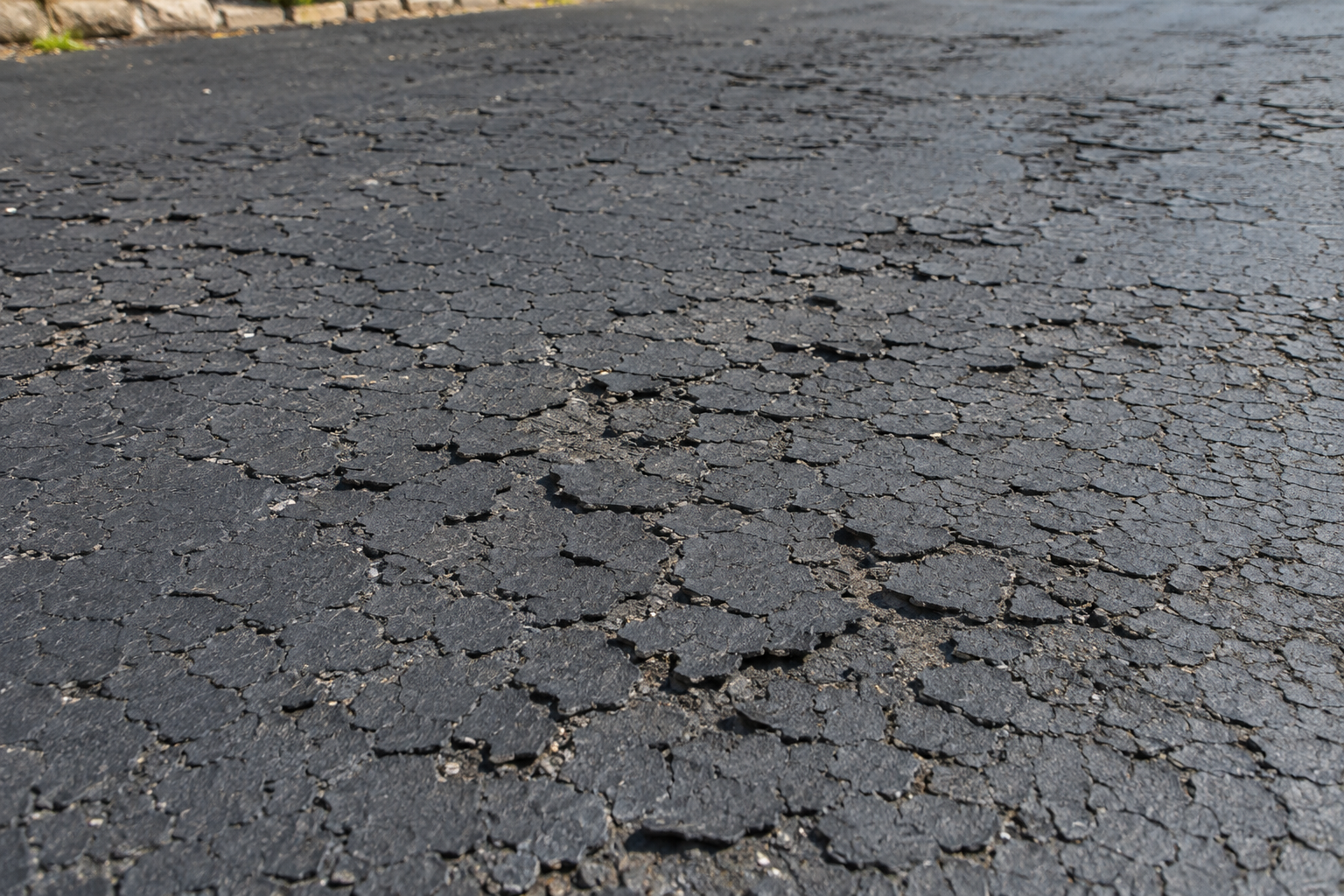
This is the part the once-a-year crowd never hears. Sealcoat is not paint, and thicker is not better. When you stack a new coat on top of one that has not worn down, the layers build up faster than they can bond and cure, and that thick film becomes brittle. We get called out to driveways that look almost scaly, and the story is almost always the same: sealed every spring for years.
- Cracking and flaking. Over-thick sealer cracks in a fine web pattern and starts peeling off in flakes, which looks worse than the faded asphalt it was meant to hide.
- Tracking and softness. Coats piled on before the previous one fully cured can stay soft, track onto shoes and tires, and never harden the way a single properly cured coat does.
- Wasted money. You are paying for a coat the driveway did not need and, worse, creating a buildup that eventually has to wear or be stripped off before a good coat will stick again.
So when a homeowner tells us they seal every year to stay ahead of it, we usually tell them to stop. The goal is a healthy surface, not the darkest driveway on the street. Getting the sealcoating cadence right protects your asphalt and your wallet.
How do I know when my driveway is actually due?
Instead of counting years, read the surface. This is the same quick walk we do on an estimate, and you can do it yourself in five minutes. If two or three of these show up, you are in your reseal window.
- Color. Fresh sealer and asphalt are nearly black. A driveway faded to dull gray has lost its surface binder to UV and is due.
- Water. After rain, does water bead and run off, or soak in and darken the asphalt in blotches? Absorbing water means the surface is porous and unprotected.
- Texture. If the individual stones are standing up and the smooth top has worn away, the protective layer is gone.
- Fine cracks. Hairline and spider cracks are an early sign water is finding its way in and it is time to fill and seal.
- Time. If it has been more than three years since the last coat, walk it and check regardless of how it looks from the street.
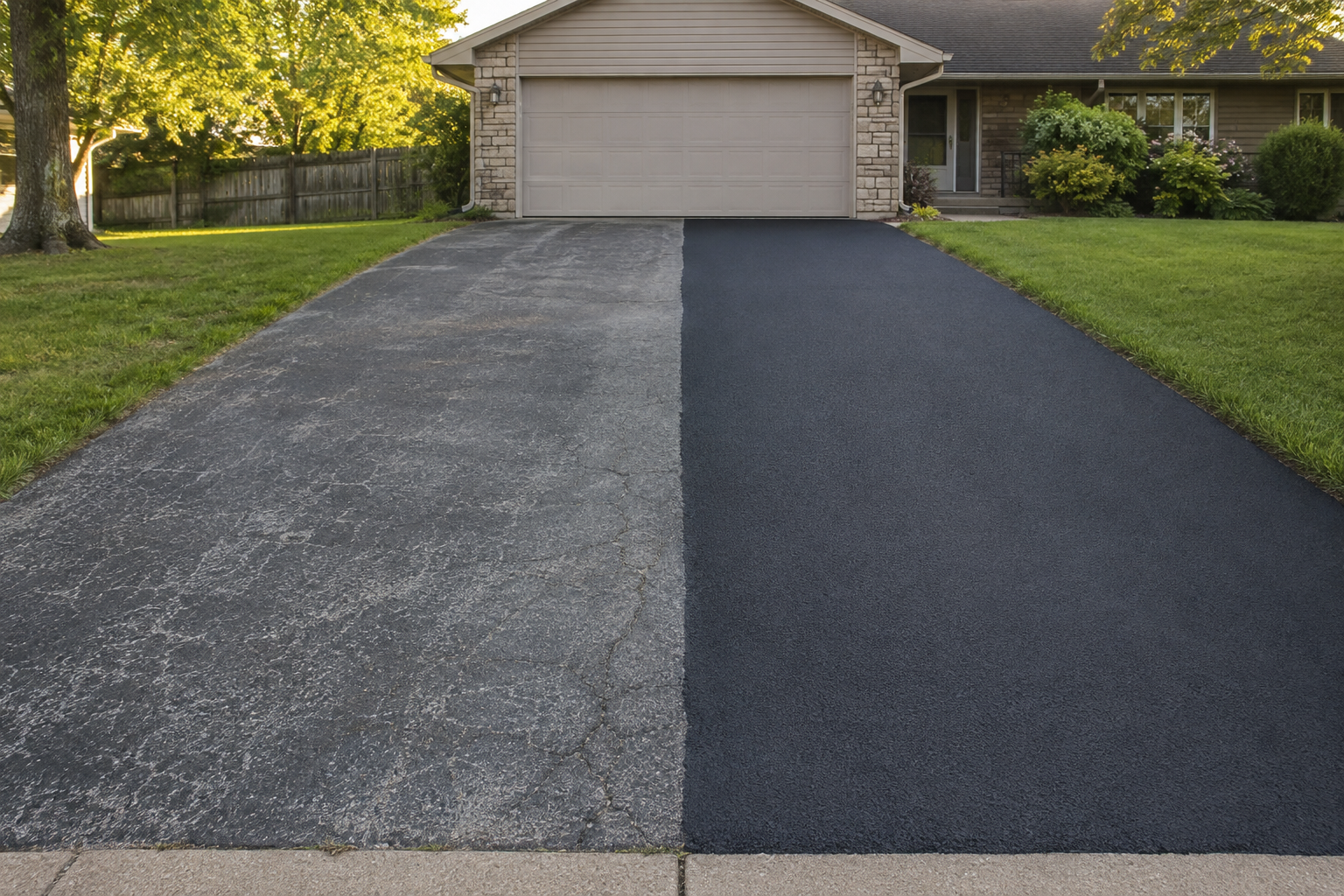
One thing sealcoat cannot do is fix a crack. Any real crack needs to be filled first so water cannot get under the surface, and that is a separate step from the coat itself. We cover it in detail on our crack filling and repair page, and on a full job we always crack-fill before we seal. If you want the whole maintenance picture, our sealcoating services page lays out what a proper driveway or commercial coat includes.
When is sealcoating NOT the answer at all?
Sealing on a two to three year rhythm assumes a structurally sound driveway. If the base has failed, no cadence of sealcoat will save it, and we would rather tell you that on the estimate than take your money for a coat that hides the problem for a few months.
- Alligator cracking. If the surface looks like reptile skin, the base underneath has failed and that area needs asphalt repair and patching, not sealer.
- Potholes and sunken spots. These are base failures. Sealing around them just lets them keep growing. Fix the structure first.
- Brand new asphalt. Give it 6 to 12 months to cure before the first coat, no matter how tempting the fresh-black look is.
Frequently Asked Questions
How often should you sealcoat a driveway in Missouri?
For most Springfield-area driveways, every two to three years is right. Full-sun or heavy-use driveways lean toward every two years, while a shaded, lightly used driveway can go three. Read the surface rather than the calendar: faded gray color and water soaking in instead of beading are the real signs it is due.
Can you sealcoat a driveway too often?
Yes. Sealing every year builds the coating up thicker than it can cure and bond, which leads to a brittle film that cracks in a fine web and peels off in flakes. It also wastes money on a surface that was still protected. Once every two to three years lets each coat wear down before the next goes on.
How long does a sealcoat last?
A properly applied coat on a clean, crack-filled surface generally protects the asphalt for two to three years in our climate. Heavy sun, standing water, and constant turning tires wear it faster. When the surface fades to gray and starts absorbing water, the coat has done its job and it is time to reapply.
Do I need to fill cracks before every sealcoat?
Yes. Sealcoat is a surface film and cannot bridge or repair a crack. Any crack that has opened since the last coat gets filled with a flexible crack filler first, then the driveway gets sealed. Doing it in that order keeps water out of the base, which is the whole point of the coat.
Should I sealcoat a brand new asphalt driveway?
Not right away. New asphalt needs 6 to 12 months to cure and release its lightest oils before the first sealcoat. Sealing too early can trap those oils and hurt the surface. If your driveway was paved this year, wait until next season for its first coat, then settle into the two to three year cadence.
Get a Free Written Estimate
Not sure whether your driveway is actually due for a sealcoat this year? Our crew will walk your surface, check for cracks and base issues, and give you an honest written estimate on whether to seal now, crack-fill first, or wait a season. No pressure and no upsell.
Asphalt Pavers LLC, 434 S Belcrest Ave, Springfield, MO 65802. Call us at (417) 319-2693. Hours: Mon-Sat 8:00 AM-5:00 PM. Find us on Google Business Profile.
Reviewed by the owner – 2026-09-01