

Every fall we get the same call, and the honest answer to when to sealcoat driveway asphalt in Springfield comes down to two things: how much life your surface has left and how many warm days are still on the calendar. Sealcoating season does not end because of a date on a flyer. It ends when overnight temperatures drop far enough that the sealer will not cure, and around here that window closes fast once October arrives. Below we walk you through how our crew decides whether a driveway actually needs sealcoating this year, how to read your own asphalt, and the honest cases where we tell homeowners to save their money.
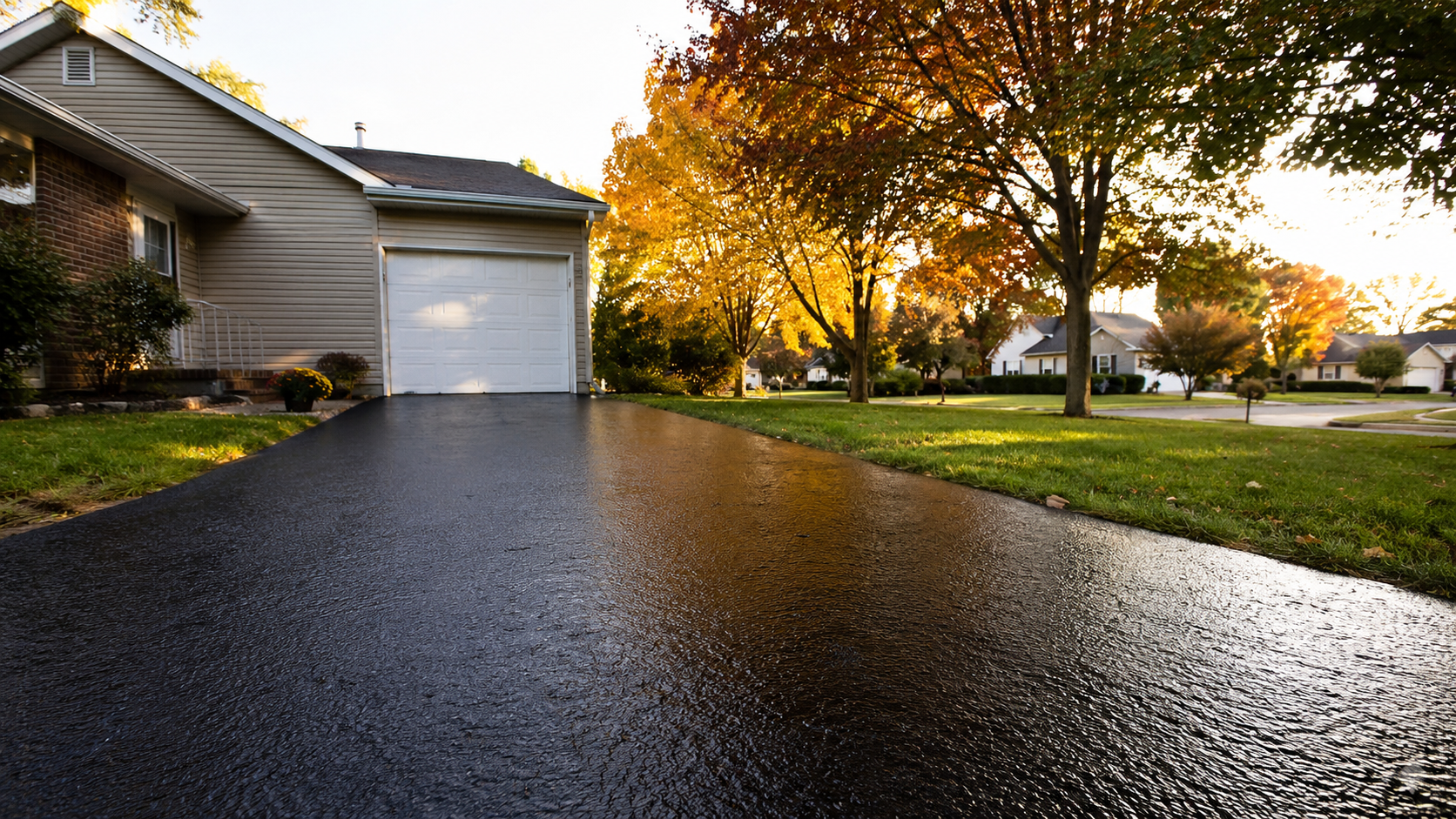
When to sealcoat driveway asphalt in Springfield: the temperature rules
The reason we push driveway sealcoating hard in late summer and early fall is chemistry, not sales pressure. Asphalt sealer is water based, and it needs warmth to cure properly. Most manufacturers, and the technical guidance from the Asphalt Institute, put the working range at roughly 50 degrees and rising, with no rain for 24 hours and ideally warm days on both sides of the application. That is the real answer to when to sealcoat a driveway: not a month, but a stretch of days that stay warm enough for the coating to set.
Here is the timing table we work from on the crew when a homeowner asks if it is too late in the year.
| Condition | Our sealcoating call |
|---|---|
| Daytime highs 60s-80s, warm nights | Ideal, cures clean and hard |
| Daytime highs 50s, overnight lows near 50 | Workable, we watch the forecast closely |
| Overnight lows dropping below 50 | Risky, cure slows and finish can suffer |
| Highs under 50 or frost at night | Stop, sealer will not cure right |
In an average Springfield year the reliable warm window runs out somewhere in mid to late October. If you look at the National Weather Service office in Springfield normals, our overnight lows start sliding through the 40s in October and keep falling. That is why we tell people October is the practical cutoff. A coating that goes down too cold can stay tacky, track under tires, and never reach the hardness it needs to protect the surface through winter.
How do you tell if your driveway needs sealcoating this year?
Not every driveway needs sealer every fall, so before we quote anyone we look at the surface itself. Knowing when to sealcoat a driveway is really about reading a few clear signs. Here is the same quick check we do on an estimate, and you can walk your own driveway the same way.
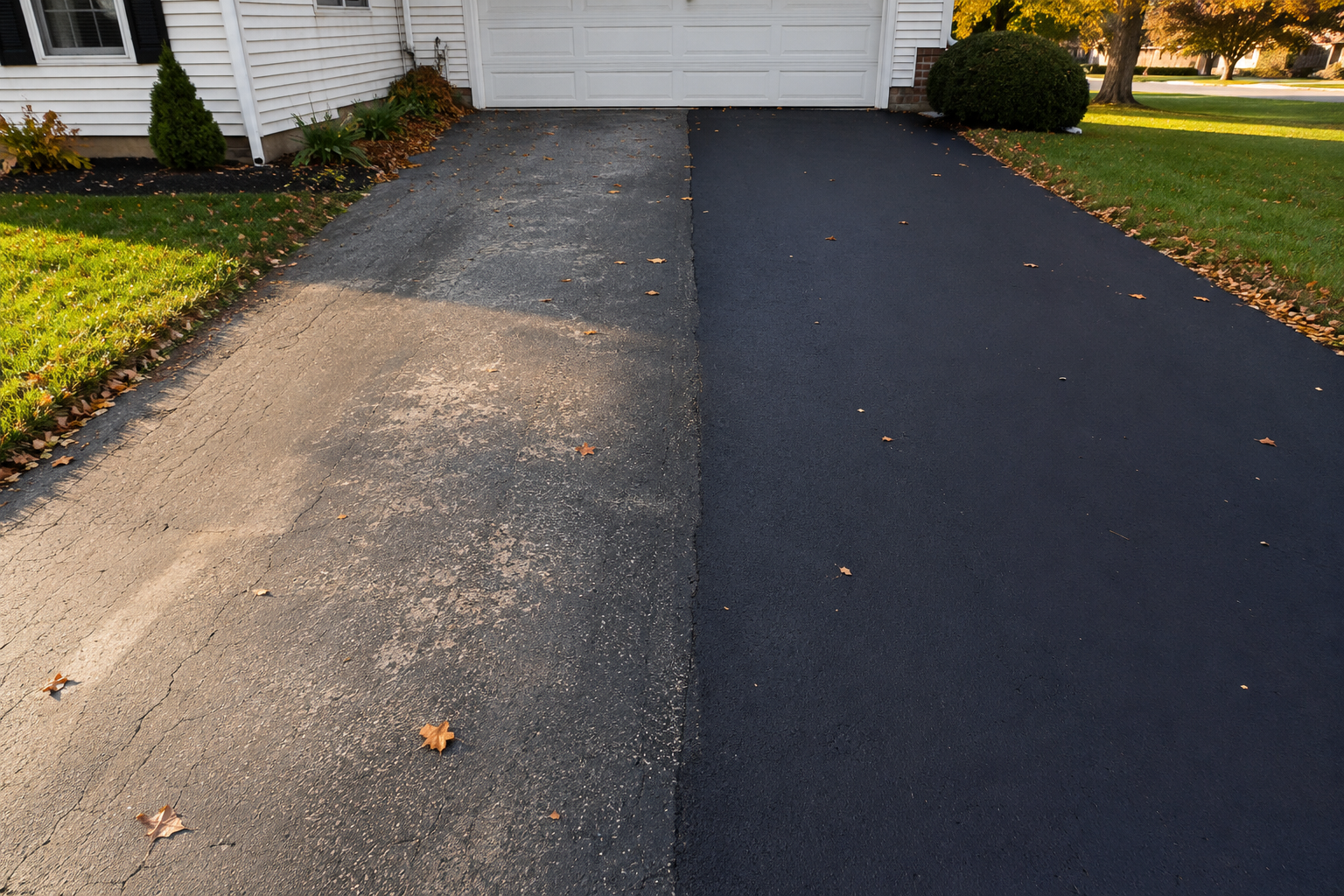
- Color. Fresh asphalt is nearly black. A driveway that has faded to a dull gray has lost the surface binder to UV, and that is the classic sign it is due.
- Texture. Run your hand or look closely. If you can see the individual stones standing up and the smooth top has worn away, the surface is drying out.
- Water. After rain, does water bead and run off, or soak in and darken the asphalt in patches? Absorbing water means the surface is porous and needs protection.
- Fine cracks. Hairline surface cracking and small spider cracks are an early warning that water is starting to find its way in.
- Last coat. If it has been more than two to three years since the last sealcoat, it is worth a look regardless of how it appears from the street.
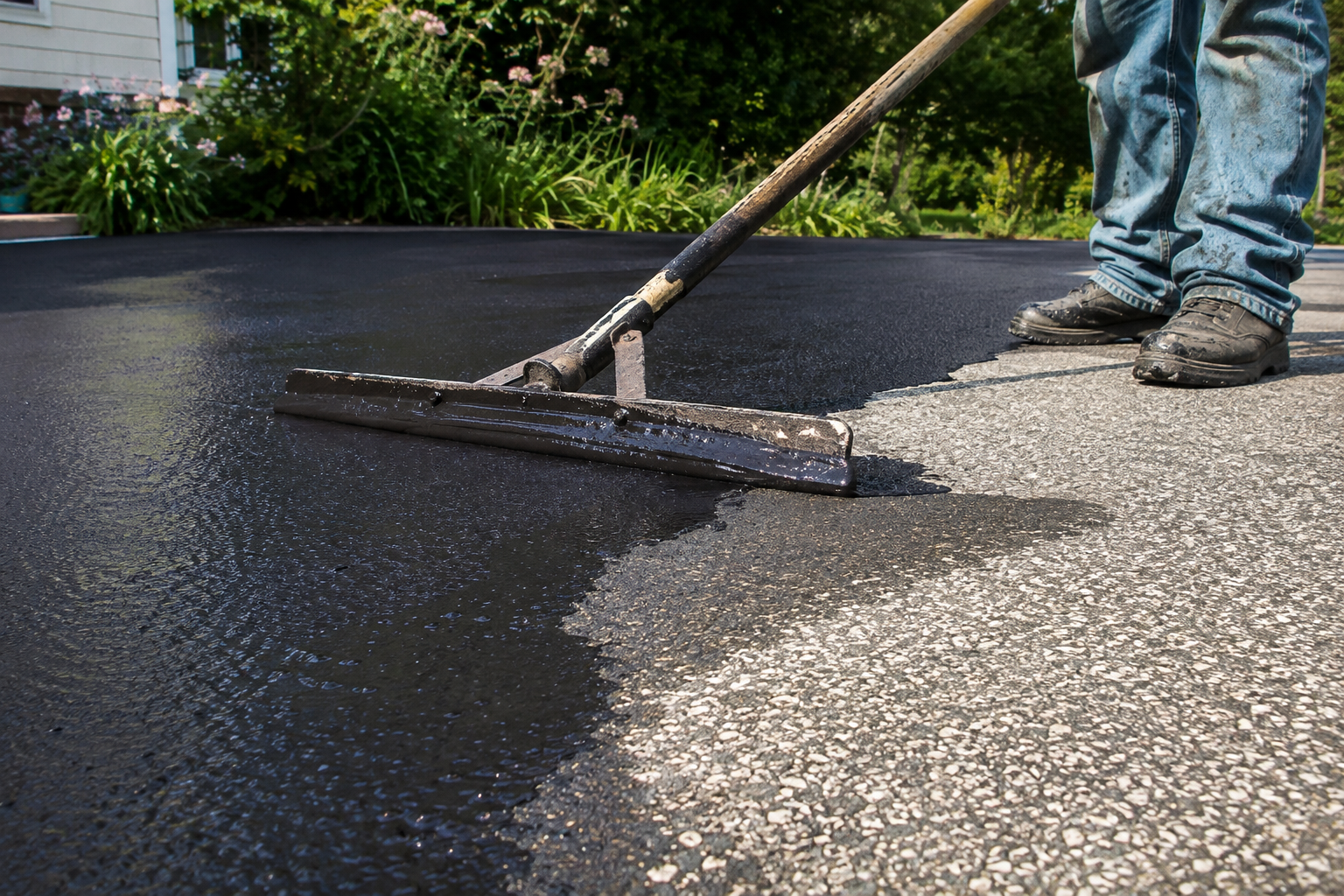
One rule we stand behind: brand new asphalt should not be sealed right away. A newly paved driveway needs to cure and give up its lightest oils first, usually somewhere between 6 and 12 months, before the first sealcoat. If your driveway went down this summer, this is not your year, and any contractor pushing a seal on month-old asphalt is doing you no favors. We cover that timeline in more detail on our driveway sealcoating page.
Why does the fall window matter so much here?
Sealcoating is not paint. It is a maintenance coat that replaces the protective layer UV and traffic wear away, and its whole job is to keep water and sun off the asphalt binder that holds your driveway together. In southwest Missouri the enemy right behind fall is freeze-thaw. Once water works into an unsealed, porous surface and the temperature swings above and below freezing all winter, small problems grow into real ones by spring.
That is the timing logic. A sealcoat applied in September or early October cures fully, seals the surface, and heads into winter ready to shed water. Wait until the warm days are gone and you have missed the window, which means another full winter of sun and water working on bare asphalt. Getting ahead of that is the same reason our crack filling and repair calls climb every fall. Sealcoat protects the flat surface, but any real cracks need to be filled first so water cannot get underneath.
When is sealcoating NOT the answer?
This is the part most sealcoating articles skip, and it is the part we care about most. Sealcoating is a thin protective coat. It is not a repair, and it cannot fix a driveway that has structural problems. We would rather tell you the truth on the estimate than take your money for a coat that hides a failing surface for a few months. Here are the cases where we tell homeowners to hold off or spend their money somewhere better.
- Widespread alligator cracking. If the surface looks like reptile skin, the base underneath has failed. A sealcoat over it is lipstick on a broken driveway. That area needs asphalt repair and patching, not sealer.
- Potholes and sunken spots. These are base failures. Seal around them all you want and they will keep growing. Fix the structure first.
- Brand new asphalt. As above, give it most of a year to cure before the first coat.
- It is already too cold. If the reliable warm days are gone, we would rather crack-fill now and schedule your sealcoat for spring than rush a coat that will not cure.
- You sealed it last year. Sealcoating every single year is overkill and can build up too thick, which leads to its own cracking and peeling. Every two to three years is the honest cadence for most driveways.
What does a proper fall sealcoat include?
When a driveway is a good candidate, the work is straightforward but the prep is where the value lives. On our jobs a sealcoat means a real clean first, cracks filled, oil spots primed, edges cut in by hand, and then the coating applied at the right thickness and left to cure before anyone drives on it. Skipping the cleaning and crack filling is how you end up with a coat that peels by spring. If you are weighing whether this is your year, the fastest path is to have us take a look and give you a straight written estimate.
Frequently Asked Questions
What month is too late to sealcoat a driveway in Missouri?
In an average Springfield year, mid to late October is the practical cutoff. Once overnight lows settle below 50 degrees and warm days get scarce, water based sealer struggles to cure. If we are past that point we usually recommend crack filling now and sealcoating in the spring instead of rushing a coat that will not set.
How cold is too cold to sealcoat?
We want daytime temperatures at least in the 50s and rising, with overnight lows staying near 50 and no rain for 24 hours. Below that, the cure slows and the finish can stay soft or tacky. Warm days on both sides of the application matter as much as the temperature the day it goes down.
How often should I sealcoat my driveway?
For most Springfield driveways, every two to three years is right. Sealing every year builds the coating up too thick and can cause it to crack and peel on its own. Read the surface: faded gray color, a dried out texture, and water soaking in instead of beading are the signs it is due.
Should I fill cracks before sealcoating?
Yes, always. Sealcoat is a surface coating and cannot bridge or repair an existing crack. Cracks get filled first with a flexible crack filler, then the driveway gets sealed. Doing it in that order keeps water out of the base right before winter, which is the whole point of a fall coat.
Can I sealcoat a brand new asphalt driveway?
Not right away. New asphalt needs 6 to 12 months to cure and release its lightest oils before the first sealcoat. Sealing too early can trap those oils and hurt the surface. If your driveway was paved this summer, wait until next year for its first coat.
Get a Free Written Estimate
Not sure if your driveway needs sealcoating before the warm days run out? Our crew will walk your surface, check for cracks and base issues, and give you an honest written estimate on whether to seal now, crack-fill and wait, or repair first. No pressure and no upsell.
Asphalt Pavers LLC, 434 S Belcrest Ave, Springfield, MO 65802. Call us at (417) 319-2693. Hours: Mon-Sat 8:00 AM-5:00 PM. Find us on Google Business Profile.
Reviewed by the owner – 2026-08-28