

Homeowners ask us about the best time to pave a driveway in Missouri almost every week once the weather warms up, and the honest crew answer is that late spring through early fall is the sweet spot. Asphalt is temperature-driven from the moment it leaves the plant, so the calendar matters far more than most people expect. Below we walk through exactly why the season decides how well your new driveway compacts and lasts, which months we actually pave in around southwest Missouri, and why our fall schedule books up fast every single year.
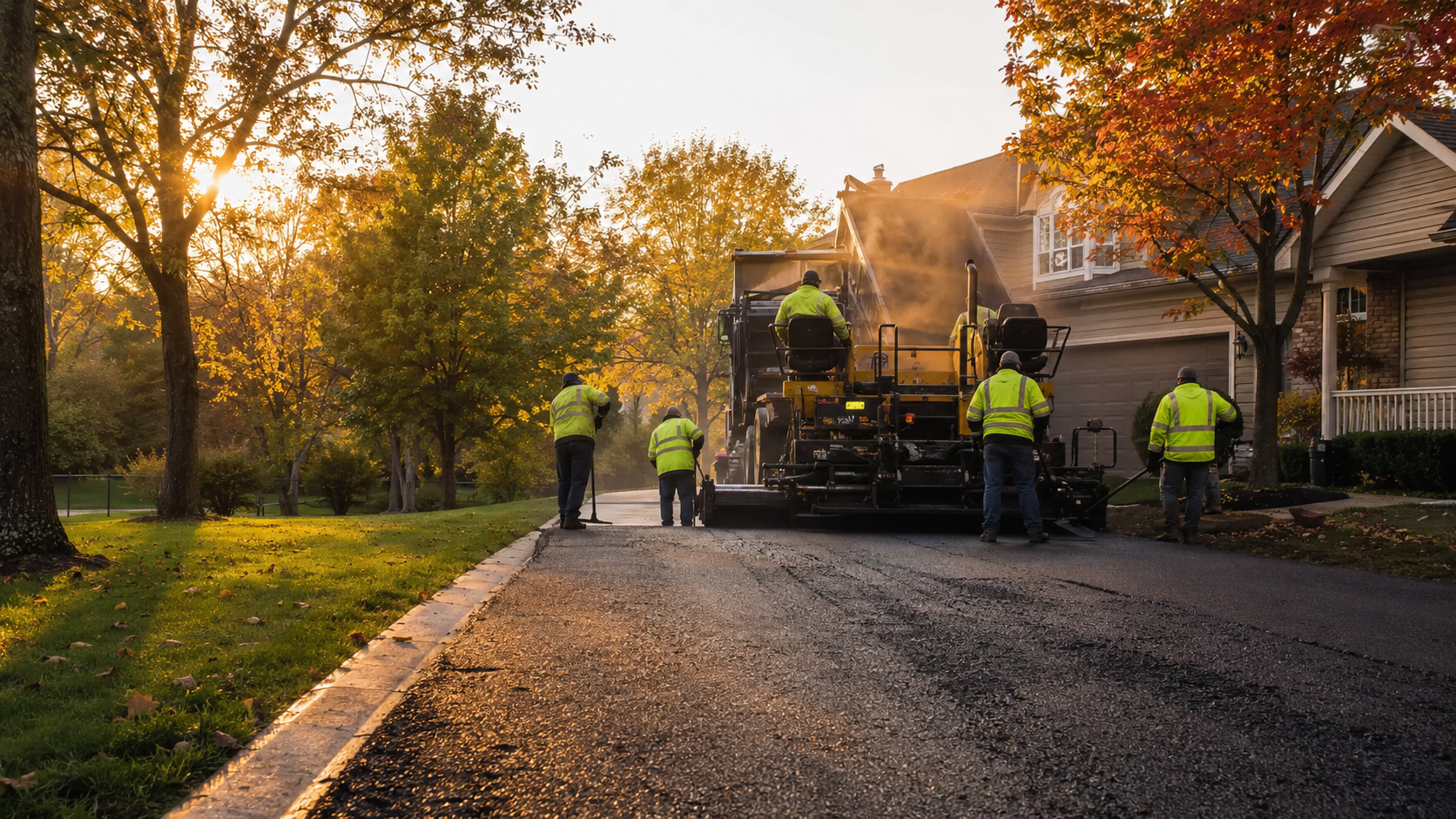
When is the best time to pave a driveway in Missouri?
For most of the year the best time to pave a driveway in Missouri runs from about mid-April through mid-October, when daytime highs sit comfortably above 60 degrees and overnight lows stay mild. That window gives hot mix asphalt enough time to spread, level, and compact before it cools off too fast. People literally type “best time to pave driveway missouri” into Google looking for a month, and the real answer from our crew is a range built around ground temperature and overnight lows, not one magic date. Here is how the seasons stack up on our schedule.
| Season | Paving conditions | Our take |
|---|---|---|
| Spring (Apr – May) | Warming, occasional wet spells | Good once the ground dries out |
| Summer (Jun – Aug) | Hot, long working days | Excellent for compaction |
| Early fall (Sep – mid Oct) | Warm days, cooler nights | Prime season, books up fast |
| Late fall (late Oct – Nov) | Cold nights, short days | Risky, case by case |
| Winter (Dec – Feb) | Cold ground, freeze-thaw | We stop full paving |
Why does asphalt need warm temperatures?
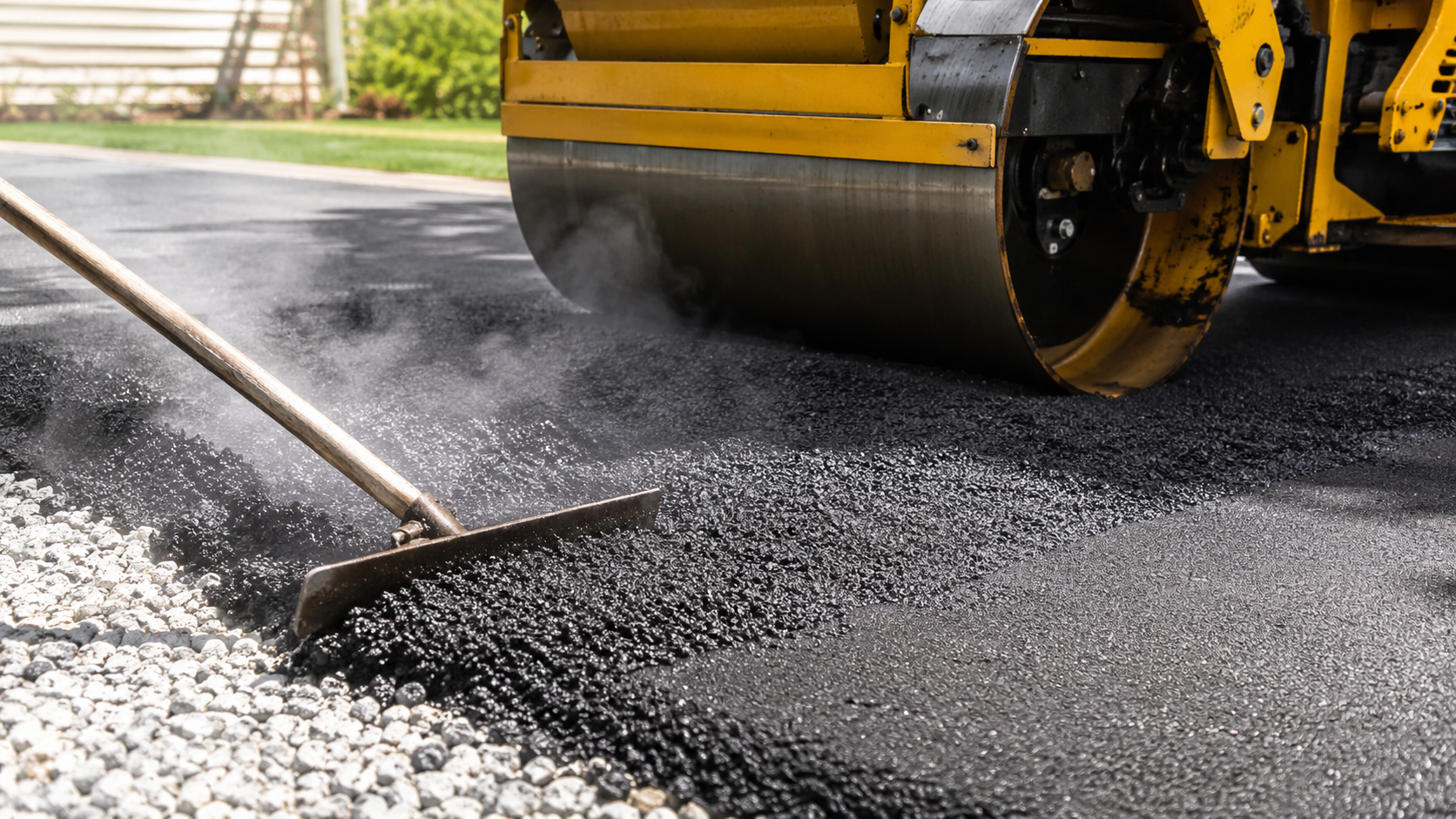
This is where the crew-level detail matters, because the numbers are not guesswork. Hot mix asphalt leaves the plant around 275 to 300 degrees Fahrenheit, and we have a limited window to spread and roll it before it drops below roughly 185 degrees, the point where it stops compacting properly. Cold ground and cold air pull that heat out fast. When we pave a driveway in Missouri on a chilly day, the mat can stiffen before the rollers finish, and asphalt that does not compact fully ends up porous, weak, and short-lived.
A few conditions we watch on every estimate and every paving day:
- Ground temperature. The base needs to be at or above about 50 degrees and rising. A frozen or cold subgrade steals heat from the mat instantly.
- Air temperature and trend. We want daytime air above 50 degrees and climbing, not a warm afternoon followed by a hard evening drop.
- Overnight lows. Fresh asphalt keeps curing after we leave. Overnight lows in the 30s pull heat out too quickly for a clean set.
- Lift thickness. Thicker lifts hold heat longer, so a thin overlay is far more sensitive to a cold day than a full-depth drive.
For a full picture of what goes into a proper build, from base prep to final rolling, see our asphalt paving service page. Temperature guidance on compaction and mix behavior is also covered by the Asphalt Institute, and it lines up with what we see in the field.
What months can we actually pave in southwest Missouri?
Springfield sits in a spot with real four-season weather, so our paving calendar follows the local climate closely. According to National Weather Service Springfield seasonal temperature normals, average highs climb into the 60s by April, peak in the upper 80s and low 90s through July and August, and slide back through the 60s and 50s across October and November. That trend maps almost exactly onto when hot mix behaves and when it fights us.
| Months | Typical daytime highs | Paving status |
|---|---|---|
| April – May | 60s – 70s | Open, weather permitting |
| June – August | 80s – 90s | Best compaction of the year |
| September – mid October | 60s – 70s | Prime, high demand |
| Late October – November | 40s – 50s | Watch overnight lows closely |
| December – March | 30s – 50s | Repairs only, no full paving |
Spring paving is excellent once the ground dries, but wet clay is its own problem here. If the subgrade is soggy from spring rain, we hold off until it firms up, because paving over a saturated base is a fast way to buy yourself alligator cracking. Summer is our most reliable stretch for compaction. The heat that makes summer paving days long and hot is the same heat that keeps the mat workable right through final rolling.
Why does fall book up fast?
Fall is the season everyone wants, and there is honest math behind the crunch. Homeowners who put off a spring project, businesses trying to spend before year-end, and anyone who wants the driveway done before winter all land on the same September to mid-October window. It is genuinely prime paving weather, warm days and cooler nights that are still mild enough for a clean set, so demand spikes right as the usable calendar starts shrinking.
The catch is that the fall window has a hard back edge. Once overnight lows settle into the 30s and daytime highs stall in the 40s, we cannot guarantee a mat will compact the way it should. Every year we field calls in early November from folks who assumed they had more time, and sometimes we have to tell them to wait until spring. If a fall driveway is on your list, the move is to get on the schedule early rather than gamble on the last warm week. You can start that conversation any time through our contact page.
Can you pave in winter heat or the dead of summer?
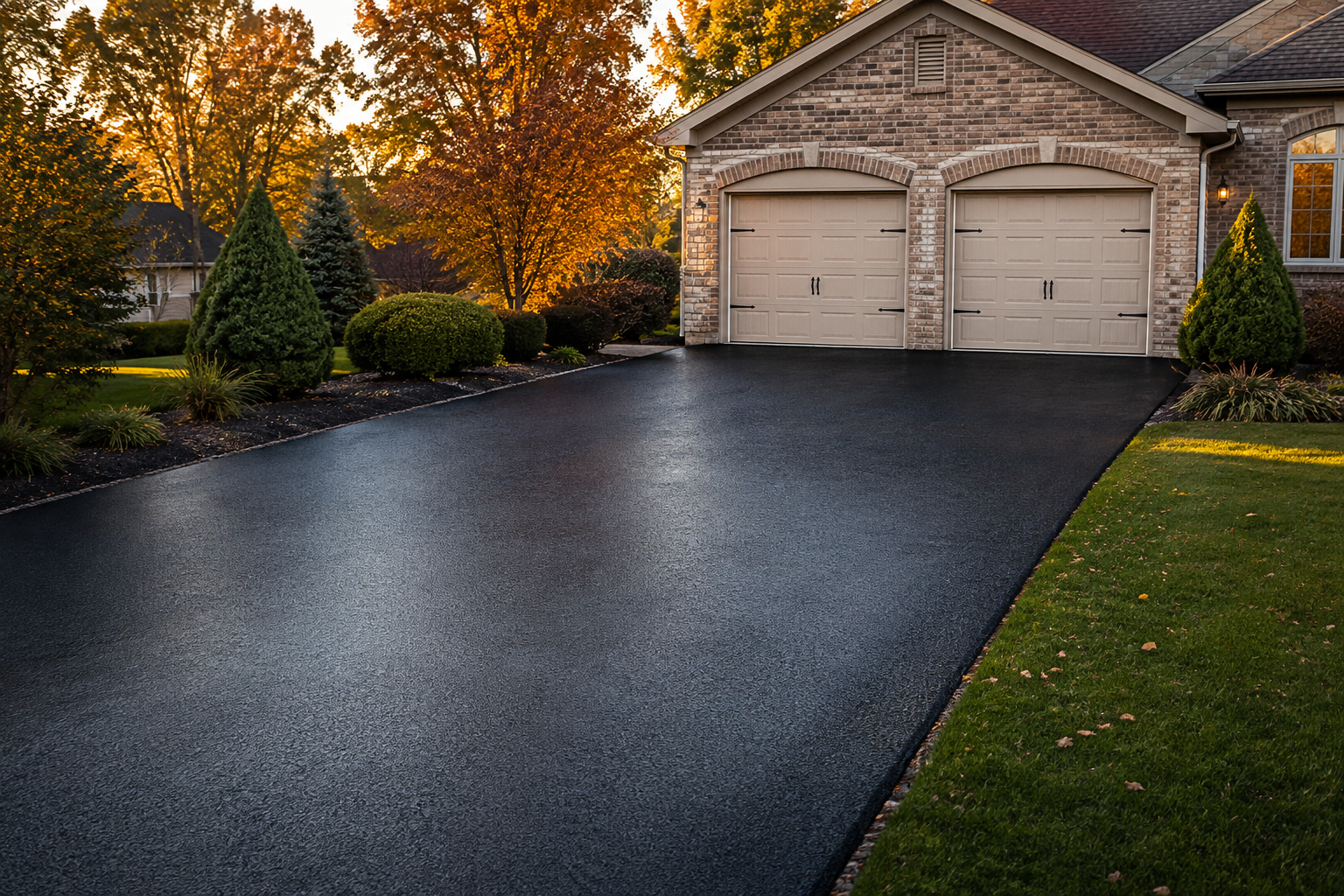
Two honest edge cases come up a lot. First, extreme summer heat. Very hot days actually help compaction, but they can make a fresh driveway soft for longer, so we tell customers to keep sharp turns, trailer jacks, and kickstands off it during the first hot week. Second, late-fall and winter work. We can still do smaller repairs and some patching in cold months, but full-depth driveway paving is off the table once the ground goes cold. Trying to force it just produces a weak driveway that fails early, and we will not put our name on that.
If winter arrives before your paving does, cold-weather crack filling and patching can protect what you have until spring. Our asphalt repair and patching work is built for exactly that holding pattern.
When we tell homeowners to wait
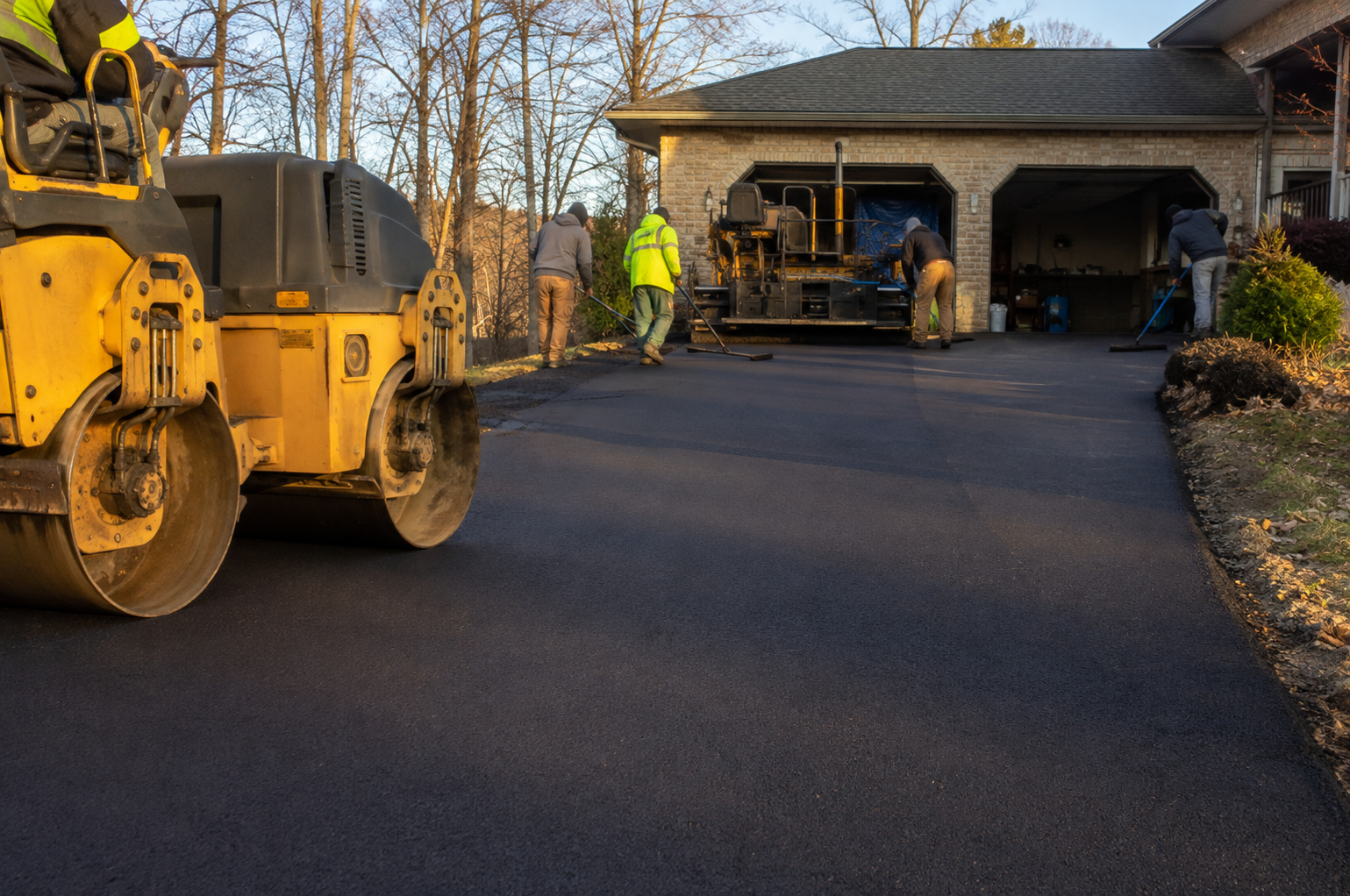
We would rather lose a job than pave in conditions that shorten your driveway’s life, so here is the straight advice we give at the truck. If it is early November and the ten-day forecast shows overnight lows in the 30s with no warm-up, we tell people to wait for spring. If the subgrade is still wet from a spring storm, we wait for it to dry. And if you are squeezing in a late job, understand that new asphalt needs to breathe before its first sealcoat, usually 60 to 90 days, so a late-fall pave means sealing in spring anyway. When the timing is right, we also point people to our driveway sealcoating service so the surface gets protected on the correct schedule.
Frequently Asked Questions
What is the best month to pave a driveway in Missouri?
There is no single best month, but September and early October are the most popular for good reason: warm days, cooler nights, and low humidity make for clean compaction. June through August is just as strong for the actual paving; it is simply hotter to work in. Any month from mid-April through mid-October can work with the right forecast.
Can asphalt be laid in cold weather?
Small repairs and patches can be done in cold weather, but full driveway paving should not. Hot mix has to compact before it cools below about 185 degrees, and cold ground and cold air pull that heat out too fast. We stop full paving once overnight lows and ground temperatures drop for the season.
Is it bad to pave in the rain?
Yes. Asphalt cannot be placed on a wet or saturated base, and rain on fresh mat interferes with compaction. We schedule around the forecast and will move a paving day rather than pave into moisture, because a wet subgrade is one of the top causes of early driveway failure in our clay soil.
How long should I wait to seal a new asphalt driveway?
Give new asphalt about 60 to 90 days to cure and off-gas before its first sealcoat. That is why a late-fall driveway usually gets sealed the following spring. Sealing too early traps oils in the surface and can do more harm than good.
Why is your fall schedule so busy?
Fall combines prime paving weather with a shrinking calendar, so spring procrastinators, year-end commercial jobs, and before-winter homeowners all compete for the same few weeks. Booking early is the only reliable way to lock in a fall slot before the cold shuts the season down.
How long does the paving itself take?
Most residential driveways are a one to two day job once we are on site, weather permitting. The bigger scheduling variable is getting a stretch of suitable temperatures, which is exactly why the season you choose matters so much.
Get a Free Written Estimate
Want your driveway paved while the weather still cooperates? Our crew will measure your site, check the subgrade, and get you on the schedule before the fall window closes, no pressure.
Asphalt Pavers LLC, 434 S Belcrest Ave, Springfield, MO 65802. Call us at (417) 319-2693. Hours: Mon-Sat 8:00 AM-5:00 PM. Find us on Google Business Profile.
Reviewed by the owner – 2026-08-24